TL;DR

Get decor and gifts delivered free with Prime
- Fast, free delivery on millions of items
- Prime Video, Amazon Music and more included
- Member-only deals all year
Educational wall clocks for kids combine vivid designs with teaching features, making it easier for children to grasp time concepts. Recent innovations include interactive and eco-friendly models, perfect for both home and classroom use.
Choose clocks with large, colorful, and clear numbers to boost readability.
Interactive features like movable hands and labeled parts help kids grasp time concepts faster.
Match the clock’s theme to your child’s interests to increase engagement and learning motivation.
Consider safety and durability—opt for shatterproof, child-safe materials.
Use the clock consistently in daily routines to reinforce learning naturally.
What Makes a Clock Kid-Friendly and Easy to Read?
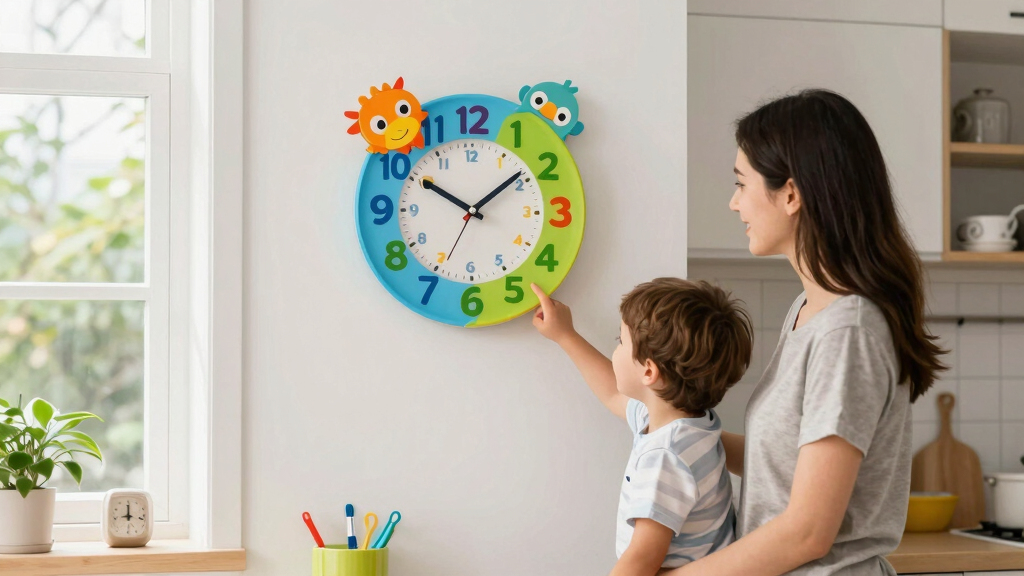
Kid-friendly clocks use bright colors, large numbers, and clear hands to catch a child’s eye and simplify reading. Think of a clock where the hour hand is painted in cheerful red and the minute hand in vivid blue—immediately obvious, even from across the room. Imagine a clock shaped like a smiling dolphin or a friendly robot, designed to spark curiosity while remaining functional.
For example, a popular model features bold, black numbers on a pastel background, making it easy for kids to distinguish each hour. The hands are also labeled—’short’ for hours, ‘long’ for minutes—helping children connect the visual with the concept of time.
As an affiliate, we earn on qualifying purchases.
How Do Educational Features Help Kids Learn Time Faster?
Educational wall clocks often include labeled or color-coded hands, movable parts, or interactive elements. These features are not just decorative; they serve as crucial tools to deepen understanding of how time works. For instance, a clock with a rotating minute hand marked in 5-minute intervals helps children visualize how minutes accumulate within an hour, fostering a sense of progression and time segmentation. Without this, children might see the clock as just a set of moving hands, missing the underlying structure of time. These features encourage active participation, making children more engaged and likely to retain the concepts. The tradeoff is that added complexity or digital features may sometimes distract from foundational skills if not used appropriately. Therefore, choosing a clock with the right level of interactivity aligned with the child’s learning stage is essential for effective learning.
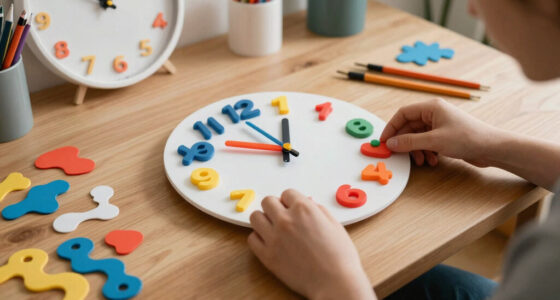
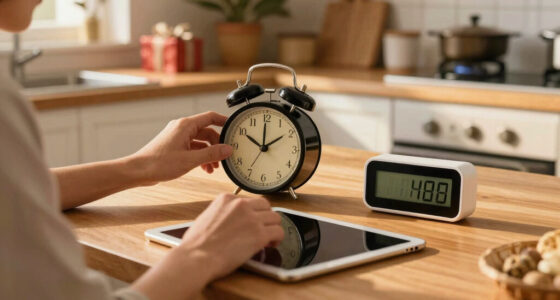
Some clocks incorporate flip cards or digital displays that show different times, reinforcing the learning process. Imagine a clock where you can move the hands to a specific time, then check if your child can read it correctly—turning practice into a playful challenge.
interactive learning clock for children
As an affiliate, we earn on qualifying purchases.
As an affiliate, we earn on qualifying purchases.
Compare Traditional and Modern Educational Clocks: What’s Better?
| Feature | Traditional Analog Clock | Modern Educational Clock |
|---|---|---|
| Design | Bright colors, fun shapes, themed characters | Includes digital displays, app connectivity |
| Educational Features | Movable hands, labeled parts | Interactive elements, customizable themes |
| Durability | Child-safe materials, shatterproof glass | Eco-friendly, often with soft edges |
| Learning Focus | Analog time-telling, basic concepts | AM/PM, elapsed time, digital reading |
Both types serve their purpose, but modern clocks add tech layers that boost engagement. If your goal is foundational skills, a bright, simple clock works wonders. Want a tech-savvy, adaptable tool? The latest models might be your best pick. However, it’s important to consider that digital features require batteries or power sources, which might add maintenance considerations. Traditional clocks, on the other hand, tend to be more durable and straightforward, making them ideal for rougher handling or environments where simplicity is preferred. The choice ultimately depends on your child’s learning style and your educational goals.
As an affiliate, we earn on qualifying purchases.
Step-by-Step: How to Choose the Perfect Clock for Your Child
- Consider your child’s age: 5-7 years for basic skills; older kids for more advanced features.
- Pick a design matching their interests: animals, space, cartoons—whatever makes them smile.
- Check for clear, large numbers and labeled hands to support easy reading.
- Ensure the clock is made from child-safe, durable materials.
- Decide if you want interactive features or eco-friendly options.
For instance, a parent choosing a clock for a 6-year-old might opt for a colorful, character-themed clock with movable hands, making practice feel like play. Remember, the key is balancing fun and educational value—overly complex clocks might frustrate younger children, while too simple models may not challenge older kids enough. Consider your child’s current understanding and future needs to select a clock that grows with them.
As an affiliate, we earn on qualifying purchases.
Tips for Making the Most of Your Child’s Learning Clock
- Practice daily, turning it into a game—”What time is it now?”
- Use the clock to teach concepts like AM/PM during daily routines.
- Encourage your child to move the hands and tell you the time.
- Pair the clock with stories or songs about time to reinforce learning.
- Keep the clock visible in a central spot, like the bedroom or playroom.
Imagine a Saturday morning where your child confidently reads the clock, pointing out it’s 3:30 when snack time arrives. Consistent and engaging practice helps solidify these skills because children learn best through repetition and context. Turning learning into a game or routine makes the process enjoyable and less like a test, fostering a positive attitude toward time-telling. Additionally, involving your child in choosing or customizing their clock can increase their interest and motivation to practice regularly.
Frequently Asked Questions
At what age should children start learning to tell time with a clock?
Most children begin grasping basic time concepts around ages 5 to 7, when they can understand the relationship between hours and minutes.Are digital clocks better than analog clocks for teaching kids?
Both have their benefits. Analog clocks are essential for understanding traditional time-telling, while digital clocks help kids recognize number formats and digital reading skills.How do educational clocks help children learn better?
They provide visual cues, tactile interaction, and engaging themes, making abstract concepts concrete and turning practice into fun experiences.What features should I look for in an educational clock?
Look for large, easy-to-read numbers, movable hands, durable, child-safe materials, and themes that align with your child’s interests.Are eco-friendly or sustainable options available?
Yes, several brands now offer clocks made from recycled, biodegradable, or sustainable materials, combining eco-consciousness with educational value.Conclusion
A well-chosen, vibrant educational clock transforms learning to tell time from a chore into a joyful discovery. It’s more than just a wall ornament—it’s a daily teaching partner that builds confidence and numeracy. When you see your child confidently reading the clock, you’ll realize the true power of a fun, thoughtful design. Make every glance at the clock an exciting moment of learning and growth.Columbus Day / Indigenous Peoples' Day Picks
long weekend sales
As an affiliate, we earn on qualifying purchases.