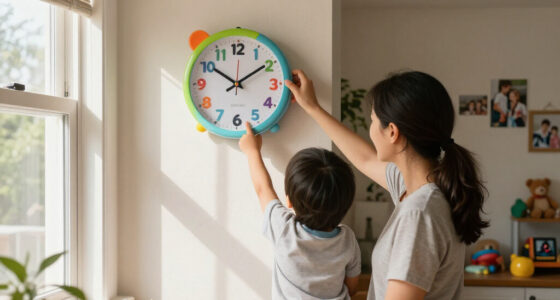

TL;DR

Get decor and gifts delivered free with Prime
- Fast, free delivery on millions of items
- Prime Video, Amazon Music and more included
- Member-only deals all year
Parents often rush or overcomplicate teaching time, focus only on digital clocks, or neglect real-life context. Using age-appropriate tools, patience, and practical examples makes learning to tell time smoother and more fun.
Imagine trying to explain the concept of time to a child who’s just beginning to grasp the world around them. It’s tempting to push for quick results or rely solely on digital clocks. But the truth is, many parents stumble by making simple mistakes that slow down or frustrate their kids.
This guide reveals the common pitfalls, why they happen, and how you can turn teaching time into a fun, confident experience for your child. Whether you’re just starting or need a refresher, understanding these key points makes all the difference in helping your child master this essential skill.
Patience is essential — avoid rushing the child’s natural learning pace.
Use both analog and digital clocks early to build a strong foundational understanding.
Tie lessons to daily routines to make learning relevant and memorable.
Practice regularly in short bursts — consistency beats intensity.
Celebrate effort, not just accuracy, to keep your child motivated and confident.
Rushing the Learning Process Will Backfire
When you expect your child to read a clock overnight, frustration often follows. Patience is your best tool. Children’s brains need time to connect the dots, especially with abstract concepts like hours and minutes.
For example, a child might understand the minute hand moving but struggle with understanding what 3:15 really means. Giving them time, and breaking lessons into small steps, leads to better understanding and less anxiety.
Tip: Start with just the hour hand, then add minutes over weeks. Celebrate small wins to keep motivation high.
analog clock with movable hands for kids
As an affiliate, we earn on qualifying purchases.
As an affiliate, we earn on qualifying purchases.
Why Focusing Only on Digital Clocks Creates Confusion
Many parents emphasize digital clocks, thinking they’re simpler. But kids often get stuck when they see an analog clock and can’t read the hands. An analog clock is the foundation for understanding the flow of time.
Imagine showing your child a digital time like 2:45, then handing them an analog clock with the hands pointing to almost 3. Without grasping how the hands work, they’ll feel lost. It’s like learning a language only through text and ignoring pronunciation — the full picture is missing.
Tip: Use clocks with movable hands and practice reading both formats daily, pairing each with real-life routines like breakfast or bedtime.
As an affiliate, we earn on qualifying purchases.
Simplify Explanations and Use Relatable Examples
Complex language confuses children. Instead of saying, “The hour hand indicates the hour and the minute hand shows minutes,” say, “The short hand tells us the hour, and the long hand shows minutes — like a race between two friends.”
Using everyday scenarios cements understanding. For instance, “It’s 3:00 — snack time! When the shorter hand points to 3, and the longer to 12, you know it’s lunchtime.”
Keep explanations visual, playful, and connected to what your child knows. This approach makes abstract ideas concrete.
children's learning clock for time-telling
As an affiliate, we earn on qualifying purchases.
As an affiliate, we earn on qualifying purchases.
Neglecting Daily Routines Hampers Learning
Teaching time is most effective when it’s tied to daily life. Children learn best when they see how clocks relate to their routines — waking up, going to school, dinner, bedtime.
For example, point out, “Look, it’s 7:00 — time to brush teeth before bed,” or “It’s 8:15 — time to start homework.” Connecting lessons to real moments makes the concept stick.
Skip this step, and time becomes just numbers on a clock, not part of their world.
interactive teaching clock for children
As an affiliate, we earn on qualifying purchases.
As an affiliate, we earn on qualifying purchases.
Inconsistent Practice Slows Down Progress
Practice sessions should be short but regular. Jumping into a 30-minute lesson once a month doesn’t build lasting understanding. Instead, aim for 5-10 minutes daily.
For example, every morning before breakfast, ask your child to read the clock on the microwave or watch. Over time, these quick checks become second nature.
Consistency cements learning, and small daily doses beat sporadic cram sessions.
Pushing Too Hard Before Developmental Readiness
Not all kids are ready to tell time at the same age. Forcing a child to learn when they’re not developmentally prepared only breeds frustration. Watch for signs of readiness, like interest in clocks or understanding of daily routines.
For example, if your 4-year-old shows curiosity but can’t yet grasp the concept of minutes, it’s okay to wait. Patience respects their stage of development and boosts confidence.
Tip: Focus on fun and exploration first; formal lessons come later when they’re ready.
Overemphasizing Accuracy Can Discourage Effort
If you only praise perfect answers, your child might feel anxious about making mistakes. Instead, celebrate effort and progress. When they correctly identify the hour hand but stumble on minutes, acknowledge their effort and encourage them to try again.
For example, say, “Great job noticing the hour hand! Now, let’s look at the minute hand together.” This approach reinforces their learning process and helps them understand that mistakes are a natural part of learning, not failures. Recognizing effort encourages persistence, which is essential for mastering a complex skill like telling time.
Using the Right Tools and Methods Boosts Success
Interactive clocks, visual charts, and games turn learning into play. A clock with movable hands, for example, helps children see how hours and minutes relate dynamically. Combining these with stories or routines makes lessons stick.
For example, a story about a clock’s hands racing to a party at 4:30 makes the concept memorable. Visual aids make abstract ideas concrete and fun.
Tip: Mix hands-on tools with daily routines for a balanced, engaging approach.
Comparison Table: Teaching Methods and Their Effectiveness
| Method | Pros | Cons |
|---|---|---|
| Movable clock hands | Hands-on understanding, visual clarity | Requires supervision, some setup |
| Educational apps | Interactive, engaging, adaptable | Screen time concerns, less tactile |
| Storytelling and routines | Relatable, contextual learning | Less precise, needs consistency |
| Traditional flashcards | Simple, quick review | Can be dull, less interactive |
Conclusion
Teaching your child to tell time isn’t about speed or perfect answers — it’s about building a genuine understanding. Keep lessons playful, patient, and connected to their world. Over time, those clock hands become familiar friends guiding them through daily life.
With the right approach, your child will not only learn to read a clock — they’ll connect to time as a helpful, friendly part of their everyday routine.
Halloween Picks
halloween
As an affiliate, we earn on qualifying purchases.