TL;DR

Get decor and gifts delivered free with Prime
- Fast, free delivery on millions of items
- Prime Video, Amazon Music and more included
- Member-only deals all year
A teaching clock with movable hands is a hands-on tool that helps kids grasp how hours and minutes work together. By actively setting times and practicing with real-life scenarios, children develop stronger time-telling skills and fine motor control. Recent models combine digital features and colorful designs to boost engagement.
Imagine a clock that lets you actually move the hands yourself. No, it’s not just a fancy toy — it’s a powerful learning tool. When you use a teaching clock with movable hands, you turn abstract numbers into a tangible, real-world activity. Kids don’t just see the time; they feel it, manipulate it, and truly understand it.
Whether you’re helping a preschooler grasp the concept of half past or guiding a student through the intricacies of quarter to, this simple tool makes a difference. In this guide, you’ll find practical tips, recent tech updates, and answers to common questions. Let’s make teaching time approachable — and even fun.
Choose a colorful, easy-to-move teaching clock with clear numbers for best engagement.
Start with simple times, then gradually introduce more complex concepts like quarter past and quarter to.
Use real-world scenarios and daily routines to make learning relevant and fun.
Incorporate modern digital and app-based tools to complement hands-on practice.
Consistent, short practice sessions with patience build strong understanding over time.
What is a teaching clock with movable hands — and why does it matter?
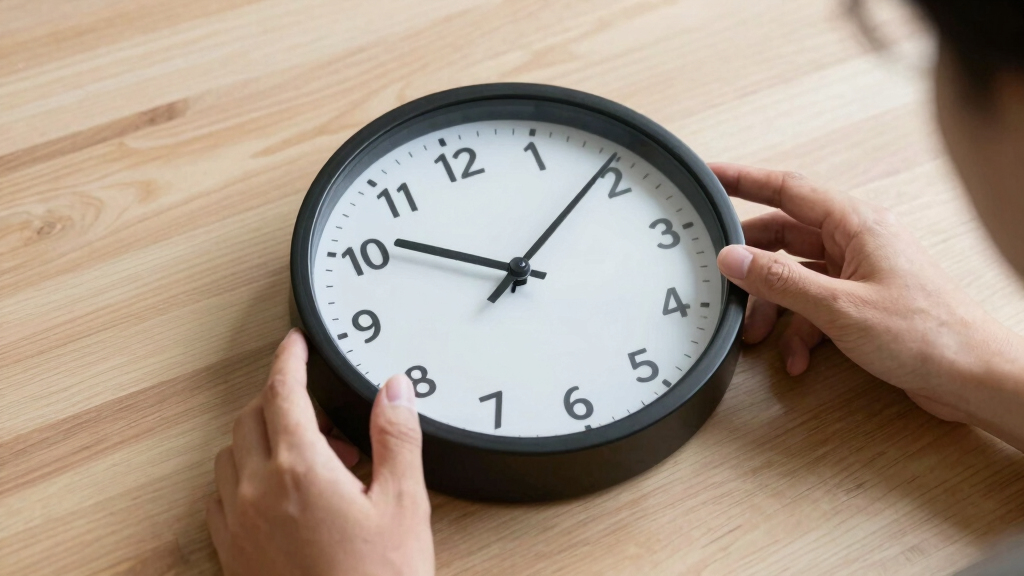
A teaching clock with movable hands is a real, physical clock designed for learning. Its main feature? You can manually turn the hour and minute hands to set specific times. This hands-on approach helps kids connect the concept of time with physical movement, making abstract ideas concrete.
Imagine a child setting the clock to 3:30, then explaining what that means — they’re actively engaging with the concept. This tactile experience boosts understanding and retention, especially for young learners or those with learning differences.
According to educators, these clocks are recommended because they develop fine motor skills and help children see the direct relationship between the position of the hands and the time displayed. This understanding is foundational, as it allows children to internalize the mechanics of clock reading, which is essential for more advanced time concepts and real-world time management.
As an affiliate, we earn on qualifying purchases.
How to set up and start using your teaching clock in 3 simple steps
- Choose a clock with clear, colorful numbers and easy-to-turn hands. Look for models with contrasting colors for hours and minutes. This visual clarity reduces confusion and helps children quickly identify which hand to move, fostering independence in learning.
- Begin with basic times: set the clock to the hour, half-hour, or quarter-hour, and explain what those mean. For example, move the hands to 2:00 or 4:15. Introducing these foundational times helps children grasp the structure of the clock face and the significance of each position.
- Use real-world scenarios: ask your child to set the clock to the time they wake up, eat lunch, or go to bed. Make it relevant and fun! Connecting clock reading to daily routines makes the learning meaningful and helps children see the practical value of telling time, which increases motivation and retention.
For example, if it’s 3:45, move the hands accordingly and ask, “What time is it?” Then, relate it to everyday activities. The key is to keep it playful, not intimidating. This approach encourages curiosity and reduces anxiety around learning to tell time.
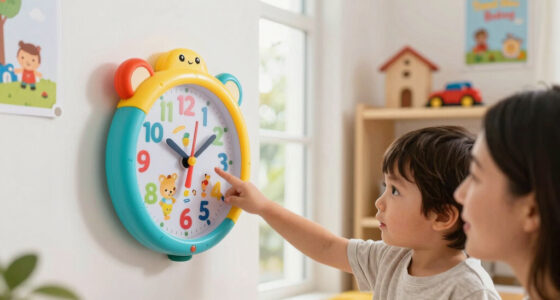
kids learning clock with colorful numbers
As an affiliate, we earn on qualifying purchases.
As an affiliate, we earn on qualifying purchases.
Mastering time concepts: Using the clock to teach hours, minutes, and more
To really grasp time, you need to see how the hour and minute hands work together. Show kids that when the hour hand points to 3 and the minute hand to 12, it’s exactly 3:00. Moving the minute hand to 6 shows 30 minutes past, or half past. Explaining these interactions helps children understand the relationship between the two hands, which is crucial for accurate time reading.
Understanding these relationships also enables children to interpret more complex times, like quarter past or quarter to, by recognizing how the position of the minute hand indicates specific segments of the hour. These concepts aren’t just about reading a clock—they form the foundation for understanding how time is divided into meaningful parts. This knowledge impacts their daily routines, such as knowing when an appointment or activity is due, and supports their overall mathematical development. Recognizing how the minute hand’s position corresponds to fractions of an hour fosters spatial reasoning and helps children internalize the concept that time is a continuous, divisible measure, which is essential for advanced math skills later on.
Here’s a quick breakdown:
| Time Concept | How to Demonstrate |
|---|---|
| On the hour | Hour hand points directly at a number, minute hand at 12 |
| Half past | Minute hand at 6, hour hand halfway between numbers |
| Quarter past | Minute hand at 3, hour hand slightly past the hour |
| Quarter to | Minute hand at 9, hour hand just before the next number |
Using these demonstrations helps children visualize the passage of time more concretely. Encouraging them to interpret the clock independently and ask questions like, “What time is this?” fosters active learning. This process not only helps solidify their understanding but also develops their confidence in reading clocks and applying this knowledge to real-world situations, such as planning their day or understanding schedules.
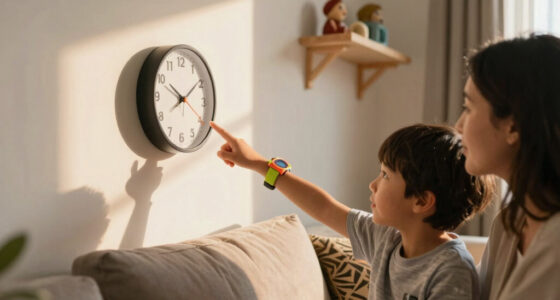
analog teaching clock for children
As an affiliate, we earn on qualifying purchases.
As an affiliate, we earn on qualifying purchases.
Avoid common pitfalls: Tips for effective practice and engagement
Kids often struggle with understanding that the hour hand moves gradually, not jumps. To clarify, move the hour hand slowly between numbers while explaining, “It’s almost 4, but not quite yet.” Recognizing this gradual movement helps children appreciate that telling time is a continuous process, not just reading static positions. This understanding prevents misconceptions, such as thinking the hour hand only points directly at numbers.
Make practice fun by turning it into a game. For example, challenge them to set the clock to a specific time within a time limit, or relate times to daily routines like “Set it to when you brush your teeth.” These activities reinforce learning through play, which is especially effective for young children. Incorporating fun elements like timing competitions or storytelling makes the experience memorable and maintains their interest.
Patience is key. Children often need time to internalize the concept that the hour hand moves smoothly and continuously. Rushing this understanding can lead to frustration or misconceptions. Using gentle, repeated demonstrations and encouraging them to observe the movement over time helps build this awareness. Remember, mastery develops through consistent, positive reinforcement. If they get frustrated, take a break and try again later. Short, frequent practice sessions are more effective than long, tedious drills, fostering confidence and long-term retention. This patience and repetition help children develop a more accurate mental model of how clocks work, which is essential for independent time-telling and avoiding common mistakes like misreading the position of the hands.
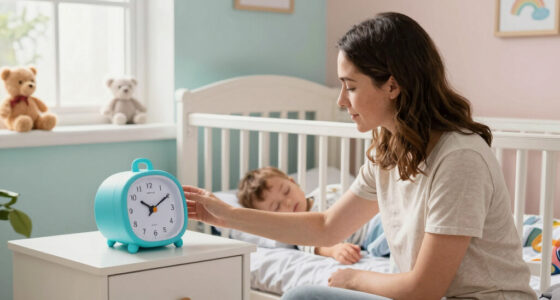
interactive clock for time-telling practice
As an affiliate, we earn on qualifying purchases.
As an affiliate, we earn on qualifying purchases.
Latest innovations: Digital, colorful, and more kid-friendly teaching clocks
Modern teaching clocks aren’t just plain old analog anymore. Many now combine colorful, durable plastics with digital displays. Some models include interactive features, like pressing buttons to hear the time or using an app to simulate clock setting. These innovations are designed to cater to different learning styles, making the process more engaging and accessible for children who thrive with visual or auditory stimuli.
For example, a clock with bright red hour and green minute hands can help kids differentiate easily, reducing confusion and fostering quicker recognition. Others include movable seconds dials or multilingual labels, supporting diverse learners and expanding the clock’s educational potential. These features also allow for differentiation, giving children with varying needs appropriate tools to succeed, which is essential in inclusive learning environments.
According to Alphabet Clock, these innovations make the learning process more engaging and adaptable, especially for remote or tech-savvy children. They help bridge the gap between traditional teaching methods and modern technology, ensuring that learning remains relevant and effective in an increasingly digital world.
Comparing physical clocks vs. digital tools — which works best?
| Feature | Physical Teaching Clock | Digital/Virtual Clock |
|---|---|---|
| Hands-on experience | Excellent — kids manipulate real hands for tactile feedback, which helps reinforce the physical and spatial understanding of time. | Limited — interaction is via screen, which may reduce the tactile connection but can offer dynamic visual cues. |
| Engagement level | High — colorful, movable parts attract kids and keep their interest through physical activity and exploration. | Variable — depends on app design, but often includes interactive features that can sustain attention if well-designed. |
| Ease of use | Very user-friendly, no tech needed, ideal for hands-on learning in various environments. | Requires devices and internet connection, which may pose barriers but allows for more versatile, remote access. |
| Suitability for remote learning | Less ideal unless used in person, but can be adapted for virtual instruction with some modifications. | Great — easily accessible online, making it suitable for remote or hybrid learning models. |
| Learning reinforcement | Strong — physical activity and manipulation help solidify understanding and create muscle memory. | Good — visual and auditory cues support learning, but may lack the kinesthetic element crucial for some learners. |
When choosing between these tools, consider the child’s learning style and the context of instruction. Physical clocks promote active manipulation and spatial awareness, while digital tools offer flexibility and adaptability for diverse environments. Combining both can provide a comprehensive approach, leveraging the strengths of each to maximize understanding and engagement.
What should you do next? Practical tips for ongoing practice
Keep the clock handy and incorporate it into daily routines. For example, when it’s time for breakfast, ask, “Can you set the clock to 8:00?”
Mix quick drills with storytelling — “It’s 2:15, time to pick up your toys!” Over time, challenge them to set different times without help. This ongoing practice reinforces their skills, helping them see telling time as an integral part of daily life. Regular, short sessions make learning less overwhelming and more effective, as children are more likely to retain information when it’s spaced out and linked to real-world activities. Consistency in practice helps develop muscle memory and mental models, making the process more intuitive and less prone to errors.
Use the clock as a visual cue for routines, like bedtime or snack time. The more they see and manipulate it, the faster they’ll master telling time. Embedding clock activities into daily life helps children internalize the concept and see its relevance, which fosters independence and confidence in reading clocks and understanding schedules.
Frequently Asked Questions
At what age should my child start using a teaching clock?
Most children begin to understand basic time concepts around age 4 or 5. If they’re curious and can follow simple instructions, it’s a great time to introduce a teaching clock.
How do I explain quarter past or quarter to using the clock?
Show them that when the minute hand points to 3, it’s a quarter past — 15 minutes after the hour. When it points to 9, it’s a quarter to — 15 minutes before the next hour. Moving the hands slowly helps visualize this, and emphasizing the relationship between the position of the minute hand and the division of the clock face helps children understand the concept of fractions of an hour, which is foundational for more advanced time-telling skills.
Can virtual clocks replace physical ones for teaching?
Virtual clocks are excellent supplements, especially for remote learning. However, physical clocks provide tactile feedback that helps solidify understanding, so combining both often works best. The tactile experience aids in muscle memory and spatial reasoning, which are harder to develop through screens alone.
How often should I practice setting the clock with my child?
Short, daily sessions — 5 to 10 minutes — are most effective. Consistency is more important than length, as regular practice helps reinforce learning and build confidence. Making these sessions a part of daily routines ensures that children see the relevance and value of their practice, encouraging sustained engagement and mastery over time.
Conclusion
Remember, a teaching clock with movable hands isn’t just a learning toy — it’s a bridge to understanding time in a way that sticks. Keep it playful, keep it consistent, and watch your child’s confidence grow.
In a world of digital screens, the tactile act of moving clock hands still proves to be one of the most effective ways to teach a fundamental life skill. So, grab a colorful clock, and start turning those times into real understanding.
Fall Picks
fall essentials
As an affiliate, we earn on qualifying purchases.