
TL;DR

Get decor and gifts delivered free with Prime
- Fast, free delivery on millions of items
- Prime Video, Amazon Music and more included
- Member-only deals all year
Sleep-training clocks use color changes and visuals to signal when toddlers can get out of bed. When used consistently, they reduce early waking and build independent sleep habits, making mornings calmer for parents and kids alike.
Ever wake up to a tiny tornado of energy bouncing in your room at dawn? You’re not alone. Many parents face the challenge of convincing toddlers to stay in bed longer. That’s where sleep-training clocks come in—a simple, visual way to set boundaries without constant nagging.
These clocks aren’t just toys; they’re tools that help your child understand when it’s okay to get up. You’ll learn how they work, why they’re effective, and how to make them part of your bedtime routine. Ready to turn those early mornings into peaceful, predictable moments? Let’s dive in.
Sleep-training clocks use clear, visual cues to teach toddlers when it’s okay to stay in bed, reducing early wake-ups.
Consistency in using the clock every night builds trust and helps children learn the signals faster.
Choose a clock with engaging visuals and simple controls to make the process easier for your child.
Pair the clock with calming routines and patience—results typically show after a few weeks.
Respond calmly to early rising or out-of-bed episodes to reinforce the clock’s meaning.
What Are Sleep-Training Clocks, and Why Do They Work?
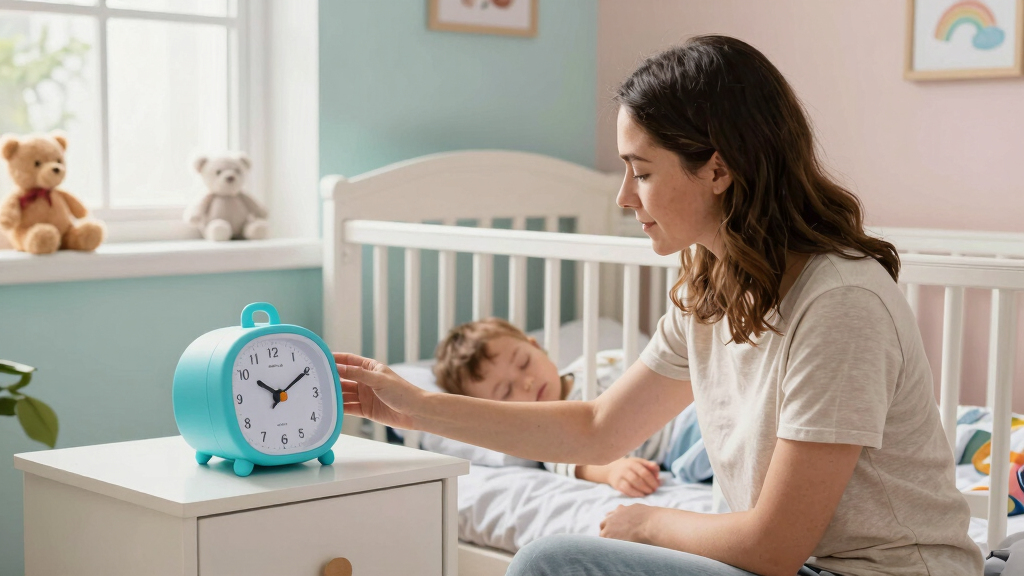
Sleep-training clocks are devices designed to teach toddlers when it’s time to stay in bed and when it’s okay to get up. They use visual signals—like colors, images, or lights—that change at set times. For example, a clock might show a sleepy face with a red background during night hours, then switch to a bright sun when it’s okay to rise.
Imagine a clock with a cute sleeping bear that turns red at bedtime, then green when waking is permitted. It’s a simple, calm cue that helps kids self-regulate their sleep and wake times. These cues matter because they provide a non-verbal, consistent signal that replaces the need for constant verbal reminders or supervision, which can be exhausting. They foster independence by encouraging children to listen to their own cues and trust the visual system. This way, children learn to associate specific signals with appropriate behaviors, reducing resistance and creating a more predictable routine for everyone.
As an affiliate, we earn on qualifying purchases.
How Visual Cues Help Toddlers Stay in Bed Longer
The magic of sleep-training clocks lies in making boundaries clear and reinforcing them visually. When a toddler sees the clock’s color change to red, they recognize it’s still night and that they should stay in bed. When it switches to green or a smiling sun, they know it’s okay to get up. This clarity reduces the guesswork that often leads to early rising—children aren’t left to interpret vague cues like ‘it’s morning’ or ‘you can get up now.’ Instead, they have a specific, predictable signal to guide their behavior.
Take Lucy, a 2-year-old who used to wake at dawn, bouncing in her parents’ room. After two weeks with her clock, she stayed in bed until her clock turned green—an extra hour of sleep for everyone. This shift not only improved her sleep quality but also reduced her parents’ frustration, creating a calmer morning routine. The tradeoff, however, is that some children may initially test the boundaries or resist the signals, especially if they’re unfamiliar with the cues. That’s why consistent use and patience are key; over time, the visual cues become trusted signals, and the boundary becomes a firm part of their routine.
Research from Alphabet Clock shows that consistent visual cues can cut early rising episodes by nearly 50% within a month, highlighting the importance of routine and clarity in behavioral change.
As an affiliate, we earn on qualifying purchases.
The Top Features to Look for in a Sleep-Training Clock
| Feature | Why It Matters |
|---|---|
| Ease of Use | A clear, simple interface helps your child understand without frustration. If a clock is overly complicated, children may become confused or lose interest, which can undermine the training process. Simplicity ensures they can independently interpret signals, fostering confidence and reducing parental intervention. |
| Engaging Visuals | Colors, images, or characters make the cues memorable and fun. Engaging visuals capture children’s attention and help them associate specific signals with routines, making the transition smoother and more motivating. The right visuals can turn bedtime into a positive, predictable part of the day. |
| Customizable Settings | Adjusting signals and times to fit your routine is key for consistency. Customization allows parents to align the clock’s cues with their child’s sleep needs and schedule, minimizing confusion and resistance. It also accommodates changes as your child grows or routines shift. |
| Durability | Kids are rough; a sturdy clock lasts longer and saves money. Durability ensures the clock can withstand drops, bites, or rough handling, maintaining its functionality and reducing the need for replacements, which can disrupt routines and cause frustration. |
| Compatibility | Some clocks sync with apps or smart home devices for extra control. Compatibility extends the clock’s functionality, allowing parents to customize settings remotely, set alarms, or track sleep patterns. This integration can enhance consistency and provide additional insights into your child’s sleep habits. |
For example, a clock with a big, colorful face and a gentle alarm sound can make the transition smoother. Functionality combined with engaging design ensures that the clock is not only effective but also appealing, which increases the likelihood of consistent use and success.
toddler sleep trainer clock with color cues
As an affiliate, we earn on qualifying purchases.
As an affiliate, we earn on qualifying purchases.
Step-by-Step: How to Introduce a Sleep-Training Clock
- Choose a clock that appeals to your child’s interests and is easy to understand. If the clock’s visuals or signals are confusing, your child may resist or become frustrated, which can hinder learning.
- Explain the signals in simple terms—like “When the clock shows a sleepy face, it’s still bedtime.” Use consistent language to reinforce understanding and build trust in the cues.
- Set the clock’s times based on your usual bedtime and wake-up goal, ensuring the signals align with your routines to avoid mixed messages.
- During bedtime, point to the clock and reinforce what the signals mean. Consistency in your explanations helps your child associate specific signals with specific behaviors.
- In the morning, celebrate when they wake up with a green or smiling face. Positive reinforcement solidifies the behavior and makes mornings more enjoyable for everyone.
- Stick to this routine every night, even if progress is slow at first. Patience and repetition are crucial because children learn best through consistent, predictable cues over time.
Anna’s son, Jack, took three weeks to consistently stay in bed until his clock turned green. The gradual improvement was a sign that routine and patience are essential, especially as children adapt to new signals and expectations.
As an affiliate, we earn on qualifying purchases.
Tips for Making Sleep-Training Clocks Actually Work
- Be consistent: Use the clock every night without exceptions. Inconsistency can confuse your child and undermine the learning process, making progress slow or unstable.
- Keep explanations simple: Use familiar language and positive reinforcement. Clear, positive cues help your child trust and understand the signals, reducing resistance and frustration.
- Pair with calming bedtime routines—storytime, dim lights, gentle music. These routines prepare your child’s mind and body for sleep, making the clock’s signals more meaningful and effective.
- Adjust the clock’s times gradually if your child resists. Small, incremental changes are less disruptive and help your child adapt without feeling overwhelmed.
- Stay calm and patient—children pick up on your emotions. Your calm demeanor reinforces the signals’ trustworthiness and creates a peaceful environment conducive to learning.
For instance, if your toddler keeps getting out early, try moving the “green light” 10 minutes later each night. Small tweaks over time can significantly improve compliance and reduce frustration for both you and your child.
Why Consistency and Patience Are Your Best Allies
Using a sleep-training clock is a game of persistence. The clock teaches your child new cues, but their understanding and trust in these signals take time to develop. Consistency in your routine and responses helps embed these cues into their routines, making the behavior more automatic and less reliant on parental intervention. This process also strengthens your child’s sense of security, as predictable routines create a stable environment.
Think of it like planting a seed—show consistent care, and it will grow. If you give in or frequently change the rules, your child may become confused or distrustful of the signals, which can delay progress or cause setbacks. The tradeoff is that patience requires emotional resilience, but the payoff is a more independent, self-regulated sleeper.
According to an anonymous researcher, children who receive clear cues and consistent routines sleep longer and wake less often. While the process may seem slow initially, the long-term benefits—more restful nights and calmer mornings—are well worth the effort.
What If My Child Gets Out of Bed Before the Clock Signals?
Stay calm. When your child leaves bed prematurely, respond with gentle firmness—guide them back to bed and remind them of the clock’s meaning. Consistently reinforcing that the clock’s signals are the correct cues helps your child learn to trust the system. This consistency is crucial because children often test boundaries to understand what behaviors are acceptable, and a calm, firm response teaches them that the signals are reliable.
For example, if your toddler wanders out at 6 am while the clock is still red, calmly say, “The clock says it’s still night. You need to stay in bed until it turns green.” Repeating this calmly and consistently helps your child learn that the signals are trustworthy and that resistance doesn’t change the routine. Over time, they will start to wait for the correct cue before getting up, which reinforces their understanding and self-control.
Remember: patience and consistency are key. If you respond calmly, your child learns that the clock’s signals are trustworthy and that their persistence won’t lead to immediate rewards, fostering patience and self-regulation.
Are There Downsides or Things to Watch Out For?
While sleep-training clocks are helpful, they’re not magic. Some children might find the visuals confusing or become frustrated if routines aren’t consistent. Over-reliance on the clock can also lead to dependency, where your child struggles to fall asleep or stay in bed without it. This dependency can sometimes hinder the development of internal cues for sleep, which are important for long-term sleep independence.
It’s important to combine the clock with other good sleep habits—like a calming bedtime routine and a consistent schedule. Use the clock as a tool to support, not replace, foundational sleep practices. If a child resists or fixates on the clock, it may be a sign to reassess whether the signals are clear enough or if other routines need strengthening.
In rare cases, children may become overly fixated or develop anxiety around the signals, which can interfere with sleep. Monitoring your child’s responses and adjusting the approach accordingly helps ensure that the clock remains a positive part of sleep training rather than a source of stress.
Frequently Asked Questions
Are sleep-training clocks effective for all toddlers?
Effectiveness varies, but most children respond well when the clock is used consistently alongside routine. Some may take longer, but patience pays off.
At what age should I start using a sleep-training clock?
Most clocks are best for children around 2 years old, but some can work as early as 18 months if your child understands simple cues and routines.
How long does it take for a child to learn to stay in bed using a clock?
It often takes several weeks—anywhere from two to four—depending on your child’s temperament and how consistently you follow through.
Can sleep-training clocks replace other sleep routines?
They’re most effective when combined with calming bedtime routines, like stories and dim lighting. The clock is a helpful tool, not a standalone solution.
What should I do if my child gets out of bed before the clock signals?
Gently guide them back and remind them of the clock’s meaning. Stay calm, be consistent, and reinforce that the signals are trustworthy.
Conclusion
Imagine mornings that start with calm, instead of chaos. A well-chosen sleep-training clock can be that quiet, guiding presence, helping your toddler learn independence without tantrums.
Remember, patience and consistency turn these tiny signals into lasting habits. With time, those early wake-ups will fade, replaced by peaceful mornings and rested families.
Fall Picks
fall essentials
As an affiliate, we earn on qualifying purchases.