
TL;DR

Get decor and gifts delivered free with Prime
- Fast, free delivery on millions of items
- Prime Video, Amazon Music and more included
- Member-only deals all year
Retrofitting insulation may make a home warmer and reduce heating demand, but the source report does not provide measured savings or guarantee lower bills. Experts interviewed by Ideal Home warn that older buildings need assessment for wall type, moisture and ventilation before work begins.
Retrofitting insulation can help existing homes retain heat, but the right approach depends on how a house was built, according to experts interviewed by Ideal Home. Their warning is particularly relevant to older properties: installing an unsuitable system or making a home more airtight without adequate ventilation may contribute to trapped moisture and damp, while the report gives no quantified estimate of bill savings.
Becky Lane, chief executive of Furbnow, said owners of older houses should first identify the wall construction and understand how the building handles moisture. Many traditional buildings, especially those built before the 1930s, were designed to let moisture pass through their walls, she said. Insulation that changes this behaviour without appropriate ventilation can create problems.
Martyn Fowler, founder of Elite Renewables, said insulation can make a substantial difference in older homes that began with little or none, but cautioned against treating all houses alike. A Victorian solid-wall home and a 1930s cavity-wall property need different considerations, he said. For cavity-wall work, he advised checking the wall’s condition, exposure to driving rain and whether the cavity is clear before filling it.
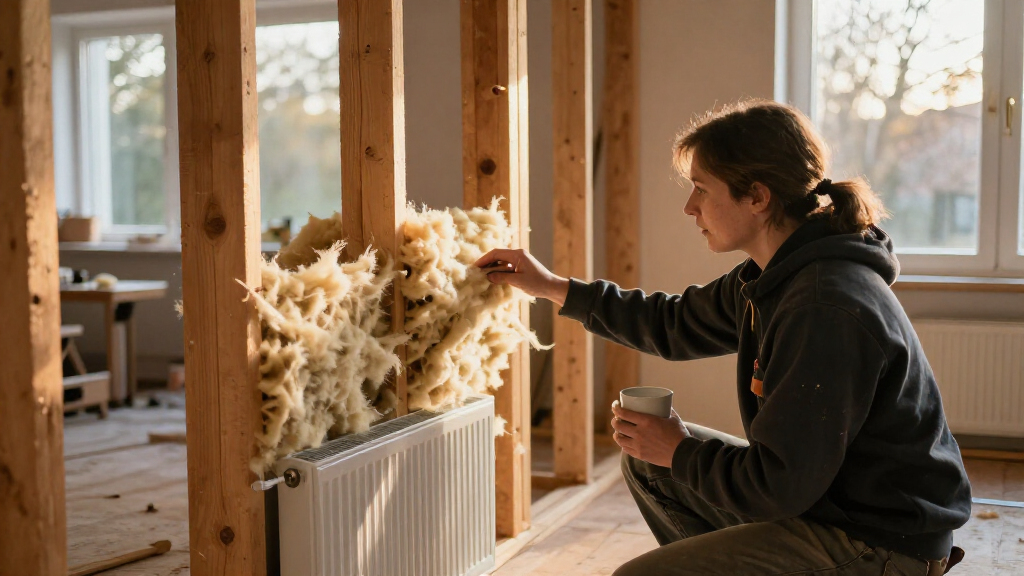
The work involved varies. Ideal Home’s report says loft insulation is generally straightforward, while suitable cavity-wall insulation can often be installed in a few hours, with small holes drilled in outside walls and filled after the material is injected. Internal wall insulation can require moving radiators, sockets, skirting boards and sometimes kitchen fittings, followed by redecoration. External insulation usually keeps the work outside but may require scaffolding and adjustments to downpipes, window details or other fittings.
Choosing Insulation Without Creating Damp
The practical question for homeowners is not simply whether insulation retains heat, but whether a particular system suits their property. Insulation may reduce heat loss, which can lower the amount of heating needed, but the report does not establish a typical bill reduction, payback period or guaranteed saving. Results will depend on the home, the work carried out, energy use and heating costs.
That distinction matters because installation can range from a relatively limited loft or cavity-wall job to disruptive work inside rooms or across the exterior. An unsuitable choice can bring repair costs and moisture concerns, rather than the comfort and efficiency a household expects. Assessment before installation is therefore central to weighing possible savings against cost, disruption and building risks.
For residents planning work, the report also makes clear that “insulation” is not a single upgrade. Loft, cavity-wall, solid-wall and floor insulation involve different access requirements and suitability checks. The best starting point depends on where heat is escaping and how the building is constructed, not on applying one solution everywhere.
Products Worth Considering

Makita 5007F 7-1/4 Circular Saw

EGO POWER+ 16-Inch POWERLOAD String Trimmer with Telescopic Carbon Fiber Shaft (Battery and Charger Not Included)

EGO Power+ SNT2420 24-Inch Two-Stage Self-Propelled Snow Blower (Battery and Charger Not Included)
As an affiliate, we earn on qualifying purchases.
Different Homes Need Different Systems
The report addresses homeowners considering insulation as colder weather prompts interest in keeping homes warm without running central heating as much. It focuses on retrofitting existing properties, including older homes that may have little insulation, rather than presenting new data from a trial or government scheme. Its central point is that the potential benefits depend on the building and installation.
Lane’s comments focus on moisture movement in traditional walls and the need to understand construction before making a home more airtight. Fowler similarly distinguishes solid walls from cavity walls. According to the report, cavity-wall installation can be comparatively quick when a property is suitable, while internal solid-wall insulation typically affects rooms and finishes. External wall insulation changes the outside of the building and can require scaffolding.
The source also notes that floor insulation depends on access. Its supplied text ends while Fowler is discussing suspended timber floors, so it does not provide his full explanation or further detail about floor-installation options. It includes no cost comparisons, energy-use measurements or case studies that would let readers calculate savings.
“With an old house you really need to understand what you’re dealing with before you start.”
— Becky Lane, chief executive of Furbnow
Savings and Suitability Remain Unquantified
The report does not quantify likely savings on heating bills, installation costs, energy reductions or the time needed to recover the expense. It therefore cannot show whether a specific homeowner will spend less overall after paying for the work. Actual outcomes will vary with the property and household circumstances.
Nor does the report assess any one home or recommend a particular product. It does not provide detailed moisture-control specifications, ventilation requirements or a full account of floor insulation; the supplied source cuts off during Fowler’s discussion of suspended timber floors. Homeowners would need property-specific advice to determine whether a proposed system is appropriate and what checks or permissions may apply.
Assess the Property Before Work
The next step for anyone considering a retrofit is to establish where insulation is needed and how the home is built. The experts quoted by Ideal Home advise checking wall type, wall condition, exposure to driving rain, cavity condition and moisture management before choosing a system. For older solid-wall homes, the ability of the building to dry out and the home’s ventilation need particular attention.
Homeowners should also compare the likely disruption and full project cost with the expected comfort and energy benefits, rather than assuming that insulation guarantees a specific reduction in bills. The source provides no announced programme or future milestone; the decision remains a property-by-property assessment. No specific savings or installation outcome is confirmed by the report.
Key Questions
Can retrofitting insulation lower heating bills?
It may reduce heat loss and the amount of heating a home needs, but the report provides no typical saving or guarantee. The result depends on the property, the insulation installed, energy use and costs.
Is insulation suitable for every older house?
No single system suits every home. The experts say owners should identify the wall construction and understand how the building manages moisture before work begins, particularly in older solid-wall properties.
Which insulation work is least disruptive?
The report describes loft insulation as generally straightforward. Cavity-wall insulation can also be quick when the property is suitable; internal wall insulation is more disruptive because fixtures may need to be moved and rooms redecorated.
Can insulation cause damp?
The experts warn that an unsuitable system or increased airtightness without adequate ventilation can trap moisture and contribute to damp. The report does not assess any particular home, so risk depends on the building and proposed work.
How long does cavity-wall insulation take?
Ideal Home’s report says suitable cavity-wall work typically takes two to four hours. Installers drill small holes in the external walls, inject the insulation and make good the holes afterward.
Source: idealhome.co.uk