
TL;DR

Get decor and gifts delivered free with Prime
- Fast, free delivery on millions of items
- Prime Video, Amazon Music and more included
- Member-only deals all year
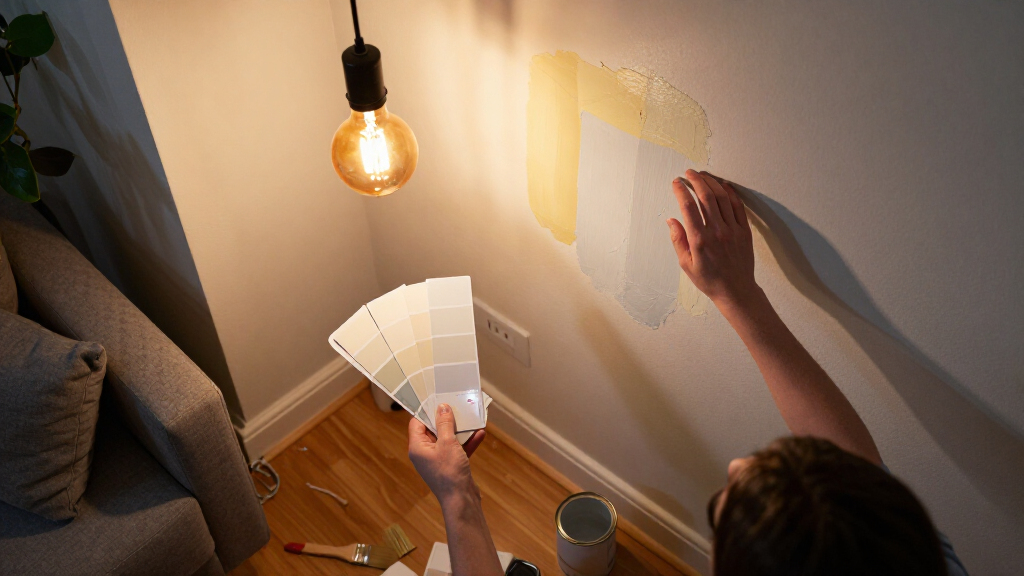
A Livingetc report says warm, relatively dim household bulbs can make wall paint look different at night than it does in daylight. Designers recommend checking paint in its intended daytime setting and using layered, adjustable lighting rather than relying on one harsh ceiling fixture.
Warm household lighting can change how wall paint appears after dark, making some colors seem warmer or less distinct than they do in daylight, according to a Livingetc report featuring interior design and lighting specialists. Their practical advice is to test paint in natural light, then use appropriate bulb temperatures and layered fixtures to shape the room’s evening appearance.
Color consultant and interior designer Emily Brooks told Livingetc that people perceive paint through light reflecting from its pigment. The light’s color temperature and intensity can therefore affect how a shade appears. A paint choice that looks balanced in daylight may read differently under a room’s artificial lighting.
Jo Plant, Pooky Lighting’s chief creative officer, said natural light is around 5,000 Kelvin, while many household bulbs fall between 2,500K and 3,000K. These figures describe color temperature, not brightness. Plant said warm light can make warm blues appear warmer, while cooler hues may look muddy or flat in evening conditions.
The report does not advise immediately repainting or replacing every bulb. Brooks recommends judging a color’s tone and lightness in daylight, then selecting evening lighting to complement the paint. She and Plant point to layered lighting—including lamps and wall lights—as an alternative to depending on a single central ceiling fixture or harsh downlights.
How Bulbs Alter Evening Wall Colors
The issue matters to people choosing paint or trying to understand why a finished room looks different at night. Paint color is not perceived in isolation: the fixture, bulb and paint finish all contribute to the room’s appearance. A mismatch between the desired look and the evening light may be a lighting problem rather than a poor paint choice.
Adjusting lamps or bulb temperature can be less disruptive than repainting. Layering light sources also changes where light falls, adding variation across a wall rather than washing it with one overhead source. The report presents this as a design option, not a guarantee that every paint color will look identical under every light.
As an affiliate, we earn on qualifying purchases.
Daylight Tests Do Not Tell Everything
The Livingetc article frames the advice around a common decorating sequence: paint is often selected in daylight, while rooms such as bedrooms and living rooms are regularly used under artificial light. Those conditions differ, especially when evening bulbs are warmer and dimmer than daylight.
Brooks describes paint, finish and light as working together. She also gives terracotta as an example: a cooler bulb may bring out pink or purple tones, while warm light can emphasize yellow undertones. The effect depends on the particular color and the lighting scheme, so the example is not a universal rule for all terracotta paints.
“The color or temperature of the light hitting it, and the strength of that light hugely affect how our eyes perceive the shade.”
— Emily Brooks, interior designer and color consultant, quoted by Livingetc
As an affiliate, we earn on qualifying purchases.
The Effect Depends on Each Room
The report gives broad color-temperature ranges and designer guidance, but it does not provide controlled tests or quantify how much a particular paint shade will shift. Actual results can vary with the specific bulb, its brightness, the paint’s undertones and finish, the fixture, and other light in the room. The article does not identify one bulb temperature that will suit every color or home.
It is also unclear from the supplied report how readers should compare bulbs beyond trying them in their own rooms. Its recommendations are expert design advice; they should not be read as a guarantee that changing lighting will make a paint shade look the same at all times of day.
layered lighting fixtures for living room
As an affiliate, we earn on qualifying purchases.
As an affiliate, we earn on qualifying purchases.
Test the Room Before Repainting
For homeowners unhappy with a wall color at night, the advice is to first assess the room’s existing bulbs and fixtures. Compare the paint in daylight with its appearance under the lighting used in the evening, then try adjusting bulb temperature or adding lamps and wall lights. Change one element at a time where practical, so it is easier to see which adjustment affects the result.
The source offers no announced follow-up study or scheduled development. The next step for an individual room is a hands-on lighting test; whether a bulb change is enough, or repainting is still preferred, depends on the result.
As an affiliate, we earn on qualifying purchases.
Key Questions
Why can paint look different at night?
Artificial light has a different color temperature and intensity from daylight, affecting how reflected light from paint reaches the eye. Warm evening bulbs can make some shades appear warmer or less clear.
What bulb temperature does the report say is common at home?
Jo Plant told Livingetc that many household bulbs are between 2,500K and 3,000K. The report compares this with natural light at around 5,000 Kelvin.
Should I repaint if the color looks wrong after dark?
Not necessarily. The designers recommend checking the room’s bulbs and fixture arrangement first. Changing or layering the lighting may alter the appearance, though the result depends on the room and paint.
What lighting approach does the article recommend?
The report recommends using a mix of lamps and wall lights for ambient light rather than relying only on a harsh central ceiling fixture or downlights. It does not specify one setup for every room.
Source: rss
Fall Picks
fall essentials
As an affiliate, we earn on qualifying purchases.