TL;DR
Livingetc has published a guide to five Japanese wall-color references that interior designer Yoko Kloeden says can make minimalist rooms feel warmer. The palette favors earth colors with yellow, red or green undertones rather than blue- or black-cooled neutrals; the effect depends on lighting, finish and the specific paint chosen.
Livingetc has published a guide to five Japanese wall-color references that interior designer Yoko Kloeden says can help minimalist rooms feel warmer. The report describes a palette of brown, red, yellow and green undertones, offering alternatives to neutrals that may read as cool in a sparsely furnished space.

Get decor and gifts delivered free with Prime
- Fast, free delivery on millions of items
- Prime Video, Amazon Music and more included
- Member-only deals all year
Kloeden’s central distinction is undertone: she says warmer Japanese-inspired colors tend to be earth colors without blue. In her account, some Western off-whites and greiges are cooled with blue or black, which can make a bare room feel chilly. This is her design assessment, not a measured claim about how every paint color or room will appear.
The five references range from susutake-iro, a smoky brown-black with red and amber, to shiracha, a tea-tinted warm off-white. Kloeden describes rikyū-nezu as a gray with green undertones; kyō-sabi as muted red-brown clay; and tsuchikabe as a settled mid-brown associated with traditional clay walls. The source names commercial paints as approximate options, including Little Greene Attic II, Farrow & Ball Stirabout and Dead Salmon, and Farrow & Ball Duster.
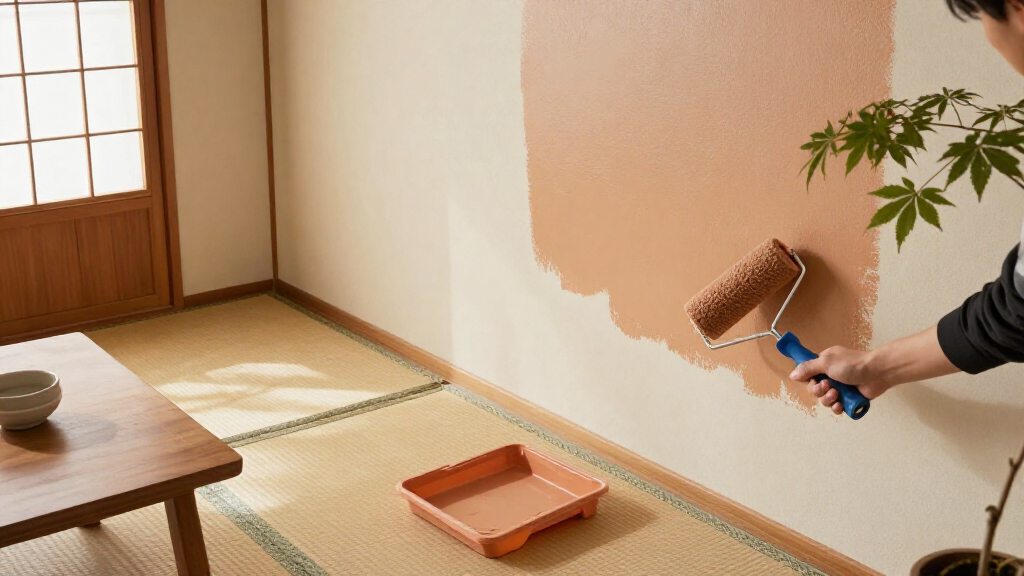
The guide also stresses that the colors are not fixed paint formulas. Kloeden says kyō-sabi refers to clay whose color can vary, while traditional tsuchikabe mixes local clay with chopped straw and sand. She recommends matte paint, limewash or clay plaster for surface texture, saying these finishes can make color shift across a wall as light changes.
How Undertones Change a Room
The advice gives readers a practical way to choose neutrals when a room feels stark: look beyond the color name and check its undertone in the room’s actual light. A gray with green in it, for example, may feel different from a gray with a blue cast, while a tea-colored off-white may appear creamier under daylight and browner by lamplight, according to Kloeden.
That distinction matters particularly in minimalist interiors, where there are fewer furnishings and textiles to balance the walls. The recommendations are not a guarantee that a color will make every room feel warmer; room orientation, lighting, finish and surrounding materials all affect the result. The article’s value is as a set of references for testing colors, rather than a universal paint prescription.
Products Worth Considering

EGO POWER+ NEXUS 1400W Portable Power Station with Two 56V 6.0Ah Batteries and Charger

Greenworks 80V 21-Inch Self-Propelled Lawn Mower with 4.0 Ah Battery and Charger

EGO POWER+ 21-Inch Single-Stage Snow Blower with Two 4.0Ah Batteries and 320W Charger
As an affiliate, we earn on qualifying purchases.
Five References, Not Fixed Formulas
The names in the guide describe materials and cultural color references as well as visual shades. Kloeden connects susutake-iro to bamboo darkened by smoke in an old thatched farmhouse, and shiracha to a cup of white tea. She links rikyū-nezu to tea master Sen no Rikyū and his taste for subdued color. These descriptions help explain the palette, but they do not establish standardized paint specifications.
For kyō-sabi, the report identifies clay from Fukakusa in southern Kyoto, traditionally used as a final coat; it says a room at Shūsui-tei, a pavilion in the Imperial Palace gardens, is finished in the material. Tsuchikabe refers to a clay wall mixture, with juraku clay identified as a well-known Kyoto variety. The article presents the named paint products as similar colors, not exact reproductions of traditional materials.
“The Japanese wall colors that warm a minimalist room are all earth colors, and none of them have blue in them.”
— Yoko Kloeden, interior designer, as quoted by Livingetc
Color Depends on Light and Finish
The source does not provide standardized color codes, paint-test data or a method for matching the traditional references exactly. It also does not identify the article’s publication date. The named retail paints are presented as close or similar options, and their appearance may differ by manufacturer, surface, application and lighting.
Kloeden’s statements about warmth describe design judgment rather than a controlled comparison. The guide does not establish that these colors will make every room feel warmer, nor does it quantify how much a particular undertone changes a room’s appearance. Readers should test samples under daylight and evening lighting before choosing a finish or painting a full room.
Test Samples in Room Light
The source outlines no product launch, formal color standard or follow-up announcement. For readers considering the palette, the practical next step is to compare paint samples on the intended walls and observe them at different times of day. Kloeden’s recommendations point to matte, limewash or clay-plaster finishes for added surface variation, but the article does not specify application requirements or costs.
Any choice should be checked against the room’s existing materials and lighting rather than selected from a color name alone. The guide’s commercial paint suggestions are starting points; it remains unclear how closely each product matches the traditional material it references.
Key Questions
Which five Japanese wall colors does the guide feature?
It features susutake-iro, shiracha, rikyū-nezu, kyō-sabi and tsuchikabe. The names refer to color traditions or materials, not necessarily standardized paint shades.
What makes these colors feel warmer, according to the designer?
Yoko Kloeden says the palette favors earth colors with yellow, red or green undertones and avoids blue. That is her design guidance; the perceived effect can vary with lighting and other room materials.
Are the suggested retail paints exact matches?
No. Livingetc lists commercial paints as similar or close options. The source does not provide color codes or evidence that the products exactly reproduce the traditional materials.
How should I check a color before painting?
Test a sample on the intended wall and view it in both daylight and lamplight. The guide says some colors change in appearance under different lighting, and it does not claim one shade will suit every room.
Source: livingetc.com