
TL;DR

Get decor and gifts delivered free with Prime
- Fast, free delivery on millions of items
- Prime Video, Amazon Music and more included
- Member-only deals all year
This article offers a simple scope and sequence for homeschooling parents to teach kids time-telling skills. It breaks down learning stages, highlights recent trends, and provides practical tips for engaging, effective lessons.
Imagine your child confidently reading an analog clock at the breakfast table or setting a digital alarm for bedtime. Teaching time-telling isn’t just about numbers; it’s about giving kids a vital life skill. But where do you start? How do you make it manageable and fun? That’s where a simple, well-structured scope and sequence can make all the difference.
This guide walks you through a practical, step-by-step curriculum designed for homeschooling families. You’ll learn how to break down the skill into small, achievable milestones, incorporate engaging activities, and adapt lessons to your child’s pace. Whether you’re new to teaching or looking for a fresh approach, this overview helps you build confidence and keep learning light and lively.
Break time-telling skills into clear stages: from recognizing clock faces to calculating elapsed time.
Use a simple, flexible sequence that gradually introduces more complex concepts, building confidence.
Incorporate real-life activities and games to make learning engaging and memorable.
Start with analog clocks for a deeper understanding, then add digital clock skills as confidence grows.
Consistency and daily practice turn new skills into second nature—a key to mastery.
Homeschool learning roadmap
Time-Telling, One Small Step at a Time
A simple scope and sequence for moving from clock-face recognition to confident real-life time calculations—without overwhelm, rigid pacing, or marathon lessons.
The six-stage learning ladder
Each skill depends on the one before it. Stay at a stage until your child can explain the idea, demonstrate it, and use it during an ordinary routine.
Meet the clock face
Identify the circle, numerals, center point, hour hand, and minute hand. Compare the hands by length and purpose.
Recognize + nameRead the hour hand
Practice times such as 1:00 and 7:00. Connect each whole hour to meals, lessons, play, and bedtime.
Large units firstHalf and quarter hours
Divide the face into halves and quarters. Use “past” and “to” language alongside familiar daily events.
Spatial reasoningCount around by fives
Link each numeral to five-minute jumps, then progress toward individual minutes when skip-counting feels secure.
5, 10, 15, 20…Add digital notation
Match analog models to digital displays. Introduce the colon and discuss AM/PM through morning and evening routines.
Analog ↔ digitalCalculate elapsed time
Find durations, missing start times, and end times. Use timelines, schedules, timers, and short real-life problems.
Reason + calculateA progression that protects confidence
Move from concrete objects to symbols, and from larger units to smaller ones. Review earlier skills inside every new activity.
Use a flexible mastery loop: model the skill, practice together, try it independently, apply it in daily life, and revisit it later. Many children develop basic proficiency within a few weeks to months of consistent practice.
Analog first, digital next
Digital clocks are quick to read, but analog clocks make the passage and proportion of time visible. Pairing both formats creates stronger time literacy.
| Aspect | Analog clocks | Digital clocks |
|---|---|---|
| Visual layout | Circular face with moving hands | Numbers displayed in a row |
| Learning focus | Position, proportion, hours, and minutes | Direct recognition and notation |
| Shows time passing | ✓ Strong visual model | ✗ Limited visual cues |
| Quick recognition | ~ Requires interpretation | ✓ Read directly |
| Best curriculum role | Start here for conceptual depth | Add after the analog foundation |
| Useful practice | Move hands, partition the face, estimate duration | Set alarms, read schedules, match equivalent times |
Recommended bridge: build a time on a movable analog clock → say it aloud → write the matching digital notation.
Let mastery—not the calendar—set the pace
Early exposure can begin around ages five or six, while time-telling mastery commonly develops between ages six and eight. These are guideposts, not deadlines.
Conceptual complexity by stage
A relative curriculum map—not a test score or fixed timetable.
Typical learning window
Exposure may begin earlier; fluency grows through repeated real-life use.
Readiness signs: recognizes numerals, counts by fives with support, understands before/after, and shows interest in schedules or clocks.
Turn everyday moments into practice
Short, playful encounters build fluency more naturally than occasional long lessons. Choose activities that let the child touch, say, match, and use time.
Move real hands
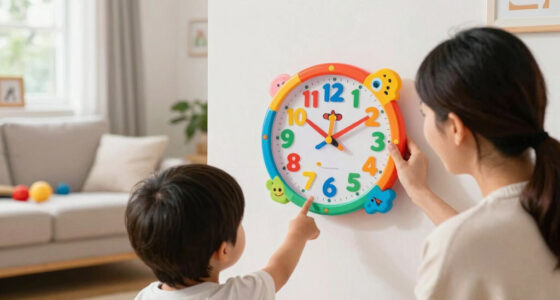
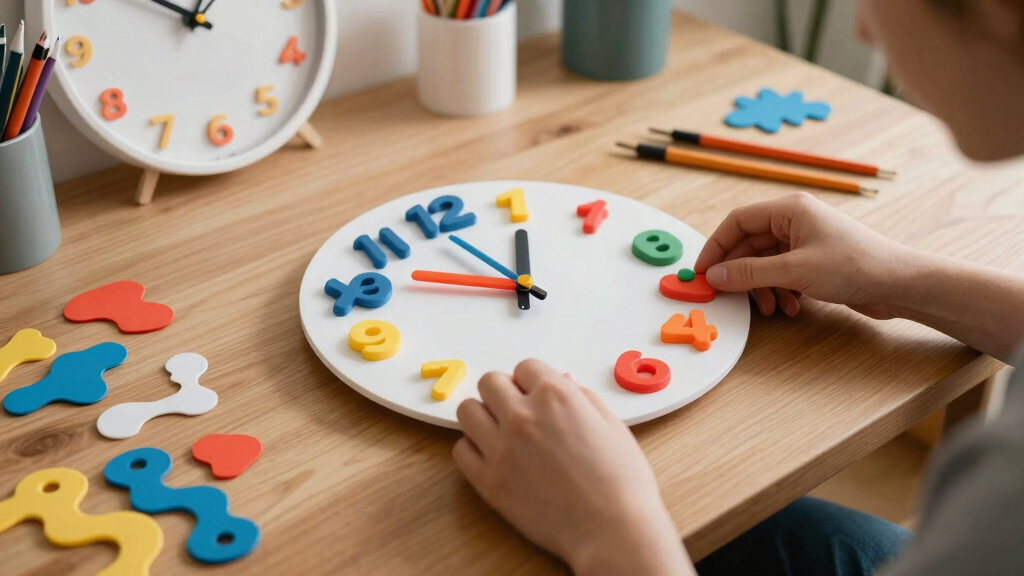
Use a teaching clock or paper model. Ask your child to build snack time, lesson time, and bedtime.
Match the formats
Pair analog clock cards with digital time cards, then reverse the game and let the child quiz you.
Tell time stories
Narrate a short day: “At 3:00 we eat a snack; 30 minutes later we walk the dog.”
Run timer challenges
Estimate and measure how long familiar tasks take, then compare the estimate with the result.
Build a daily schedule
Let your child place times beside meals, reading, outdoor play, chores, and evening routines.
Use flexible review
Mix one familiar prompt with one new challenge so progress feels secure and manageable.
The simple weekly formula
- Keep lessons short and frequent
- Review before adding complexity
- Use analog clocks as the foundation
- Connect every skill to a routine
- Invite the child to explain thinking
- Pause when confusion replaces curiosity
What Are the Key Stages in Teaching Kids to Tell Time?
Teaching kids to tell time works best when broken into clear, manageable steps. Starting with the basics, then gradually increasing complexity, helps prevent overwhelm. The main stages include:
- Introducing the clock face: Recognize the numbers, the circle, and the hands.
- Reading hours: Understanding the hour hand and telling the hour.
- Half-hours and quarter-hours: Recognize when the hands point to half or quarter marks.
- Minutes: Learning to read the minute hand and understand minute increments.
- Digital clocks: Transitioning skills to digital formats.
- Elapsed time: Calculating durations and understanding time intervals.
Why these stages matter is because each builds on the previous one, creating a scaffolded learning experience. Recognizing the clock face is foundational because it introduces children to the visual layout and concept of passing time. Moving to hours and then minutes allows them to understand the relationship between different time units. Transitioning to digital clocks reflects real-world usage, but doing so too early can cause confusion because digital formats lack the visual cues of analog clocks. Mastering elapsed time is more advanced, involving problem-solving and arithmetic, which consolidates their understanding of duration and sequencing. Each stage’s success influences the next, making a deep grasp at each step essential for long-term mastery.
analog clock teaching clock for kids
As an affiliate, we earn on qualifying purchases.
As an affiliate, we earn on qualifying purchases.
How to Structure Your Curriculum for Easy Progression
A straightforward scope and sequence keeps your lessons organized and flexible. Here’s a typical progression, along with why this order is important:
- Start with the clock face: Use paper clocks or real analog clocks to familiarize your child with the dial, numbers, and hands. This initial step is crucial because it establishes the visual foundation of time-telling. Understanding the layout helps children interpret what the hands represent and prepares them for more complex concepts.
- Introduce the hour hand: Practice reading times like 1:00, 2:00, and so on. Focusing on the hour hand first simplifies the process, as children can grasp the passage of time in larger chunks before tackling minutes.
- Practice half-hour and quarter-hour intervals: Use visual cues and storytelling to reinforce concepts. This step helps children see the clock as a whole, understanding that the clock is divided into segments that relate to familiar routines, making abstract concepts more concrete.
- Move to minutes: Teach how each number on the clock represents five-minute jumps. This transition is important because it connects the visual positions of the hands with real-time increments, enabling children to read times like 3:15 or 7:45 more accurately.
- Transition to digital clocks: Show how the same times look in digital format. This step is essential because digital clocks are ubiquitous in daily life, and understanding both formats enhances overall time literacy.
- Apply in real life: Set timers, read clocks in daily routines, and play time-matching games. Practical application reinforces learning and helps children see the relevance of their new skills.
Why this order works is because it gradually increases complexity while reinforcing previous knowledge. Starting with the visual layout develops spatial understanding, which is critical for accurate reading. Moving from larger units (hours) to smaller ones (minutes) helps prevent cognitive overload. Integrating real-life examples solidifies understanding and demonstrates the importance of these skills beyond the classroom. Adapting the pace based on your child’s comfort ensures they build confidence without frustration, making learning both effective and enjoyable.
digital clock learning toy for children
As an affiliate, we earn on qualifying purchases.
As an affiliate, we earn on qualifying purchases.
Comparison: Analog vs Digital Time-Telling – Which Matters First?
| Aspect | Analog Clocks | Digital Clocks |
|---|---|---|
| Visual Layout | Circle face with hands pointing to numbers | Numbers displayed in a row, usually with AM/PM |
| Learning Focus | Understanding the position of hands and reading hours/minutes | Reading numbers directly, easier for quick recognition |
| Best Starting Point | Yes, helps grasp the concept of passing time | Useful for understanding digital time, especially in daily routines |
| Transition Tips | Start with analog, then introduce digital formats | Introduce analog after basic digital skills are mastered |
Research suggests that beginning with analog clocks helps children develop a deeper understanding of passing time because they see the continuous movement of the hands, which visually demonstrates how time flows. Digital clocks, while easier for quick reading, lack this visual progression and can lead to misconceptions about how time passes. For example, children might recognize 3:30 instantly but struggle to understand the transition from 3:29 to 3:30 on an analog clock. Conversely, starting with digital clocks can make initial recognition easier but might delay understanding of the passing of time as a continuous process. The tradeoff is between immediate recognition and conceptual depth; a balanced approach often involves beginning with analog for foundational understanding and then adding digital to prepare for modern contexts. Understanding this helps parents decide which to introduce first based on their child’s learning style and daily needs.
kids time-telling educational game
As an affiliate, we earn on qualifying purchases.
As an affiliate, we earn on qualifying purchases.
Top Tips to Keep Learning Fun and Engaging
Kids learn best when they’re having fun. Here are some practical ideas to turn time-telling into a game that keeps children motivated and reinforces their understanding:
- Use real clocks: Let them move the hands themselves or set times for daily activities. This tactile experience helps solidify their understanding of how the hands relate to specific times and makes abstract concepts concrete.
- Play matching games: Match digital times to the analog clock or vice versa. Such activities develop flexibility in recognizing different formats and deepen comprehension of the relationship between digital and analog representations.
- Integrate storytelling: “It’s 3 o’clock—time for snack!” Make it part of your daily routine. Connecting time to familiar routines helps children see the relevance and encourages them to apply their skills in real contexts.
- Introduce timed challenges: See how many times they can read the clock correctly in a minute. This gamification adds excitement and promotes quick, confident reading, which is essential for practical use.
- Reward progress: Sticker charts or small prizes motivate steady practice. Reinforcement builds positive associations with learning and encourages continued effort.
For example, turning lunchtime into a time-telling challenge—“Can you set the clock to 12:30?”—not only makes the activity fun but also ties learning directly to daily life. The sensory experience of physically moving the clock hands helps children internalize the concept more effectively than passive observation alone. These engaging approaches foster a love of learning and help develop both accuracy and speed in reading clocks, laying a strong foundation for future time management skills.
homeschool time-telling curriculum resources
As an affiliate, we earn on qualifying purchases.
As an affiliate, we earn on qualifying purchases.
Why Consistency and Real-Life Practice Are Key
Consistent practice turns new skills into second nature by reinforcing neural pathways and building confidence. When children regularly revisit clocks and incorporate time-telling into daily routines, they begin to internalize the concept more deeply. For instance, asking your child to read the clock when waking up or before bed turns passive recognition into active understanding. This habitual exposure helps solidify the connection between the abstract concept of time and its practical application, making it more intuitive over time.
According to Alphabet Clock, frequent real-world interactions with clocks—such as setting timers or reading the time during daily activities—accelerate mastery because they contextualize learning and make it relevant. These moments serve as natural reinforcement, reducing the need for prolonged drills and increasing retention. Patience and positive reinforcement are vital; celebrating small wins encourages perseverance. Remember, mastery isn’t just about knowing how to read a clock but understanding its importance in organizing daily life. Consistent, practical exposure ensures that children develop a reliable, lifelong skill that supports independence and time management skills as they grow.
Frequently Asked Questions
At what age should my child start learning to tell time?
Most children begin around age 5-6, but early exposure can be beneficial. Some kids show readiness as early as age 4, especially if they enjoy puzzles or counting. Watch for curiosity and comfort with numbers to gauge when to start.
How long does it usually take to teach time-telling skills?
It varies, but with consistent practice, many children master basic skills within a few weeks to a month. More advanced concepts, like elapsed time, may take longer. Keep lessons short and frequent to maintain engagement.
What tools are best for teaching clock reading?
Physical clocks—both analog with moving hands and digital displays—are essential. Printable worksheets, educational apps, and interactive games also help reinforce concepts. Incorporate a variety of tools to cater to different learning styles.
How can I make learning time-telling more fun?
Turn it into a game—use real clocks, challenge your child to set specific times, or relate times to daily activities like meals and bedtime. Rewards, storytelling, and hands-on activities keep the process lively and memorable.
Is a formal curriculum necessary for teaching time?
While informal teaching works, a simple, structured curriculum offers a clear roadmap, ensuring all key skills are covered. It makes planning easier and provides a sense of progress, especially for parents juggling multiple subjects.
Conclusion
Teaching kids to tell time doesn’t need to be complicated. A simple, step-by-step approach, combined with hands-on activities and regular practice, turns learning into a fun daily habit. With patience and creativity, you’ll watch your child confidently read clocks in no time.
Remember: the goal isn’t just about reading a clock; it’s about giving them a lifelong skill that helps organize their day and fosters independence. Put your plan into action today—small steps lead to big mastery.
Halloween Picks
halloween
As an affiliate, we earn on qualifying purchases.