TL;DR

Get decor and gifts delivered free with Prime
- Fast, free delivery on millions of items
- Prime Video, Amazon Music and more included
- Member-only deals all year
Word clocks show time in five-minute steps to simplify display, reduce costs, and improve readability. Recent advances blend this classic approach with digital precision, making them both charming and practical for everyday use.
Ever glance at a wall and see a clock spelled out in words, telling you it’s “quarter past three”? That’s a word clock in action. But why do so many of these clocks stick to five-minute steps instead of showing every minute? It’s a smart, practical choice that balances clear reading with sleek design.
In this guide, you’ll learn exactly why five-minute intervals are the sweet spot for these clocks, how recent tech is pushing those boundaries, and what it means for your home decor or teaching tools. Whether you’re a design lover or just curious about how these clocks work, this will shed light on the simple genius behind the five-minute rule.
Most word clocks use five-minute steps because they simplify the display and reduce costs.
Technical constraints limit the number of display elements, making five-minute intervals practical.
Recent tech developments allow hybrid clocks that combine aesthetic design with precise digital timekeeping.
Choosing between a pure five-minute clock and a hybrid depends on your need for accuracy versus style.
For casual use and decor, five-minute steps are usually more than enough; for exact time, look for smart features.
What Makes Five-Minute Steps So Perfect for Word Clocks?
Word clocks are built around a matrix of words or LEDs that spell out the time. Showing every single minute—like “3:07″—would mean adding dozens of extra words or LEDs, making the display cluttered and harder to read. Instead, showing time in five-minute chunks keeps things clean and easy.
Imagine a wall-mounted clock that spells out “It’s quarter past three” or “It’s ten minutes to four.” That’s enough to get the gist without overwhelming the eye or the design. Plus, most people find an approximate time just as useful—especially in casual settings or when checking if you’re running late.
According to Alphabet Clock, limiting display options to five-minute intervals cuts the number of words needed from nearly 60 for every minute to just around 12. This reduction saves costs, power, and simplifies assembly, making these clocks more accessible and durable.
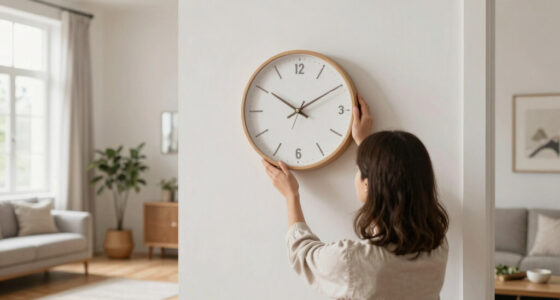
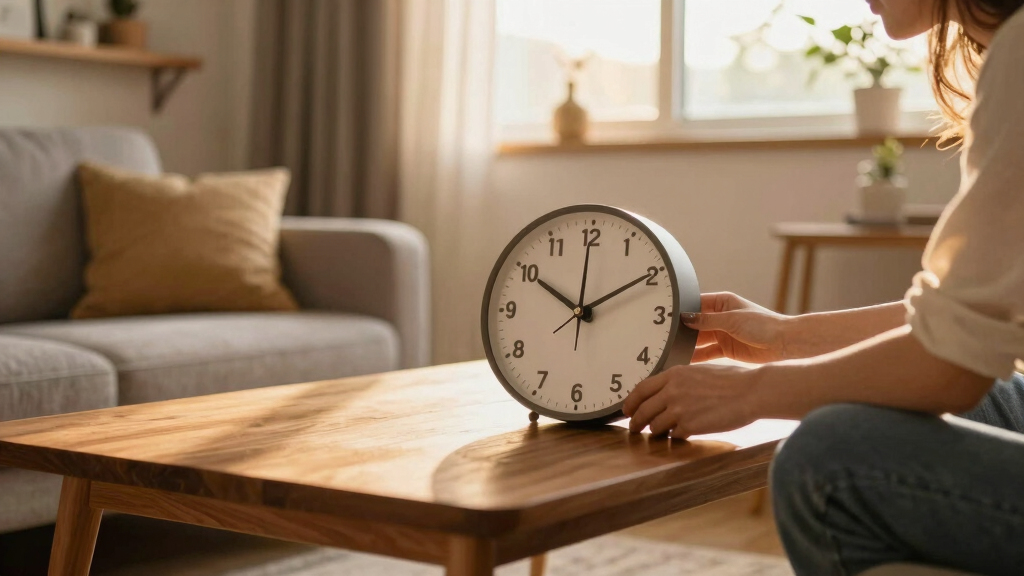
word clock with five-minute intervals
As an affiliate, we earn on qualifying purchases.
As an affiliate, we earn on qualifying purchases.
How Technical Limits Shape the Five-Minute Display
The core reason behind five-minute steps boils down to technical constraints. Most word clocks rely on a grid of LEDs or a matrix of words. Displaying each minute would require a much larger array—think dozens more LEDs—making the device bulkier, more expensive, and more power-hungry.
For example, a typical word clock might use a 10×11 grid of LEDs. To show every minute, you’d need at least 60 different indicators, which would require a bigger, more complex matrix. Instead, five-minute steps mean you only need 12 options—”five past,” “ten past,” “quarter past,” etc.—keeping the design sleek.
Recent developments—like microcontrollers and smart tech—allow some clocks to toggle between five-minute steps and more precise displays. According to Alphabet Clock, these hybrid models blend the charm of classic designs with the accuracy of digital readouts or app controls, giving users the best of both worlds.
As an affiliate, we earn on qualifying purchases.
Comparison Table: Five-Minute Step Clocks vs. Exact Minute Clocks
| Feature | Five-Minute Step Clocks | Exact Minute Clocks |
|---|---|---|
| Display Elements | Minimal, usually 12 options | All 60 minutes, more complex |
| Size & Cost | Compact, affordable | Larger, costlier |
| Readability | High, quick glance | Very detailed, but can be cluttered |
| Power Consumption | Lower | Higher |
| Use Case | Casual, decorative, teaching | Precise timekeeping, alarms |
As an affiliate, we earn on qualifying purchases.
What Recent Tech Is Doing to Change the Game
Latest innovations are pushing the boundaries of what a word clock can do. Hybrid clocks now combine the classic five-minute display with digital screens or app controls that show the exact minute. This way, you get the aesthetic charm with precision when you need it.
Imagine a modern wall clock that spells out “It’s ten past three” but also syncs with your smartphone to give you the exact second. According to Alphabet Clock, these smart features are becoming more common, making the five-minute display just one part of a smarter, more flexible system.
These advancements mean you can enjoy the design simplicity without sacrificing accuracy. They’re perfect for tech-savvy homes or anyone who wants a stylish clock that keeps up with their busy schedule.
As an affiliate, we earn on qualifying purchases.
How to Pick the Perfect Word Clock for Your Space
Choosing the right word clock depends on how you want to use it. If you love a clean, minimal look that’s easy to read from across the room, a five-minute step clock is perfect. For more precision, consider a hybrid model or a digital version.
Here are some tips:
- Decide if you want a purely aesthetic piece or functional accuracy.
- Check if the clock offers customization, like switching between five-minute and exact minutes.
- Think about the size and placement—large clocks work well in open living rooms, smaller ones suit bedrooms or offices.
- Look for features like adjustable brightness or smart home integration.
For example, a friend of mine chose a sleek word clock for her living room. She loves how it creates a cozy, modern vibe, even if she only gets an approximate time when she’s rushing out the door.
Conclusion
In the end, five-minute steps are a clever design shortcut that balances clarity with simplicity. They turn telling time into a quick, visual experience that fits perfectly into modern living spaces.
As technology advances, these clocks are becoming smarter without losing their charm. So if you’re after a clock that’s both beautiful and practical, a five-minute word clock might just be your new favorite wall feature.
Halloween Picks
halloween
As an affiliate, we earn on qualifying purchases.