
TL;DR

Get decor and gifts delivered free with Prime
- Fast, free delivery on millions of items
- Prime Video, Amazon Music and more included
- Member-only deals all year
Choosing the right wall clock for Scandinavian interiors means prioritizing simplicity, natural materials, and proportion. A well-selected clock can serve as both functional art and a subtle accent, enhancing your space without clutter.
Imagine walking into a Scandinavian-inspired room — light, airy, and calm. The right wall clock doesn’t just tell time; it becomes a quiet, stylish presence that harmonizes with your space. But how do you pick a clock that complements that signature minimalist vibe?
This guide is your practical companion, showing you how to match clocks to Scandinavian interiors without sacrificing function or style. From choosing materials to perfect placement, you’ll learn how a clock can elevate your home’s aesthetic effortlessly.
Choose clocks made from natural wood or matte metals to match Scandinavian minimalism.
Keep size proportional—about 1/4 to 1/3 of the wall width—and hang at eye level.
Stick to neutral hues like whites, grays, and soft pastels for seamless integration.
Opt for clocks with clean lines, minimal numerals, or no numerals for a clutter-free look.
Place your clock where it can serve as both a functional piece and a subtle visual anchor.
Why Simplicity and Natural Materials Are Key
Scandinavian design thrives on simplicity — clean lines, uncluttered spaces, and a focus on natural materials. When choosing a wall clock, look for pieces that echo this ethos. Think warm wood finishes like oak or pine, matte metals, or clocks with no fuss or excess ornamentation.
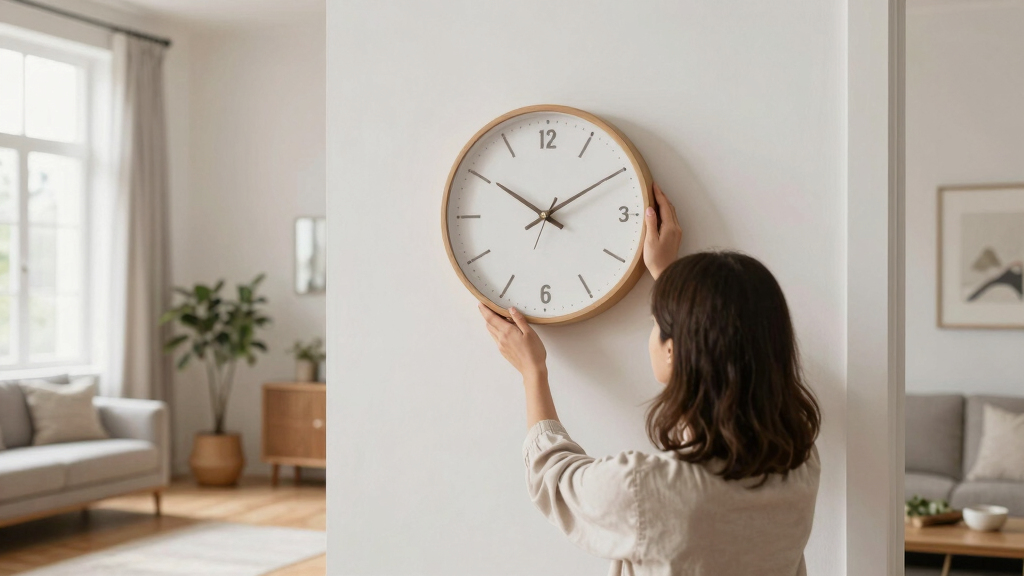
For example, a clock with a smooth wooden face and slim hands blends seamlessly above a sofa or in a kitchen corner, adding warmth without overwhelming the space.
Research shows that natural finishes evoke a sense of calm and comfort, perfect for the Scandinavian aesthetic.
Scandinavian minimalist wall clock
As an affiliate, we earn on qualifying purchases.
As an affiliate, we earn on qualifying purchases.
How to Choose the Perfect Size and Placement
Matching a wall clock to Scandinavian interiors also means considering size and placement. A clock that’s too small can get lost in the space, diminishing its visual impact, while an oversized clock might dominate and disrupt the room’s harmony. Striking the right balance involves understanding proportion—aim for a size that complements the wall and furniture without overwhelming the space. Typically, a clock that is about 1/4 to 1/3 the width of the wall area it’s on ensures it commands enough attention without becoming intrusive.
Placement is equally critical. Hanging your clock at eye level (roughly 57-60 inches from the floor) ensures it’s easily visible and creates a natural focal point. Positioning it centrally on a wall, such as above a sofa or dining table, helps maintain visual balance and emphasizes the clock as an intentional design element rather than an afterthought. Proper sizing and placement are crucial because they influence the visual flow and harmony of the room; a poorly scaled or misplaced clock can unintentionally disrupt the minimalist aesthetic, making the space feel cluttered or unbalanced. Achieving this balance requires understanding your room’s proportions and selecting a clock that complements rather than competes with existing decor.
natural wood wall clock for living room
As an affiliate, we earn on qualifying purchases.
As an affiliate, we earn on qualifying purchases.
Matching Color Palettes for a Cohesive Look
Colors play a pivotal role in integrating your clock into the Scandinavian palette. The goal is to create harmony and continuity, so sticking to neutral shades like whites, soft grays, muted pastels, or natural wood tones is essential. These colors reflect the typical Scandinavian emphasis on light and airiness, making spaces feel more open and serene.
For instance, a clock with a white face and light oak accents against a pale gray wall reinforces a sense of understated elegance and simplicity. Conversely, choosing a clock with a matte black finish can add a modern edge while still maintaining a minimalist aesthetic, especially when paired with white or neutral backgrounds. Avoid bright or overly vibrant colors, as they can disrupt the tranquil, cohesive feel characteristic of Scandinavian design. Instead, subtle tonal variations and monochromatic schemes allow your clock to blend seamlessly into the overall aesthetic, enhancing the space’s calm and balanced atmosphere. The right color choices are about more than aesthetics—they influence how the space feels. A cohesive palette creates a sense of calm, making your home inviting and relaxing, while mismatched or overly vibrant hues can create visual noise that detracts from the minimalist ethos.
As an affiliate, we earn on qualifying purchases.
Comparison Table: Material & Style Options for Scandinavian Clocks
| Material | Style Features | Best For |
|---|---|---|
| Natural Wood | Warm, organic texture, minimal design, subtle grain | Creating a cozy, earthy feel |
| Matte Metal | Sleek, modern lines, understated finish | Adding a contemporary edge |
| Minimal Plastic | Clean look, lightweight, often with simple shapes | Budget-friendly, versatile accents |
| Mixed Materials | Combines wood and metal, adds texture contrast | Modern Scandinavian with a twist |
As an affiliate, we earn on qualifying purchases.
How to Maintain the Minimal Look While Adding a Clock
Maintaining the minimal aesthetic in Scandinavian interiors requires careful selection of clocks that enhance rather than clutter. Clocks with busy faces, excessive numbers, or ornate details can disrupt the calm. Instead, opt for designs that feature clean numerals or omit numerals altogether, emphasizing simplicity and clarity.
A clock with a plain white face, slim black hands, and no numerals exemplifies this minimal approach. The absence of unnecessary elements ensures it blends seamlessly into the environment, serving both functional and aesthetic purposes without drawing undue attention. This approach underscores the importance of restraint—every element should contribute to the overall harmony, not detract from it. Regularly inspecting your clock for dust or fingerprints and cleaning it gently can also preserve its sleek, uncluttered appearance, reinforcing the minimalist ethos.
Keep in mind that less is more. Your clock should act as a subtle visual anchor that complements the space, rather than competing with other decor elements. Regular cleaning and dusting preserve its understated elegance and prevent clutter from accumulating.
Digital Clocks and Smart Features — Are They Scandinavian-Style?
Digital clocks can certainly fit within Scandinavian interiors if they adhere to core principles of minimalism. Look for sleek, slim-profile digital clocks with simple, uncluttered displays and neutral colors. The key is to choose models that prioritize form as much as function, avoiding overly complex interfaces or bright, distracting displays.
Smart clocks with silent movement or discreet digital readouts can add modern convenience without breaking the aesthetic. These devices should have a clean, understated appearance—think matte finishes, muted tones, and minimal branding. For example, a matte black digital clock with a simple, low-profile design mounted against a white wall maintains the minimalist ethos while offering tech-savvy features. The emphasis is on harmony: technology should integrate seamlessly, enhancing the space rather than dominating it. When selecting digital or smart clocks, consider how their design complements your existing decor and whether their features add value without cluttering the visual space. The goal is to integrate technology subtly, so it feels like a natural extension of your minimalist aesthetic rather than an intrusive element.
Where to Place Your Wall Clock for Maximum Impact
In a Scandinavian home, the wall clock often becomes a focal point on a main wall, serving both functional and aesthetic purposes. Ideal locations include above the sofa, on a feature wall, or above a dining area. The goal is to create a visual anchor that naturally draws the eye and balances the room’s proportions.
For example, hanging a large wooden clock above a neutral-colored sofa not only provides practical time-telling but also creates a warm, inviting centerpiece. Ensuring the clock is at eye level (roughly 57-60 inches from the floor) maximizes readability and maintains harmony with the surrounding decor. Additionally, consider the natural light; a matte-finish clock won’t reflect glare and will preserve the tranquil ambiance of the space. Thoughtful placement is essential because it influences how the clock integrates with other elements and how it impacts the overall balance of the room. An oversized or poorly positioned clock can disrupt the minimalist flow, making the space feel cluttered or unbalanced. Carefully selecting a location that emphasizes symmetry and proportion enhances the overall cohesiveness and understated elegance of your Scandinavian interior.
Frequently Asked Questions
Measure your wall space first. Aim for a clock that’s about 1/4 to 1/3 of the wall’s width. It should be large enough to be a focal point but not overpower the room’s airy feel.
Are wood clocks better than metal for Scandinavian decor?
Wood clocks bring warmth and texture, fitting perfectly with the natural vibe of Scandinavian interiors. Metal clocks can be sleek and modern, but choose matte finishes to avoid harsh contrasts.Can I use a digital clock in a Scandinavian space?
Yes, if it features a minimalist design—think slim profiles, neutral colors, and simple displays. Modern digital clocks can blend in beautifully when they follow the same clean, understated principles.Where should I hang my clock in a small Scandinavian kitchen?
Place it above a central area like the dining table or on a blank wall where it can serve as both decor and a practical tool. Keep it at eye level for easy reading.How do I keep my clock looking fresh without clashing with my decor?
Stick to neutral tones and simple designs. Avoid overly ornate or colorful clocks. Regular dusting and gentle cleaning with a soft cloth will keep the finish looking pristine.Conclusion
When matching a wall clock to Scandinavian interiors, simplicity and natural materials are your best allies. Think clean, warm, and understated—your clock becomes a quiet partner in creating calm, cohesive spaces.
Remember, a well-chosen clock isn’t just about telling time; it’s about enhancing your home’s quiet elegance. So, pick one that speaks to your style and let it quietly anchor your space with understated charm.
Halloween Picks
halloween
As an affiliate, we earn on qualifying purchases.