
TL;DR

Get decor and gifts delivered free with Prime
- Fast, free delivery on millions of items
- Prime Video, Amazon Music and more included
- Member-only deals all year
To hang a heavy wall clock without damage, choose the right hardware like toggle bolts or French cleats, carefully assess your wall type, and use proper installation techniques. Damage-free solutions like adhesive strips work for lighter loads but have weight limits. Proper planning saves you time and keeps your walls pristine.
Imagine a beautiful, hefty wall clock — the kind that adds a statement to your living room or a touch of whimsy in a kid’s playroom. Now picture trying to hang it without leaving behind a trail of holes or cracks. That’s the challenge. The good news? With the right approach, you can mount your heavy clock securely and keep your walls looking pristine.
This guide will walk you through smart techniques and the best hardware options to prevent damage, whether you’re working with drywall, plaster, or brick. You’ll learn how to pick the perfect spot, choose the right tools, and avoid common pitfalls—saving you time, frustration, and wall repair bills.
Always match your hardware to your wall type and clock weight. For drywall over 20 pounds, toggle bolts are the safest bet.
French cleats offer a damage-free, secure method for heavy clocks—distribute weight evenly and avoid multiple small holes.
Use a level and precise markings for straight, professional-looking hangs that stay put.
Damage-free mounting options like Command strips are great for lighter clocks but have weight limits—check the specs.
Pre-drill holes and insert the right anchors for a secure, damage-free install that lasts for years.
Pick the Perfect Spot: Support and Visibility Matter
Before you even grab a hammer or drill, decide where your clock will shine. A heavy clock needs a wall that can handle its weight—think sturdy drywall, plaster, or brick. Avoid spots that get lots of sunlight or are near moisture, which can weaken mounting points over time.
For example, a 12-pound clock hung on a weak drywall corner might sag or cause cracks. But the same clock mounted on a solid brick wall with proper anchors will stay put for years. Also, consider what you see every day—centered at eye level makes the clock both beautiful and functional.
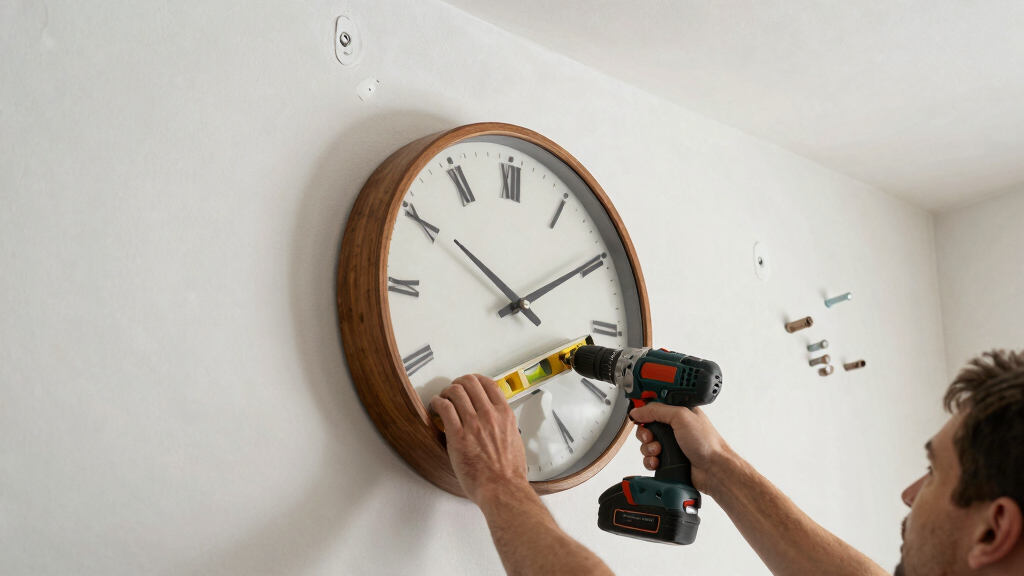
Mark your spot with a pencil, using a level to ensure it’s perfectly straight. The key is precision—once you start drilling, mistakes can be costly or damaging.
heavy wall clock mounting hardware
As an affiliate, we earn on qualifying purchases.
As an affiliate, we earn on qualifying purchases.
Choose Hardware That Can Handle Heavy Loads Without Damage
Not all hooks are created equal. For heavy clocks, standard nails or small picture hooks won’t cut it. Instead, opt for hardware designed to support weight and minimize wall damage.
Here’s what works best:
- Toggle bolts: Expand behind the wall for secure support, ideal for drywall over 20 pounds. They distribute weight over a larger area, reducing stress on any single point, which is crucial for preventing wall cracks or pull-outs.
- Molly bolts: Provide a strong anchor inside drywall and can be removed later with minimal damage. Their design allows for a more secure hold, offering a balance between support and wall preservation, especially if you need to move the clock later.
- Masonry anchors: Perfect for brick or concrete walls, especially if you want a long-lasting hold. They create a solid connection that withstands the weight without loosening or damaging the surface.
- French cleats: Distribute weight evenly across a broad surface, significantly reducing localized stress that can cause cracks or tears. They’re especially valuable for very heavy clocks because they spread out the load, making the mounting more stable and less damaging.
Imagine hanging a 15-pound clock with a toggle bolt—once installed, it’s like a mini superhero holding the weight, with no large holes or cracks. Choosing the right hardware isn’t just about support; it’s about preserving the integrity of your wall and ensuring your clock stays secure over time.
As an affiliate, we earn on qualifying purchases.
Assess Your Wall Material and Use the Right Anchors
Every wall type needs a different approach. Drywall, plaster, brick, and concrete all require specific anchors to stay strong and damage-free. But understanding why this matters is key to making a good choice. Using the wrong anchors can lead to loose support, cracks, or even complete failure of the mount.
For drywall over 10 pounds, toggle bolts or molly bolts are best because they expand behind the wall, creating a secure grip that distributes stress evenly. For heavier loads, toggle bolts are especially effective—they spread the weight over a larger area, reducing the risk of wall damage like tears or cracks. When mounting on plaster, heavy-duty anchors that grip tightly without cracking are essential because plaster is more brittle.
Brick or concrete walls need masonry anchors—using a hammer drill and appropriate bits ensures clean, precise holes that won’t cause chipping or crumbling. For example, a 10-pound clock on brick can be securely mounted with a masonry anchor; this method prevents damage and provides a reliable hold.
Matching the right hardware to your wall material is like choosing the correct key for a lock—without it, everything falls apart. The right combination ensures your clock is supported safely without compromising your wall’s integrity, especially important in rental or delicate surfaces where repairs can be costly or undesirable.
French cleat wall mount for clocks
As an affiliate, we earn on qualifying purchases.
As an affiliate, we earn on qualifying purchases.
Follow a Step-by-Step Process to Secure Your Clock
- Measure and mark: Find the exact spot, mark with a pencil, and check with a level.
- Pre-drill holes: Use the right drill bit for your hardware and wall material.
- Insert anchors: Push or screw anchors into the holes, ensuring they’re flush and secure.
- Attach hardware: Screw hooks, brackets, or mounting plates into anchors.
- Hang the clock: Carefully place the clock onto the hardware, adjusting for levelness.
- Double-check: Ensure everything feels sturdy and the clock hangs straight.
Picture this: you’re like a clocksmith, carefully lining up each step, until your heavy timepiece hangs perfect and secure, with zero wall damage. The process isn’t just about following steps—it’s about understanding how each step contributes to the overall safety and integrity of your mount. Proper technique ensures that support is evenly distributed, anchors are correctly placed, and the wall isn’t compromised. Skipping or rushing steps can lead to instability or damage, especially when dealing with heavy loads. Taking your time and double-checking your work helps prevent costly mistakes and ensures your clock remains secure for years to come.
As an affiliate, we earn on qualifying purchases.
Use Damage-Free Mounting Options When You Can
Sometimes, you don’t want to drill at all. Damage-free solutions like Command strips or tension rods can work for lighter clocks, usually under 10 pounds. But understanding why these options are limited is important. They rely on adhesive strength or tension, which can weaken over time or with wall surface imperfections. For example, a 6-pound vintage clock might stay perfectly in place on a smooth wall with high-quality Command strips, but on textured or porous surfaces, adhesion can fail prematurely. Always follow the manufacturer’s instructions carefully, ensuring the surface is clean and dry before application. For heavier clocks, consider French cleats made from thin wooden strips that snap together with minimal wall impact. These systems distribute weight evenly and can be removed with little damage, making them ideal for rental spaces or delicate walls. Remember, these options are best suited for lighter loads—they’re not a substitute for proper anchors when supporting significant weight but are valuable for quick, damage-free hangs where appropriate.
Distribute Weight and Minimize Wall Damage
For truly heavy clocks, spreading out the weight is smart. Use multiple hooks or a single large mounting plate to share the load. Consider a French cleat system—it’s like a sturdy shelf bracket, but for your clock. It’s designed for heavy objects and causes minimal wall damage. Distributing weight reduces the strain on any single point, which lessens the chance of cracks, tears, or wall failure over time. For example, a 20-pound clock hung with a French cleat leaves just a few thin lines of paint or small holes, which are easy to patch later. Relying on just one nail or small hook can lead to uneven stress, increasing the risk of wall damage or the mount pulling loose. Think of it as giving your wall a balanced hug—supporting the clock securely while preserving its surface. Proper weight distribution is especially crucial in rental homes or delicate surfaces, where repair costs or aesthetic concerns matter. The goal is to ensure your clock stays safe and your wall remains intact, combining strength with gentle handling.
Frequently Asked Questions
What hardware is best for hanging a heavy wall clock on drywall?
Heavy-duty toggle bolts, molly bolts, or specialized picture hooks rated for loads over 20 pounds work best. They expand or anchor behind the wall, providing secure support without risking damage.
Can I hang a heavy clock without drilling holes?
Yes. Damage-free options like Command strips (for clocks under 10 pounds), tension rods, or French cleats allow you to hang heavy clocks with minimal wall impact—just ensure the weight is within the product’s limits.
How do I keep my clock level and secure?
Use a quality level during marking, double-check your hardware tightness, and consider mounting brackets or plates that help distribute weight evenly. Patience ensures a perfect, long-lasting hang.
What if I rent and can’t make holes?
Damage-free solutions like Command strips, tension rods, or adhesive hooks are your friends. Just verify their weight limits and wall compatibility for best results.
How much weight can heavy-duty Command strips hold?
Most heavy-duty Command strips can hold up to around 16 pounds. Always check the packaging for exact weight ratings and wall surface suitability before applying.
Conclusion
The secret to hanging a heavy clock without wall damage? Use the right hardware, assess your wall, and follow a careful step-by-step process. Think of it as giving your wall a gentle hug that keeps your clock secure and your surface pristine.
Next time you hang that gorgeous timepiece, remember: a little planning goes a long way. Your walls will thank you, and your clock will stand tall—and safe—for years to come.
Halloween Picks
halloween
As an affiliate, we earn on qualifying purchases.