
TL;DR

Get decor and gifts delivered free with Prime
- Fast, free delivery on millions of items
- Prime Video, Amazon Music and more included
- Member-only deals all year
Kids learning clocks help children understand how clock faces represent hours and minutes, often with clear numerals and hands they can move. Start with the hour hand and familiar routines, then add the minute hand, counting by fives, and digital time in short, low-pressure practice sessions.
A child can read “3:30” on a tablet and still wonder why the little hand on a kitchen clock sits between the 3 and the 4. That’s because an analog clock tells two stories at once: the hour and how far through it you are.
Kids learning clocks make those stories easier to explore with clear numbers, visible hands, and room to practice. You’ll see what features help beginners, how to teach the hands in a sensible order, and how to make time practice feel like part of the day instead of a quiz.
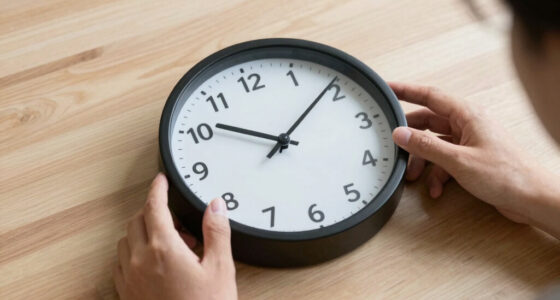
Choose a learning clock with legible numbers and hands your child can easily tell apart.
Teach the short hour hand first, then add the long minute hand and counting by fives.
Use familiar routines, such as leaving for school or eating lunch, to give clock practice a purpose.
Compare the same time on an analog clock and a digital display so your child can connect the two formats.
Keep practice short and hands-on; readiness varies more than any one age recommendation.
See why a clock face can feel like two puzzles at once
Kids learning clocks help children understand how a clock face represents both the hour and the minutes. The short hand tracks the hour, and the long hand tracks minutes around the dial. Because the short hand moves gradually, it often sits between two numbers while the minutes pass.
That double job can make the clock feel like a tiny map with two moving travelers. At 2:30, for example, the minute hand points to the 6 while the hour hand has traveled halfway from 2 toward 3. A child who expects the hour hand to jump straight from number to number may need to see the hands move to understand why.
Reading an analog clock also gives your child practice with counting by fives, halves, and quarters. Those ideas show up naturally when the minute hand reaches 3, 6, or 9. Connecting the numbers to getting dressed, lunch, or bedtime gives the practice a reason to stick.
The hour hand moves as the minutes pass; it doesn’t wait at one number and then hop to the next.
Choose a clock that makes the hands easy to read
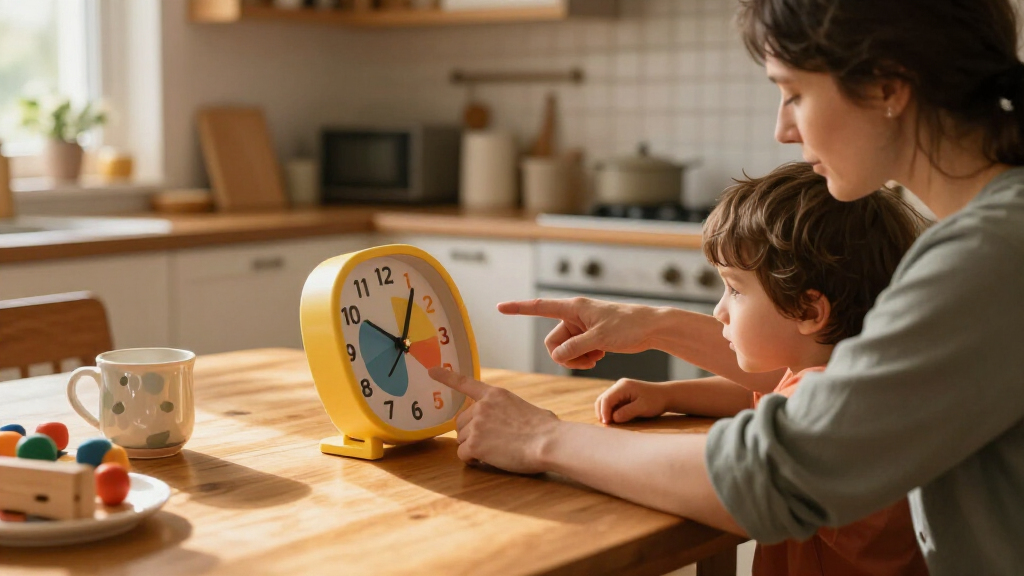
A useful learning clock has clear numerals, hands that look different from each other, and a dial that suits your child’s current skills. Some clocks let children move the hands by hand; on many teaching models, the hands connect so the hour hand moves when the minute hand turns. That link helps show how minutes affect the hour.
Minute labels around the edge can give a beginner a helpful starting point, especially when they mark five-minute intervals. Color-coded hands can also make “short hand for hours, long hand for minutes” easier to remember. Those cues support learning, though your child will still benefit from seeing the familiar clock conventions used on ordinary clocks.
Formats differ, and each has a place. A plastic teaching clock can take enthusiastic little hands, while an app may offer spoken prompts or practice questions; features vary. If you’re choosing one as a gift, pick a design your child will want to touch, and check that the hands move clearly without forcing them.
| Clock type | What it helps you teach | Best moment to use it |
|---|---|---|
| Moveable-hand teaching clock | How the hands relate as time passes | Early hands-on practice |
| Clock with minute labels | Counting minutes around the dial | Learning five-minute intervals |
| Digital clock | Reading numerals and connecting time to devices | Comparing the same time in two formats |
| App or online game | Extra practice with prompts or adjustable tasks | Short sessions alongside real-life examples |
Teach the hands in an order that feels manageable
Kids learning clocks are easiest to use when you introduce one idea at a time: start with the hour hand, then explain the minute hand, then connect the two. A familiar routine gives each new skill a real-world anchor. Try these steps for a brief practice session at home:
- Start with “o’clock.” Set the short hand to 7 and the long hand to 12. Say, “It’s 7 o’clock—time to get dressed,” if that matches your morning routine.
- Follow the hour hand. Move the clock toward 8 and point out that the short hand is traveling there as the minutes go by.
- Count minutes by fives. Move the long hand from 12 to 1, counting “five”; continue around the dial if your child is ready.
- Add half past and quarter hours. Show the minute hand at 6 for half past, at 3 for quarter past, and at 9 for quarter to.
- Connect analog and digital time. Show 3:30 on a digital display, set the teaching clock to half past 3, and explain that both show the same moment.
Keep the session relaxed and stop before it turns into a test. If your child gets stuck at 4:45, return to the hand positions: the minute hand is 15 minutes before the next hour, and the hour hand is nearly at 5. A small reset often works better than another round of guessing.
Use everyday routines to make the lesson stick
Kids learning clocks become more useful when you connect them to events your child already knows. Try asking, “What time is snack?” and then show the answer on both a wall clock and a digital display. Everyday routines turn an abstract dial into something your child can use.
For example, if your family leaves for school at 8:15, point out the minute hand at 3 and the hour hand just past 8. Later, your child can move the hands to show when story time starts or guess how long until dinner. These little moments make time feel more like a rhythm you can see than a worksheet to finish.
Readiness varies. Many children begin exploring clocks in the early school years, but familiarity with numbers, counting by fives, and daily routines tells you more than a particular birthday. Some children may enjoy naming o’clock times first, while others are ready to compare analog and digital clocks sooner.
- Keep practice brief: Try a few minutes during a calm part of the day.
- Let your child move the hands: Ask what changed when the long hand moved.
- Use the time you already say: “Lunch is at 12” gives the clock a practical purpose.
- Celebrate a good explanation: Asking how your child knows invites more useful practice than rushing to correct a mistake.
Mix apps and digital displays into practice without losing the clock
Kids learning clocks can include apps and online games, which may offer spoken prompts, practice questions, or adjustable difficulty. Features vary by app, so check what a particular tool offers before choosing it. A digital activity can make repetition lively, especially when your child likes tapping an answer or hearing a prompt.
Use screens as a companion to a real clock, not the whole lesson. If an app asks for 6:30, set a moveable-hand clock to half past 6 and look for the same time on a digital display. This comparison helps your child see that the two formats show the same moment in different ways.
Analog clocks remain useful even when phones and tablets show digital time. The moving hands make the passage of an hour visible, and reading them gives your child practice understanding how hours and minutes fit together. A few minutes of hands-on practice beside a screen can bring both styles into focus.
Frequently Asked Questions
At what age should a child start learning to tell time?
There isn’t one age that fits every child. Number familiarity, counting by fives, and interest in daily routines can help you decide when to start. You can begin with simple “o’clock” times and add new ideas as your child gets comfortable.
Should children learn analog or digital time first?
Both formats are useful, and you can teach them together. An analog clock makes the movement through an hour visible, while digital displays show time as numerals your child sees on everyday devices. Comparing one time in both formats helps connect them.
Why does the short hand point between two numbers?
The hour hand moves gradually as the minutes pass. At 2:30, for example, it has traveled halfway from 2 toward 3 rather than staying fixed on 2. The long hand shows how many minutes have passed around the dial.
What does “quarter past” or “quarter to” mean?
A quarter of an hour is 15 minutes. “Quarter past 4” means 15 minutes after 4, while “quarter to 5” means 15 minutes before 5. Showing the minute hand at 3 and then 9 can make the difference easier to see.
Can a clock-learning app replace a teaching clock?
An app can add practice, but a moveable-hand clock gives your child a direct way to explore how the hands move together. Try pairing them: answer a prompt in the app, then set the same time on a physical clock and connect it to a daily routine.
Conclusion
Start with a clock your child can move, a familiar moment in the day, and one idea: the short hand shows the hour. Add minutes when that first piece feels comfortable, and let daily routines do some of the teaching. Soon the clock face can feel less like a puzzle and more like a little map of your day.
Fall Picks
fall essentials
As an affiliate, we earn on qualifying purchases.