TL;DR

Get decor and gifts delivered free — and shop member deals
- Fast, free delivery on millions of items
- Access to Prime Big Deal Days deals on October 6–7
- Prime Video, Amazon Music and more included
Montessori-style kids rooms focus on low, reachable furniture, a minimalist calm environment, and organized spaces that encourage independence. Recent trends include sustainable materials and multi-functional furniture, making these rooms both functional and nurturing.
Imagine a room where your child can pick out their clothes, choose a book, or tidy up without help. It’s not just about aesthetics — it’s about fostering independence, confidence, and calm. Montessori-style kids rooms do exactly that, with thoughtful design that respects a child’s size and natural curiosity.
Today, we’ll explore how to create a space that’s low, reachable, and serene. You’ll learn practical tips for furniture, organization, and decor that support your child’s growth while making your home feel peaceful and intentional.
Use low, accessible furniture to foster independence and confidence in your child.
Keep decor simple, with calming colors and natural materials, to create a peaceful environment.
Organize with open shelves and labeled bins to teach responsibility and reduce clutter.
Incorporate sustainable, multi-functional furniture to adapt the space as your child grows.
Involve your kid in decorating and tidying to build ownership and pride.
Montessori-Style Kids Rooms: Low, Reachable, and Calm
A thoughtful room respects a child’s size, choices, and natural curiosity. Low furniture, visible organization, natural materials, and fewer distractions turn everyday actions—choosing clothes, finding a book, tidying toys—into opportunities for independence.
Five principles, one supportive space
A Montessori-inspired room is functional before it is fashionable. Each design decision should make movement safer, choices clearer, and everyday routines easier for the child to complete.
Keep it low
Choose a low bed, child-height table, reachable hooks, and shelves no higher than the child can comfortably use.
Edit the room
Reduce visual clutter and rotate toys. A small set of meaningful choices supports focus without removing opportunities to explore.
Make places obvious
Give books, clothes, art supplies, and toys consistent homes. Picture or word labels make the reset routine easier to learn.
Choose natural cues
Wood, cotton, linen, daylight, and gentle colors add warmth and tactile variety without overwhelming the room.
Build in flexibility
Adjustable desks, modular shelves, and beds with storage extend usefulness and reduce the need for a full redesign.
Invite participation
Let the child choose selected decor, decide where items belong, and help tidy. Participation turns the room into “my space.”
Design from the child’s eye line
Reachability is the operating system of the room. Place the most frequently used items lowest, then reserve higher zones for rotation stock, fragile objects, or adult-managed supplies.
Access priority
A practical hierarchy for deciding what belongs in the easiest-to-reach zone.
Start with the routine
Map what the child does after waking, dressing, playing, reading, and preparing for bed.
Test the reach
Kneel to the child’s level. Check sight lines, handles, shelf depth, and whether items can be lifted safely.
Reduce each choice
Offer a manageable selection: a few outfits, forward-facing books, and one activity per tray or basket.
Anchor for safety
Secure furniture, manage cords, avoid unstable decor, and follow age-appropriate sleep and product guidance.
Choose visibility with intention
The best storage depends on the task. Open shelving supports choice, containers group small objects, and drawers provide visual calm—but each option asks something different of the child.
| Storage type | Independent access | Visual calm | Best for | Watch for |
|---|---|---|---|---|
| Open shelves | ✓ Excellent | ~ Depends on editing | Books, puzzles, trays, selected toys | Too many objects quickly create visual clutter |
| Baskets & bins | ✓ Strong | ✓ Strong | Blocks, art materials, soft toys, small pieces | Deep containers can hide forgotten items |
| Drawer units | ~ Skill dependent | ✓ Excellent | Clothing, craft stock, less-used supplies | Heavy drawers and unclear contents reduce access |
| Low hooks | ✓ Excellent | ✓ Strong | Bags, hats, tomorrow’s outfit, dress-up items | Mount securely and avoid crowded walkways |
Organization becomes teachable when placement is consistent. Use a simple picture or word label, model the reset, and keep containers light enough for the child to handle.
Lower the noise, keep the wonder
Minimalism should not mean emptiness. The goal is a warm sensory balance: enough beauty, texture, and invitation to sustain curiosity without competing for attention.
Use daylight gently
Keep window treatments simple, soften glare where needed, and position reading or creative areas near usable natural light.
Bring in nature
Wood grain, cotton, linen, safe natural objects, and carefully placed plants create warmth and sensory connection.
Quiet the palette
Use soft, coordinated wall and textile colors. Let books, artwork, and play materials provide controlled moments of contrast.
Rotate, don’t accumulate
Store part of the collection elsewhere and periodically refresh the available choices according to current interests.
How the room supports development
The environment cannot guarantee an outcome, but it can create repeated, age-appropriate opportunities to practice choice, order, confidence, and self-directed activity.
See the choice
Visible, edited options make the next action understandable.
Reach the object
Child-height placement removes an avoidable adult dependency.
Complete the task
Daily routines become practical opportunities for practice.
Restore order
A clear home for each item makes tidying easier to repeat.
Build confidence
Repeated success can strengthen ownership and independence.
Transition the room without an overhaul
Keep the underlying system—accessible, orderly, calm—while changing the contents and furniture functions as the child’s body, interests, and responsibilities evolve.
Begin with access
Introduce low, stable furniture and simple storage early. Keep the floor plan open and everyday essentials easy to find.
Add participation
Invite the child to select clothes, return materials, care for belongings, and choose a few meaningful decorations.
Expand capability
Add an adjustable workspace, shelves for new interests, and multi-functional pieces such as a bed with storage.
Review together
Periodically remove what no longer serves, reorganize jointly, and let the room reflect growing preferences and skills.
Start small this week
A Montessori-inspired room can begin with rearrangement, editing, and repurposing—not a full furniture purchase.
Why Low and Reachable Furniture Makes a Difference
Montessori rooms prioritize furniture that’s scaled to a child’s size. Think beds, shelves, and tables that sit just a few inches off the ground — easy for tiny hands to access. This design fosters independence and reduces reliance on adults for everyday tasks.
For example, a bed with a low frame allows a 3-year-old to climb in and out safely, building confidence. Open shelves, no higher than the child’s waist, invite them to choose toys or books whenever they want. It’s about creating a space where they can move freely and make decisions on their own.
Research shows that when children can access their belongings easily, they develop better organization skills and a sense of responsibility. Plus, it simply feels more inviting and less cluttered, which leads to a calmer atmosphere.
Furthermore, low furniture reduces the risk of accidents, as children can get in and out without climbing or falling. It also encourages a sense of ownership over their environment, which is crucial for fostering independence and self-confidence. However, one tradeoff is that low furniture might require more frequent cleaning or dusting since it’s closer to the ground, and it may not be suitable for all design aesthetics. Still, the benefits for a child’s development often outweigh these considerations.
As an affiliate, we earn on qualifying purchases.
Designing a Calm, Minimalist Environment That Kids Love
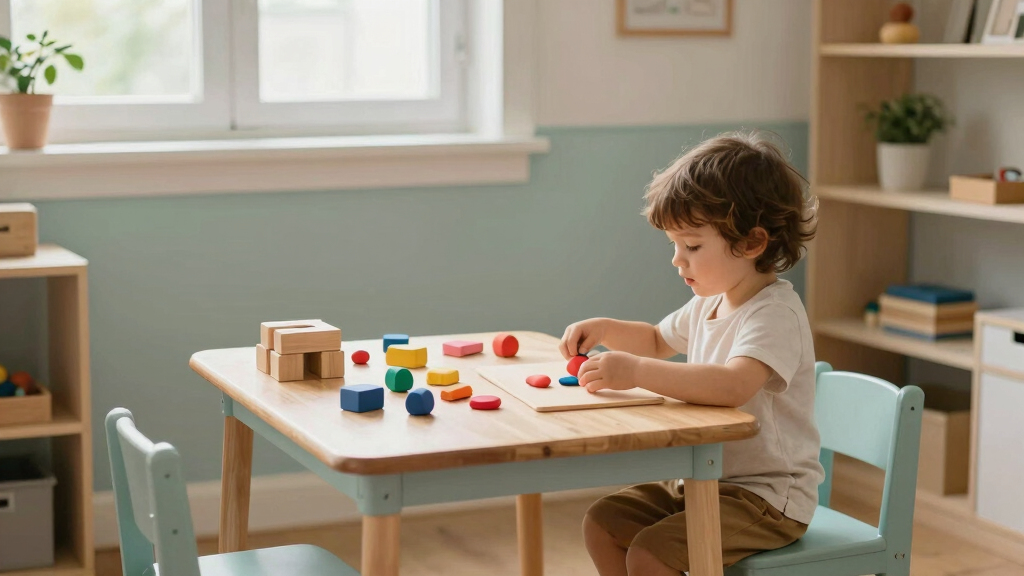
A Montessori room isn’t cluttered or overstimulating. It uses soft, natural colors like beige, pale blue, or gentle greens. The goal is to create a soothing space that invites focus and relaxation.
Picture a room with a simple cotton rug, a wooden shelf with neatly arranged baskets, and a few carefully chosen toys. The environment encourages your child to explore without distraction.
Real-life example: a toddler’s room with a single bed, a small table for art, and a shelf with a handful of natural wooden blocks and plush animals. The absence of bright, overwhelming colors helps the mind settle, fostering calmness and better sleep.
Creating a calm environment isn’t just about aesthetics; it impacts your child’s emotional regulation and ability to concentrate. Overstimulating spaces can lead to difficulty focusing and increased anxiety, while a minimalist setting promotes tranquility and better sleep routines. The challenge is balancing simplicity with enough stimulating elements to keep your child engaged, which requires thoughtful selection of toys and decor. Over time, a calm space nurtures mindfulness and emotional resilience, essential skills for childhood development.
As an affiliate, we earn on qualifying purchases.
Smart Storage Solutions for Easy Access and Tidy Rooms
In a Montessori space, organization is key. Use open shelves at child height, with baskets or bins for toys, clothes, and books. Label items if helpful, so your child learns to find and put away their things.
Here’s a quick comparison to help you choose the right storage:
| Type of Storage | Pros | Ideal For |
|---|---|---|
| Open Shelves | Easy access, encourages independence | Books, toys, clothes |
| Baskets & Bins | Contains clutter, flexible | Small items, art supplies |
| Drawer Units | Neat, hides clutter | Clothes, craft supplies |
Choosing the right storage affects your child’s ability to maintain order and develop organizational skills. Open shelves foster independence because children can see and select items without adult help, but they require consistent tidying to prevent visual clutter. Baskets and bins are versatile and help contain small objects, but they may need to be emptied regularly to prevent messes from accumulating. Drawer units can hide clutter but may make it harder for children to find items quickly. The tradeoff lies in balancing accessibility with neatness; well-organized storage teaches children responsibility and reduces frustration, but it requires ongoing effort to keep the space functional and inviting.
As an affiliate, we earn on qualifying purchases.
Incorporating Natural Materials and Light for a Warm Feel
Natural materials like wood, linen, and cotton create a warm, inviting atmosphere. Wooden furniture, soft blankets, and linen curtains fill the room with textures and scents that soothe.
Natural light is equally important. Large windows with minimal coverings bathe the space in sunlight, boosting mood and focus. A room bathed in daylight feels open and alive, encouraging exploration and calmness.
Example: a room with a wooden bed frame, a cotton canopy, and a small potted plant on the window sill. These elements connect your child to nature, nurturing their sense of wonder and well-being.
Using natural materials does more than enhance aesthetics; it influences the sensory development of your child. Textures like rough linen or smooth wood stimulate tactile senses, while natural scents can have calming effects. However, natural materials may require more maintenance to prevent wear or damage, and sourcing eco-friendly options might be pricier. Still, the sensory richness and environmental benefits make natural materials a worthwhile investment, fostering a connection to nature that supports emotional and cognitive growth.
sustainable multi-functional kids furniture
As an affiliate, we earn on qualifying purchases.
As an affiliate, we earn on qualifying purchases.
How to Transition to a Montessori Room as Your Child Grows
- Start with low furniture and accessible storage from the beginning.
- As your child ages, update decor and organize to reflect their growing interests.
- Introduce multi-functional furniture, like beds with drawers or adjustable desks.
- Keep the environment flexible — add shelves for new hobbies or books.
- Involve your child in choosing decor and organizing to foster ownership.
This approach ensures the space remains relevant and inspiring at every stage of growth. By gradually adapting the environment, you’re supporting your child’s developmental needs and encouraging ongoing independence. It also helps prevent the room from feeling outdated or cluttered, which can hinder their motivation to engage with their space.
Deeply involving your child in these changes promotes a sense of responsibility and ownership over their environment. This ongoing participation teaches them decision-making skills and respect for their belongings. The tradeoff is that constant updates require time and effort, but the payoff is a space that continues to nurture independence and curiosity as your child evolves. Flexibility in design allows the room to grow with your child, avoiding the need for complete overhauls and making the environment a true reflection of their developmental journey.
Recent Trends Making Montessori Rooms Even Better
Today’s Montessori rooms go beyond just furniture. Sustainability is a big focus, with eco-friendly, non-toxic materials taking center stage. Think organic cotton bedding, sustainably sourced wood furniture, and natural dyes.
Multi-functional furniture is also popular — beds with storage drawers or desks that grow with your child save space and money.
Minimal screen time is a priority, so rooms feature tactile, hands-on learning materials instead of digital devices. Plus, natural elements like indoor plants or stone accents connect kids to the environment.
Integrating these trends enhances the educational and environmental value of your child’s space. Eco-friendly materials reduce exposure to harmful chemicals and promote sustainability, which instills eco-consciousness from a young age. Multi-functional furniture optimizes space, making rooms adaptable for different ages and activities, though it may sometimes compromise on aesthetic uniformity. Prioritizing tactile and natural learning tools reduces reliance on screens, fostering creativity and focus. These trends reflect a holistic approach to early childhood development, emphasizing sustainability, adaptability, and sensory engagement, which are crucial for nurturing well-rounded, environmentally aware individuals.
Frequently Asked Questions
How do I make a room feel calm but still fun for my child?
Choose soft, neutral colors and natural textures. Limit clutter and add a few favorite toys or books to keep the space inviting without overwhelming the senses.Can I create a Montessori room on a budget?
Absolutely. Use DIY solutions, repurpose furniture, and focus on organization. Simple, natural materials often cost less and look more authentic.What age is best for starting a Montessori-style room?
From infancy to school age, the principles work well. Adjust furniture height and storage as your child grows, keeping the space flexible and relevant.How do I balance my child’s personal style with Montessori principles?
Incorporate their favorite colors or themes in small ways, like artwork or textiles, while maintaining low furniture and organized, accessible storage.Are there safety tips I should keep in mind?
Yes. Use non-toxic finishes, secure furniture to walls, and choose rounded edges. Always supervise and ensure furniture is stable and appropriate for your child’s age.Conclusion
A Montessori-style kids room isn’t just pretty — it’s a powerful tool for nurturing independence, calmness, and curiosity. With low furniture, organized spaces, and natural textures, you create a space where your child can thrive.
Remember, the goal is a room that feels like a safe, inviting retreat — one they can explore and call their own. When your space respects their size and needs, you’re helping them grow into confident, independent little humans.
Evergreen bestsellers Picks
bestsellers
As an affiliate, we earn on qualifying purchases.