
TL;DR
Open a free Amazon Business account
Business pricing, bulk buying and tax-exempt orders.
Create a free accountAs an affiliate, we earn on qualifying purchases.
This guide explains key clock and watch parts like movement, face, and bezel, plus recent innovations. Knowing these terms helps you appreciate craftsmanship and pick the right watch or clock for your needs.
Understanding each part of your watch or clock transforms how you appreciate its design and function.
Recent innovations like ceramic bezels and solar movements improve durability, accuracy, and eco-friendliness.
Choosing the right bezel or crystal depends on your activity—diving, travel, or everyday wear.
Smartwatches blend tradition with tech, offering customizable faces and health features, but high-end mechanical parts still hold timeless appeal.
Regular care and knowledge of components help your timepiece stay precise and beautiful for years.
Movement, Face, Bezel, and More
Every watch or clock is a small architecture of purpose: the movement powers it, the dial translates it, the bezel adds context, and the crystal and case protect the whole story. Learn the language once, and every timepiece becomes easier to judge, choose, maintain, and admire.
Over 70% of modern watches now use advanced materials or power systems, blending tradition with ceramic, solar, titanium, and hybrid tech.
The Essential Parts
These are the terms that unlock most watch and clock descriptions. Each component contributes to performance, style, usability, or long-term durability.
The Engine
Mechanical, automatic, quartz, solar, and hybrid movements determine accuracy, maintenance, feel, and craftsmanship.
The Canvas
Numerals, indices, hands, texture, color, and lume shape how quickly you can read the time and how the watch expresses style.
The Frame
Dive, tachymeter, and GMT bezels add function around the dial, from tracking elapsed time to calculating speed or another time zone.
The Shield
Sapphire resists scratches, mineral glass balances cost and strength, and acrylic suits vintage charm and easy polishing.
The Shell
Steel, titanium, ceramic, carbon, and precious metals protect the movement while defining weight, resilience, and wrist presence.
The Controls
The crown sets time and can wind the movement, while hands translate the movement into readable hours, minutes, seconds, and functions.
Movement Choices
Choosing a movement is really choosing a relationship with time: ritual and craft, everyday convenience, or a low-maintenance power system.
Quartz is precise; mechanical is poetic.
A quartz crystal vibrates 32,768 times per second for dependable accuracy. Mechanical and automatic watches trade some convenience for visible engineering, winding rituals, and long-lived emotional appeal.
Quick Comparison Table
Use this as a buyer’s shortcut: match the part to the function, then decide which material or feature fits your lifestyle.
| Component | Main Job | Best For | Recent Upgrade | Care Factor |
|---|---|---|---|---|
| Movement | Powers timekeeping | ✓ Accuracy, craft, longevity | Solar and hybrid systems | ~ Service depends on type |
| Dial / Face | Displays time and identity | ✓ Readability and style | Lume, texture, layered design | ✓ Mostly protected |
| Bezel | Adds timing or scale function | ✓ Diving, travel, racing | Ceramic scratch resistance | ~ Rotating parts need care |
| Crystal | Protects the dial | ✓ Scratch and impact defense | Anti-reflective sapphire | ✗ Severe impacts can crack |
| Case | Houses and shields internals | ✓ Water, dust, shocks | Titanium, ceramic, carbon | ~ Gaskets age over time |
How to Choose by Activity
The right terminology becomes practical when you connect it to use: water, travel, daily wear, night visibility, or collector-level craftsmanship.
Daily Wear
Pick quartz, solar, or automatic with a durable case and clear dial.
Diving
Look for water resistance, lume, sapphire, and a unidirectional bezel.
Travel
Choose a GMT bezel or world-time display for another time zone.
Sport
A tachymeter or chronograph helps measure speed and elapsed time.
Collecting
Value movement finishing, case material, dial detail, and service history.
Crystal Durability Spectrum
Trace the Timepiece
A complete watch works because each part hands off responsibility to the next, turning stored energy into a readable, protected, wearable object.
Movement
Spring, rotor, battery, or light source creates regulated motion.
Hands + Dial
Motion becomes legible through indices, numerals, and contrast.
Bezel
The surrounding ring adds timing, speed, or travel context.
Crystal + Case
Glass, metal, gaskets, and crown design defend the mechanics.
What is the Movement? The Heart of Every Clock and Watch
The movement is the engine that powers your clock or watch. It’s what keeps the hands moving—smoothly or ticking sharply. Think of it as the heartbeat, giving life to the entire timepiece.
There are three main types: mechanical, automatic, and quartz. Mechanical movements, like old-fashioned clockwork, run on a wound spring, which requires manual winding or automatic winding via wrist motion. Automatic movements use a rotor that spins with your arm’s movement, winding the mainspring naturally as you wear it. Quartz movements are powered by a small battery, regulated by a crystal that vibrates at a precise frequency—32,768 times per second—ensuring high accuracy. These differences matter because they influence maintenance, craftsmanship, and user experience.
Recent updates include hybrid movements that combine mechanical and electronic elements, as well as solar-powered options that harness light to recharge the battery. These innovations extend the lifespan of your watch, reduce the need for battery replacements, and improve reliability. Choosing between them involves tradeoffs: mechanical watches offer traditional craftsmanship and a tactile winding experience, while quartz and solar options prioritize convenience and longevity.

KOOBOOK Automatic Mechanical Watch Wrist Movement Day Date 2813 DIY Parts
- Brand New and High Quality: 100% brand new and high quality
- Durable Material: Strong, durable, long-lasting material
- Easy Replacement: Suitable as spare parts for replacement
As an affiliate, we earn on qualifying purchases.
As an affiliate, we earn on qualifying purchases.
What Does the Dial or Face Do? Your Watch’s Canvas
The face, or dial, is what you see when you glance at your watch. It displays the time, often decorated with numerals, dots, or lines called indices. Beyond telling time, the design of the face communicates style, brand identity, and functionality—serving as a visual statement that can elevate or simplify the overall look.
Modern dials often incorporate luminous materials that glow in the dark, allowing you to read the time in low-light conditions. This feature is especially important for divers or night-shift workers, where visibility can be critical. Textured layers, vibrant colors, or branding elements add personality and distinguish a watch in a crowded market. For example, a dive watch might have a bright orange face to enhance underwater visibility, while a minimalist dress watch might feature a sleek white or matte black dial for elegance and simplicity.
The face’s design impacts usability—how easily you can read the time—and reflects the wearer’s personality. A well-crafted dial balances clarity with style, making it a focal point that combines art and function. Its implications go beyond aesthetics, influencing how quickly and accurately you can tell time in different situations, and how the watch aligns with your lifestyle and taste.
As an affiliate, we earn on qualifying purchases.
What’s a Bezel? The Ring That Adds Function and Style
The bezel is the ring around the dial—like the frame of a picture. Its design and features can significantly influence a watch’s functionality and aesthetic appeal. For instance, a unidirectional bezel used in diving watches can be rotated only counterclockwise, preventing accidental extension of dive time—crucial for safety. Tachymeter bezels, often fixed, allow speed calculations based on time over a known distance, serving as a practical tool for racers and speed enthusiasts. GMT bezels enable tracking multiple time zones, making them invaluable for frequent travelers.
Recent technological advancements have improved bezel durability through the use of ceramic materials, which are highly scratch-resistant and maintain their appearance over years. Some bezels now spin bidirectionally, offering greater flexibility for different uses, such as timing or navigation. The choice of material and design affects not only longevity but also weight and comfort—important factors for everyday wear or specialized activities.
If you’ve ever used a bezel to time your coffee brew or track your run, you’ve experienced how this simple component can be both practical and stylish. Its ability to combine utility with visual appeal makes it a key feature that can define the personality and purpose of a watch.
As an affiliate, we earn on qualifying purchases.
Understanding the Crystal: Your Watch’s Glass Shield
The crystal is the transparent cover over the dial—like the glass in your front door. It protects the delicate parts inside from dust, shocks, and scratches. The quality of the crystal affects both the durability and clarity of your watch face, impacting how well you can read the time over years of wear.
Sapphire crystal is considered the gold standard because of its exceptional scratch resistance—second only to diamond in hardness. This makes it ideal for high-end watches, but it can shatter if subjected to a severe impact. Mineral glass offers a good balance—more affordable and resistant to scratches than acrylic, but less so than sapphire. Acrylic, while softer and more prone to scratches, can be polished easily, making it suitable for vintage or budget watches where ease of repair matters.
Imagine dropping your watch on a tile floor: sapphire might crack or shatter, requiring repair, while acrylic might just scratch or bounce back with a polish. The choice of crystal impacts not just appearance and maintenance but also how your watch withstands daily life’s inevitable knocks and drops.
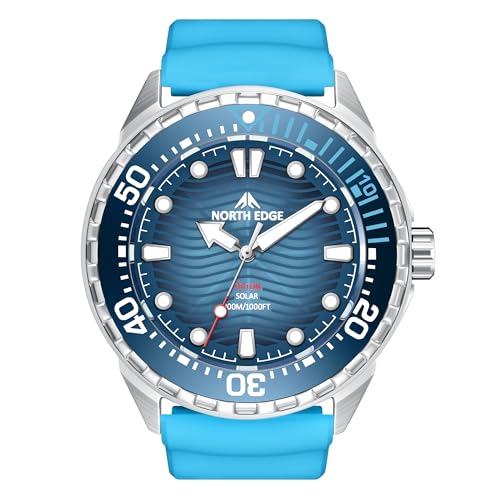
NORTH EDGE Triton Solar Dive Watch, 300M, Blue Silicone Strap
- Power Source: Solar powered quartz movement
- Water Resistance: 300M water resistant for water sports
- Visibility: Luminous hands and markers
As an affiliate, we earn on qualifying purchases.
As an affiliate, we earn on qualifying purchases.
What’s Inside? The Case and How It Protects Your Watch
The case is the outer shell holding everything together. It’s more than just a protective cover—it defines the watch’s style, weight, and resilience. Made from materials like stainless steel, titanium, ceramic, or even gold, the case’s primary function is to shield the movement and dial from shocks, dust, and water. This protection is vital for maintaining accurate timekeeping and preserving the watch’s appearance over time.
High-end cases often feature water-resistance ratings, with some diving watches rated for depths of 300 meters or more. The choice of material influences weight and comfort—ceramic cases are lightweight and scratch-resistant, while steel offers durability and a classic look. The case design also impacts how the watch feels on your wrist, balancing robustness with elegance.
If you’ve worn a watch during outdoor activities or in the water, you’ve experienced how the case’s design and materials safeguard the internal components, ensuring longevity and consistent performance. Its implications are significant: a well-designed case extends the life of your watch and complements your style, whether sleek and modern or rugged and durable.
The Crown: Setting and Winding Made Simple
The crown is the small knob on the side of your watch, acting as the control center for setting the time, date, and winding the movement. Its design can vary from simple push-pull to screw-down models that enhance water resistance. The crown’s function is crucial because it provides direct access to the watch’s internal mechanisms, allowing you to keep it accurate and functional.
For mechanical watches, turning the crown winds the mainspring, storing energy for the gear train. Proper winding ensures the watch keeps accurate time and prevents it from stopping. In some watches, pulling the crown out to different positions allows setting the time or date. Digital or quartz watches may have crowns mainly for adjustments or switching modes, but the mechanical crown’s feel and reliability are often prized by enthusiasts.
Imagine adjusting your watch to match your schedule or setting a dive watch’s bezel for your next underwater adventure. The crown’s design and operation influence ease of use, water resistance, and overall user experience. A well-made crown provides precision, security, and comfort—key for daily wear or specialized activities like diving.
Hands and Subdials: Your Time Indicators
The hands tell you the time—hour, minute, and second—and come in various shapes and styles, from slender and sleek to bold and luminous. Their design affects readability and aesthetic harmony. Subdials, often found on chronographs, moon phase watches, or multi-time-zone models, add extra functions by providing additional information at a glance.
For example, a chronograph watch has tiny hands measuring elapsed minutes or seconds—useful for timing sports events, cooking, or other activities where precise measurement matters. Subdials can also display moon phases, dual time zones, or power reserve indicators, expanding the watch’s capabilities. Recognizing how these indicators work helps you understand the complexity and craftsmanship behind multifunctional watches. Moreover, the placement and design of hands and subdials influence how quickly and easily you can interpret the information, which is crucial for practical use in everyday or professional settings.
Recent Tech Trends in Clocks and Watches You Should Know
Smartwatches now dominate the scene, blending traditional design with digital features like fitness tracking, notifications, and customizable faces. Materials like ceramic and carbon fiber make watches lighter, more durable, and resistant to scratches or impacts. Solar-powered and radio-controlled movements are improving accuracy, sustainability, and convenience, reducing the need for manual charging or adjustments.
For instance, some smartwatches can last weeks on a single charge, integrating seamlessly into daily life, while high-end mechanical watches now feature ceramic bezels and cases that resist scratches and corrosion for years. The industry is evolving to combine craftsmanship with cutting-edge technology, making watches more reliable, functional, and stylish than ever. These innovations are not just about convenience—they reflect a shift toward sustainable, long-lasting design that respects tradition while embracing the future.
Your FAQs About Clock Parts—Answered
- What’s the difference between quartz and mechanical? Quartz watches use batteries and a vibrating crystal to keep time, offering high accuracy and low maintenance. Mechanical watches rely on gears and springs, often handcrafted, offering a traditional, tactile experience but requiring regular winding and servicing. The choice reflects a tradeoff between precision and craftsmanship.
- How do I pick the right bezel? Consider your activity—diving, travel, or speed—based on features like rotation direction, scale markings, and material. A bezel suited for your primary use enhances functionality and longevity, making your watch more practical and aligned with your lifestyle.
- Are sapphire crystals really scratch-proof? Sapphire crystals are highly scratch-resistant, second only to diamond in hardness. However, they can shatter or chip under severe impacts. Handling with care and choosing the right crystal for your needs balances durability with protection against everyday wear.
- What’s a chronograph used for? It’s a stopwatch function, ideal for timing laps, events, or cooking, adding a layer of utility to your watch. Understanding how to operate and read chronographs enhances your ability to utilize this feature effectively.
- How do I care for my watch? Regular cleaning, avoiding shocks, and following recommended service intervals help maintain accuracy and appearance. Proper care prolongs the lifespan and preserves the value of your timepiece.
Frequently Asked Questions
How do I tell if a watch has a good movement?
Look for reputable brands and check if the movement is certified or has features like shock resistance or high accuracy. Mechanical watches with clear exhibition casebacks let you see the intricate gears—proof of quality craftsmanship.Can I replace a bezel myself?
Replacing a bezel can be tricky. Some are glued or snapped in, but others require special tools. For a secure fit and to avoid damage, it’s best to have it done by a professional or authorized service center.What’s the difference between mineral glass and sapphire crystal?
Mineral glass offers decent scratch resistance and is cheaper, while sapphire crystal is much more scratch-proof but can be more fragile if dropped. Your choice depends on your lifestyle and budget.Are smartwatches worth it for a traditional watch lover?
Smartwatches excel in features like fitness tracking and notifications, but if you love craftsmanship and mechanical beauty, a traditional watch still offers timeless appeal. Many collectors now enjoy a hybrid approach.Conclusion
Knowing what each part of a clock or watch does turns your admiration into understanding. It’s like peeling back the layers of a well-crafted machine, revealing the artistry and engineering inside. Next time you look at your watch, see beyond the surface—imagine the tiny engine, the shining crystal, and the rotating bezel. That’s the magic of horology—timeless, intricate, and endlessly fascinating.Labor Day sales Picks
labor day deals
As an affiliate, we earn on qualifying purchases.