
TL;DR

Get decor and gifts delivered free with Prime
- Fast, free delivery on millions of items
- Prime Video, Amazon Music and more included
- Member-only deals all year
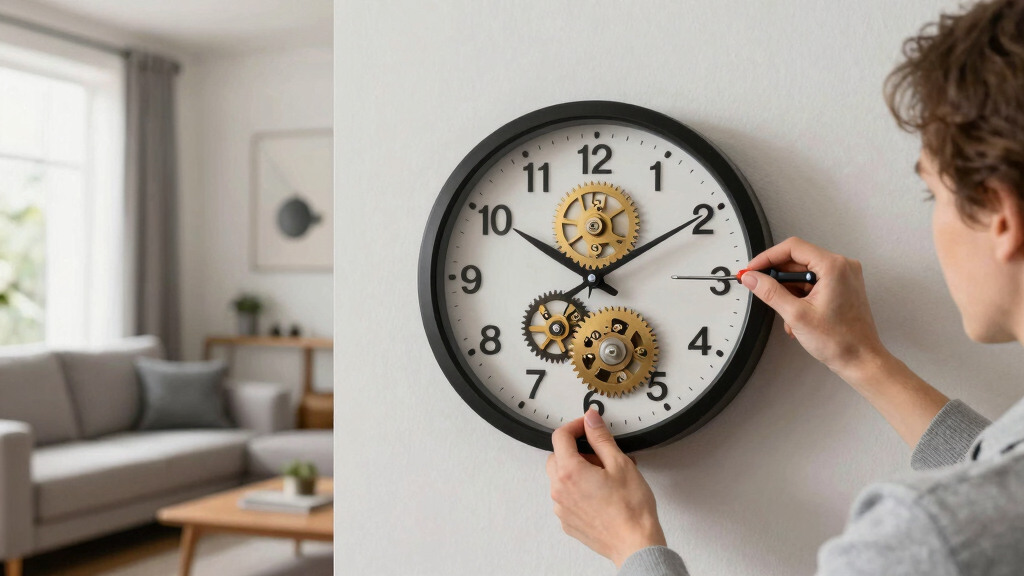
A wall clock that runs slow or stops is often fixable with simple steps like changing batteries, cleaning, or adjusting the mechanism. More complex issues may need professional help, but regular maintenance keeps your clock ticking accurately.
Start with basic fixes: replace batteries and clean the movement before trying complicated repairs.
Identify whether your clock is quartz or mechanical; each needs a different approach.
Regular maintenance, like cleaning and correct mounting, prevents most issues.
When in doubt, consult a professional for delicate or complex repairs to avoid damage.
Modern clocks with connectivity features often automatically correct time, reducing DIY fixes.
Know Your Clock Type to Pick the Right Fix
Wall clocks come in two main varieties: quartz and mechanical. Quartz clocks run on batteries and are generally easier to fix because their components are straightforward and replaceable. Mechanical clocks rely on winding and intricate gear systems, which require more delicate handling and understanding of their inner workings.
Identifying your clock type is crucial because it influences your troubleshooting approach. A quick glance at the back usually reveals a battery compartment or winding key, guiding you toward the appropriate fix—battery replacement for quartz clocks or gear inspection and lubrication for mechanical ones. Recognizing these differences helps prevent unnecessary repairs and ensures you use the most effective method for your specific clock, ultimately saving time and avoiding damage from incorrect handling.
As an affiliate, we earn on qualifying purchases.
Step-by-Step: How to Fix a Quartz Clock That Runs Slow or Stops
- Replace the batteries — this is often the simplest and most overlooked step. Using fresh, high-quality alkaline batteries ensures the clock has a reliable power source, which directly affects its accuracy and operation.
- Check the movement for dust or dirt. Accumulated debris can impede the gears or motor, causing the clock to slow down or stop. Cleaning gently with a soft brush or compressed air removes these obstructions without damaging delicate parts.
- Ensure the clock hands aren’t touching or rubbing against each other or the glass. Misalignment can cause friction, making the clock stall or lose time. Adjusting the hands carefully restores smooth movement.
- Reset the time and observe if the clock maintains accurate time over the next 24 hours. If it continues to run slow or stops, consider replacing the entire movement. This step is crucial because a failing motor or gear assembly can silently cause ongoing issues, and replacing it often restores reliable performance.
For example, a clock that loses 5 minutes daily might just need a fresh battery and a quick hand realignment. However, if it stops entirely despite a new battery, the motor or internal gears might be worn out, indicating a need for replacement or professional repair. Recognizing these signs helps you decide whether a simple fix suffices or if more in-depth intervention is necessary.
As an affiliate, we earn on qualifying purchases.
Why Is My Mechanical Wall Clock Running Slow or Stopping?
Mechanical clocks are intricate and sensitive to their environment. Dust, dried oil, and worn gears don’t just cause minor inaccuracies—they can fundamentally impair the clock’s ability to keep time. Dust particles can act like abrasives, wearing down gears and escapements over time, while dried or old oil can cause friction that slows down the gear train or causes it to seize altogether. Worn gears and a weakened mainspring also mean the clock lacks the power needed to run consistently, leading to slowing or stopping.
For example, a vintage clock in your hallway might run slow because its gear train is clogged with dust or the mainspring has lost tension. Regular winding is essential but not sufficient if internal parts are degraded. Ignoring these issues can lead to further damage, making repairs more costly or irreparable.
Adjusting the pendulum length can temporarily improve accuracy, but if internal components are dirty or worn, this won’t solve the root problem. Cleaning, lubricating, or replacing worn parts—often with professional help—is necessary to restore the clock’s precision. Understanding these underlying causes highlights why regular maintenance and timely repairs are vital for mechanical clocks, preventing long-term damage and ensuring they keep accurate time for years to come.
As an affiliate, we earn on qualifying purchases.
How to Prevent Your Wall Clock from Malfunctioning
- Replace batteries promptly—don’t wait until they die completely, as low power can cause inconsistent movement or stopping.
- Keep the clock clean—dust can slow down or jam the movement, leading to inaccuracies or failure. Regular gentle cleaning prevents buildup that can cause friction or damage.
- Mount the clock on a stable, level surface to prevent misalignment of internal components, which can affect timekeeping accuracy.
- Avoid placing clocks in extreme temperatures or high humidity, as these conditions can cause materials to expand, contract, or corrode, damaging internal parts and impairing function.
- For mechanical clocks, regularly wind and check lubrication to keep gears moving smoothly. Neglecting lubrication accelerates wear, leading to more extensive repairs.
For example, a clock kept in a humid kitchen might develop rust on internal gears, causing it to stop or run inaccurately. Moving it to a drier, more stable environment helps preserve its internal mechanisms and prolongs its reliable operation.
As an affiliate, we earn on qualifying purchases.
Compare Quick Fixes and When to Call a Professional
| Fix Type | Ease | Cost | Best For |
|---|---|---|---|
| Replacing batteries | Easy | Low | Most quartz clocks |
| Cleaning movement | Moderate | Moderate | Dusty or sticky clocks |
| Adjusting pendulum or gears | Challenging | Moderate to high | Mechanical clocks |
| Professional repair | Complex | Higher | Worn gears, internal damage |
While quick fixes work for minor issues, neglecting ongoing problems or attempting complex repairs without proper knowledge can lead to further damage. Recognizing when a problem exceeds basic troubleshooting is essential. If your clock continues to malfunction after simple steps, or if internal components are suspected to be damaged, consulting a professional ensures that your clock receives appropriate care. Professional repair often includes detailed cleaning, precise gear adjustments, and internal part replacement, which can restore the clock’s accuracy and extend its lifespan—saving you money and frustration in the long run.
Frequently Asked Questions
Why does my wall clock keep losing time or stop?
Most often, it’s due to dead batteries, dust buildup, or worn gears. Starting with a battery change and cleaning usually solves the problem. If not, internal parts may need professional attention.How do I fix a clock that runs slow?
For quartz clocks, replace the battery and ensure the hands aren’t rubbing. Mechanical clocks may need pendulum adjustments or gear cleaning. Sometimes, a professional tune-up is best for precision.Can I repair my wall clock myself?
Many minor fixes like battery replacement or cleaning are DIY-friendly. More complex repairs, especially for mechanical clocks, might require professional help to avoid damage.What tools do I need for clock repair?
Basic tools include small screwdrivers, tweezers, clock oil, and cleaning supplies. For intricate work, specialized clock repair tools are helpful but not always necessary for simple fixes.When should I take my clock to a repair shop?
If your clock has internal damage, complex gear issues, or if you’re uncomfortable handling delicate parts, a professional clockmaker can restore it safely and effectively.Conclusion
A clock that runs slow or stops isn’t a mystery—it’s a sign that simple maintenance or a minor tweak can fix it. Keep an eye on the basics, and your clock can tick accurately for years. Remember, a well-kept clock isn’t just about time—it’s about peace of mind and a smoother day.Columbus Day / Indigenous Peoples' Day Picks
long weekend sales
As an affiliate, we earn on qualifying purchases.