
TL;DR

Get decor and gifts delivered free with Prime
- Fast, free delivery on millions of items
- Prime Video, Amazon Music and more included
- Member-only deals all year
Cleaning a wooden wall clock involves gentle dusting, occasional wood-specific polishing, and protecting it from moisture and sunlight. Regular maintenance keeps it looking beautiful and working accurately, extending its lifespan.
Imagine a warm glow filling your living room, the soft tick of a vintage wooden wall clock adding character. But without proper care, that charm can fade—dust, sunlight, and moisture take their toll. Whether your clock is a treasured family piece or a modern statement, knowing how to care for it keeps it beautiful and functional for years to come.
In this guide, you’ll discover simple, effective steps to clean, protect, and maintain your wooden wall clock. From gentle dusting to advanced refinishing techniques, you’ll learn how to preserve its natural beauty and precise timekeeping—without fuss or costly repairs.
Dust weekly with a soft cloth or brush to prevent buildup.
Use minimal water and wood-specific polish for cleaning and protection.
Maintain environment stability—avoid sunlight, high humidity, and heat sources.
Regularly check and replace batteries or wind mechanical clocks to keep accurate time.
Small scratches can often be fixed with polish; deeper damage might need refinishing.
Keep a Wooden Wall Clock Beautiful, Accurate, and Heirloom-Ready
Gentle dusting, careful polishing, and a stable room environment protect the wood finish while helping the clock movement keep steady time. The goal is simple: remove buildup without adding moisture, residue, heat stress, or mechanical risk.
Regular care prevents the quiet damage: dust in the movement, sunlight on the finish, and moisture in the grain.
Well-maintained wooden clocks can last for decades.
Stable humidity helps prevent swelling and cracking.
Use microfiber or a soft brush on carvings.
Slightly damp cloth, then immediately dry.
Replace before leaks corrode the movement.
Mechanical clocks benefit from professional care.
The no-scratch routine starts dry, stays light, and ends protected.
Dust particles act like tiny abrasives on walnut, cherry, oak, and other finished woods. Start with the gentlest method, then add moisture or polish only when the surface actually needs it.
Soft cloth first
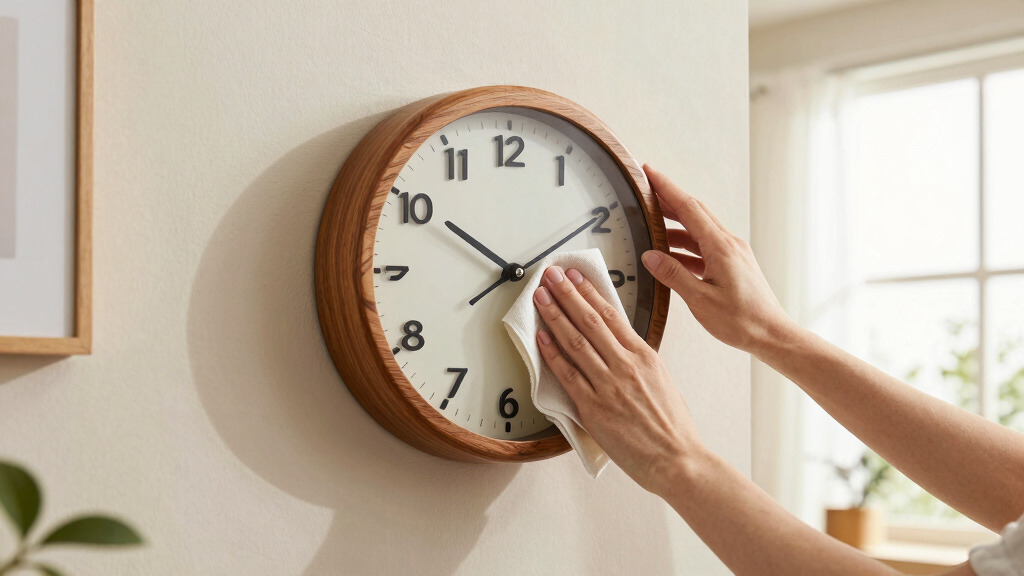
Wipe with a dry microfiber cloth using light pressure. For carved edges or ornate numerals, use a soft brush or short bursts of compressed air.
Minimal moisture
Use a barely damp cloth for grime, then follow immediately with a dry cloth so water cannot seep into the grain or joints.
Nourish the finish
Apply a small amount of wood-specific polish, beeswax, or compatible oil. Buff lightly to avoid sticky residue that attracts dust.
Remove dust
Dry cloth or soft detailing brush.
Spot clean
Use minimal water only where needed.
Dry fast
Prevent swelling, haze, and cracks.
Polish lightly
Protect the finish without buildup.
Check time
Listen for noise or irregular ticking.
The biggest threats are usually environmental, not dramatic.
Direct sunlight fades finishes, humidity swells wood, heat dries it out, and dust can interfere with the mechanism. Stable placement is the quiet upgrade that protects both beauty and accuracy.
A stable wall is better than a stunning risky spot.
A sunny window may frame the clock beautifully, but months of UV exposure can make the finish patchy and brittle. Keep the clock away from radiators, vents, damp walls, bathrooms, and direct afternoon sun.
Choose cleaning products by finish, residue risk, and moisture control.
Wood-specific products can enhance the grain and add protection, but household cleaners and excess water can damage finishes or leave buildup that attracts more dust.
| Product type | Best use | Benefit | Risk | Verdict |
|---|---|---|---|---|
| Natural oils or beeswax | Finished oak, walnut, cherry | ✓ Enhances grain and adds light protection | ~ Too much can feel sticky | ✓ Use sparingly |
| Wood-specific polish | Routine shine and protection | ✓ Restores luster and reduces dullness | ~ Must match the finish type | ✓ Good default |
| Barely damp cloth | Surface grime and fingerprints | ✓ Simple and low cost | ~ Must dry immediately | ✓ Safe with care |
| Household spray cleaner | Glass-only areas if protected | ~ Can clean glass quickly | ✗ Harsh chemicals may harm wood | ✗ Avoid on wood |
Non-toxic cleaners
Natural, low-odor wood products are increasingly popular for indoor heirloom care.
UV protection
Scratch-resistant and UV-protective coatings help reduce fading and surface wear.
Maintenance alerts
Some newer clocks include battery or issue alerts to reduce surprise failures.
Protect the movement, then repair the finish at the right depth.
Battery clocks need leak prevention; mechanical clocks need winding and periodic professional service. On the wood itself, polish can handle minor scratches, while deep gouges call for refinishing or restoration.
Keep dust out
Avoid opening the mechanism without proper tools. If ticking becomes irregular or noisy, consult a clockmaker before misalignment worsens.
Replace batteries
Swap batteries yearly to avoid leakage and corrosion, especially in clocks that hang unnoticed for long periods.
Match the damage
Use polish or a touch-up marker for small scratches. Sanding, staining, or refinishing is better left to experienced hands on valuable clocks.
Ideal humidity comfort zone
Every small habit links to a longer clock life.
The care path is connected: clean surfaces reduce abrasion, stable placement protects the wood, and mechanism checks keep the clock accurate enough to remain useful.
Dust
Less grit on finish and face.
Wipe
Minimal water, fast drying.
Polish
Barrier against grime and moisture.
Shield
Sun, heat, and humidity controlled.
Time
Battery or winding kept current.
Heirloom
Beauty and accuracy preserved.
How to Dust Your Wooden Wall Clock Without Scratching
The first step in caring for a wooden wall clock is regular dusting. Use a soft, dry microfiber cloth—think of it like a gentle whisper on the surface, avoiding scratches that could mar the finish. Dust particles can act like tiny abrasives, and neglecting them allows dirt to settle into the grain, potentially causing dullness or damage over time. Imagine the delicate surface of a walnut or cherry wood, shimmering softly as you wipe away the day’s dust.
Dusting weekly prevents buildup that can dull the finish and clog the clock’s movement, which is essential for maintaining accuracy. For intricate carvings or ornate details, a soft brush or compressed air can reach into tiny crevices, preventing dust from accumulating where it’s hardest to clean. This careful approach ensures your clock remains both beautiful and functional, avoiding the risk of dust-related corrosion or mechanical hindrance that could lead to costly repairs.
As an affiliate, we earn on qualifying purchases.
The Best Way to Clean and Polish Your Wooden Clock’s Surface
Cleaning the wood surface is about more than wiping—it’s about nourishing and protecting. Over time, dirt, oils, and environmental pollutants can degrade the finish, dulling its luster and weakening the protective layer. Regular cleaning with a slightly damp cloth removes surface grime but can inadvertently cause damage if not done carefully; excess moisture can seep into the grain, leading to swelling or cracking. Immediately following with a dry cloth helps prevent this, acting like a quick shower that leaves the wood refreshed without risking water damage.
Applying a wood-specific polish or oil—such as natural beeswax or a commercial furniture polish—serves a dual purpose. It replenishes lost oils, enhances the grain’s natural beauty, and creates a barrier against moisture and dirt. For example, a light coat of lemon oil on oak can restore its warm amber glow, but over-application can lead to a sticky surface that attracts dust or causes buildup. The tradeoff lies in applying enough to nourish without creating a residue that diminishes the clock’s appearance or function. Proper, moderate application preserves the clock’s natural charm and longevity, ensuring it remains a centerpiece rather than a maintenance headache.
wooden clock polish and care products
As an affiliate, we earn on qualifying purchases.
As an affiliate, we earn on qualifying purchases.
How to Maintain the Clock’s Mechanism and Keep Time Accurate
Keeping your clock ticking perfectly means caring for its inner workings, which are sensitive to dust, dirt, and environmental conditions. For battery-powered clocks, replacing batteries annually—preferably in spring or fall—prevents leaks that can cause corrosion or electrical issues, ultimately protecting the movement. Mechanical clocks require regular winding, but more importantly, professional servicing every 3-5 years ensures the delicate gears and springs remain lubricated and free of debris. Neglecting these routines can lead to decreased accuracy or complete failure, requiring costly repairs or replacements.
Dust and debris inside the mechanism can cause gears to slip or stop working altogether, which is why gentle maintenance is crucial. Avoid opening the clock without proper tools or knowledge—improper handling can introduce more dust or cause misalignment. If you notice irregular timekeeping or strange noises, consulting a professional clockmaker is the best course of action to prevent further damage and ensure your clock continues to function correctly. Regular maintenance preserves not only the accuracy but also the sentimental and monetary value of your timepiece, making sure it remains a reliable heirloom.
As an affiliate, we earn on qualifying purchases.
Avoiding Damage: Sunlight, Humidity, and Temperature Tips
Your wooden clock’s worst enemies are sunlight, moisture, and heat. Direct sunlight can fade or crack the finish like a dried flower; over time, UV rays break down the finish’s molecular structure, causing discoloration and brittleness. Humidity causes the wood to swell or warp, which can misalign the clock’s components or distort its shape. Keeping your clock in a stable environment—think of a cozy, consistent room temperature with humidity around 40-50%—is essential for longevity. Fluctuations accelerate aging, leading to cracks or warping that compromise both appearance and function.
For example, a clock placed near a sunny window may look stunning initially, but over months, the finish can become patchy, and the wood may warp or crack. Using curtains or UV-protective glass can shield it from harmful rays without sacrificing the warm glow of natural light. Similarly, avoiding placement over radiators or heating vents prevents rapid drying of the wood, which can lead to splitting and loss of structural integrity. The tradeoff is balancing aesthetic appeal with environmental safety—protecting your clock from damage without sacrificing its visual appeal or making it feel out of place in your home. Proper placement and environmental control are vital for preserving your clock as a treasured heirloom for decades.
wooden wall clock battery replacement
As an affiliate, we earn on qualifying purchases.
As an affiliate, we earn on qualifying purchases.
How to Restore and Refinish Worn or Damaged Wooden Clocks
Over time, scratches or fading can dull your clock’s charm. Minor scratches, especially on clear finishes, can often be polished out with a matching wood polish or touch-up marker—these small repairs act like a facelift, restoring visual harmony. However, deeper scratches or gouges penetrate the finish and may require more involved restoration. Sanding the damaged area gently, then applying a matching stain or finish, can bring back the original glow. For instance, a vintage cherry clock can regain its rich, deep hue through careful refinishing, which also helps prevent further deterioration caused by exposure or wear.
Restoring severely damaged wood might seem daunting, but professional restoration ensures the repair blends seamlessly with the original. Attempting to fix large problems yourself can sometimes cause more harm than good—improper sanding or mismatched stains can stand out and reduce the clock’s value. Small repairs and refinishing not only restore beauty but also protect the wood from further damage, preventing the need for more extensive repairs later. Investing in proper restoration techniques preserves both the aesthetic and structural integrity of your clock, ensuring it remains a cherished family heirloom for generations.
Comparing Cleaning Products for Wooden Clocks
| Product Type | Pros | Cons |
|---|---|---|
| Natural oils (lemon, beeswax) | Enhance grain, protect against moisture by replenishing natural oils, and provide a subtle sheen that highlights the wood’s beauty. | Need periodic reapplication, and overuse can lead to a sticky residue or attract dust if not buffed properly. |
| Furniture polish | Easy to use, adds shine, and provides a protective layer that can help prevent minor scratches and moisture penetration. | Can build up over time, leading to a dull appearance if not cleaned regularly, and some formulations may contain chemicals that could harm delicate finishes. |
| Household cleaners (chemical-based) | Effective for removing stubborn dirt, grime, and old polish residues, especially in heavily soiled areas. | Harsh chemicals can damage or strip the finish, drying out the wood and potentially causing discoloration or cracking if used excessively or improperly. |
| DIY solutions (water + mild soap) | Safe for general cleaning if used sparingly, minimizing risk of moisture damage. | Limited cleaning power and may not effectively remove ingrained dirt or restore shine, making it unsuitable for deep cleaning or restoration tasks. |
Choose products suited to your clock’s wood type and finish for best results. When in doubt, test on a small, hidden area first to avoid unintended damage. Remember, the goal is to maintain the wood’s natural beauty without introducing harmful substances or causing long-term harm through improper use.
Frequently Asked Questions
How often should I clean my wooden wall clock?
Dust it weekly with a soft cloth, and give it a deeper clean every 3-4 months or as needed. Regular care prevents buildup and keeps it looking fresh.Can I use household cleaners or water on my wooden clock?
It’s best to avoid harsh chemicals. Use a damp cloth with mild, wood-specific cleaner or a tiny amount of water, followed immediately by a dry cloth to prevent moisture damage.What do I do if my clock’s wood gets scratched?
For minor scratches, a matching wood polish or touch-up marker often does the trick. For deep scratches or dents, consider professional refinishing to restore its beauty.How can I prevent my clock from warping or cracking?
Place it in a stable environment with controlled humidity and temperature. Keep it away from direct sunlight, radiators, or heating vents for best longevity.Is it safe to wax or polish my wooden clock?
Yes, as long as you choose a product suitable for your wood type and finish. Apply sparingly and buff gently for a natural, protective shine.Conclusion
Taking simple steps—gentle cleaning, protective placement, and occasional refinishing—can turn your wooden clock into a cherished family piece that lasts for decades. A little care goes a long way in preserving its beauty and precision.
Imagine your clock, gleaming softly on the wall, ticking faithfully through the years. With these tips, you’ll keep its story alive, one gentle wipe at a time.
Halloween Picks
halloween
As an affiliate, we earn on qualifying purchases.