
TL;DR

Get decor and gifts delivered free with Prime
- Fast, free delivery on millions of items
- Prime Video, Amazon Music and more included
- Member-only deals all year
Choosing the right nursery lighting—like low-lumen night lights, dimmable fixtures, and sleep clocks—helps establish calming routines. Recent innovations support healthier sleep cycles for your little one while making nighttime caregiving easier.
Creating a sleep-friendly nursery isn’t just about blackout curtains or the perfect crib. The right lighting can make a world of difference—calming your baby, easing nighttime care, and establishing healthy routines. Bright, harsh lights chase away sleep and confuse little internal clocks. But soft, warm, and thoughtfully placed lights set the scene for peaceful nights.
In this guide, you’ll learn how to choose the best night lights, dimmers, and glow clocks for your nursery. Plus, I’ll share recent innovations that keep your baby safe, support natural sleep cycles, and make your life easier. Because good sleep starts with simple, intentional lighting choices.
Choose warm, dim lighting to support melatonin production and restful sleep.
Night lights should be low-lumen (< 10 lumens), adjustable, and safe for babies.
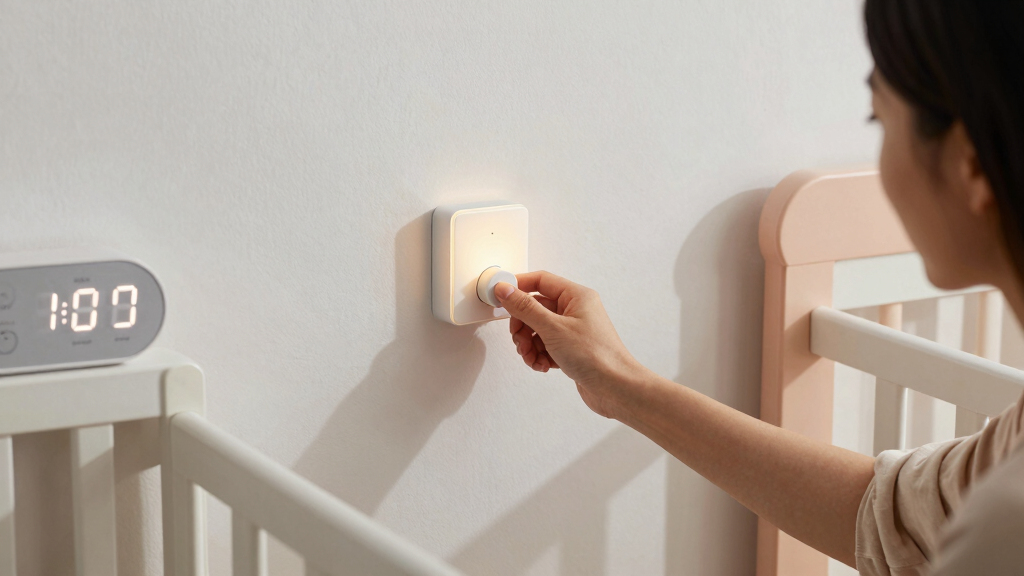
Dimmers create a calming signal, helping your child associate dimness with bedtime.
Sleep clocks with glow features teach routines visually, reducing early waking.
Smart, circadian rhythm lights adapt to natural cycles, improving overall sleep quality.
Why Soft, Warm Light Is Your Baby’s Sleep Superpower
Any parent who’s tried to soothe a crying baby knows bright lights can make things worse. Soft, warm lights—around 2700K—mimic the sunset’s gentle glow. They don’t flood the room with blue wavelengths that suppress melatonin, the hormone that tells your body it’s time to sleep.
Imagine a bedside lamp emitting a cozy amber hue, casting gentle shadows on the crib. That kind of light helps your baby wind down naturally. It’s like giving their internal clock a nudge toward bedtime, without startling or overstimulating.
Research from sleep science confirms: warm lighting supports melatonin production and encourages longer, more restful sleep. For example, a nursery lit with 3000K bulbs shows fewer night wakings than rooms with cooler, white-toned lights.
Choosing warm lighting isn’t just about comfort; it’s about aligning with your baby’s natural circadian rhythms. Cooler or bluish lights, especially in the evening, can delay melatonin release, making it harder for your little one to fall asleep or stay asleep. The tradeoff is that warmer lights may have slightly lower brightness, so you need to balance visibility with sleep-friendly properties.
baby night light with adjustable brightness
As an affiliate, we earn on qualifying purchases.
As an affiliate, we earn on qualifying purchases.
Top Features to Look for in Night Lights for Babies
- Adjustable brightness: Dimming options allow you to tailor the light level for different activities—bright enough for diaper changes, yet soft enough to avoid disturbing your baby’s sleep. This flexibility is crucial because one-size-fits-all lighting often disrupts sleep routines.
- Low lumen output: Lights under 10 lumens are ideal because they provide just enough illumination without overwhelming the visual system. Excessive brightness can cause your baby to become overstimulated or wake up unnecessarily, so understanding the balance between visibility and sleep preservation is key.
- Automatic shut-off: Timer or sensor-based features prevent the light from staying on all night, reducing unnecessary exposure to light. This not only conserves energy but also minimizes the risk of sleep disruption caused by accidental prolonged illumination.
- Portability: Battery-powered or compact plug-in models offer flexibility, allowing you to move the light closer during nighttime care or to different parts of the nursery as needed. Portability ensures that lighting can adapt to changing routines or room layouts, which is especially useful as your child grows.
Picture a small, plush night light sitting on your bedside table—its soft amber glow guiding you through midnight feedings without waking your little one. The key is understanding how these features work together to create a sleep-supportive environment that is both functional and gentle.
warm white nursery night light 2700K
As an affiliate, we earn on qualifying purchases.
As an affiliate, we earn on qualifying purchases.
Dimmers: Transition Lights That Signal Bedtime
Dimmable lights are like a gentle hand guiding your child into sleep. They help create a calming atmosphere, signaling that it’s time to wind down. Using a dimmer switch on ceiling fixtures or a lamp with adjustable brightness makes the routine smoother.
For example, turning down the lights gradually during bedtime helps your toddler associate dimness with sleep time. It’s a visual cue that bedtime is approaching—less light, more relaxation. This gradual transition is especially effective because it mimics natural sunset patterns, reinforcing the body’s internal clock and easing the psychological transition from activity to rest.
Sleep experts note that consistent use of dim lighting during routines not only reduces resistance but also helps prolong sleep duration. The tradeoff with dimming is that too low a light level might make it difficult to see during nighttime tasks, so selecting the right dimmer and understanding your child’s sensitivity are important for optimizing this feature.
As an affiliate, we earn on qualifying purchases.
How Baby Sleep Clocks and Glowing Displays Help Establish Routines
Sleep clocks with glow features aren’t just cute—they’re powerful tools for teaching your child when it’s appropriate to wake and when to stay in bed. These clocks use visual cues like colors or icons to communicate sleep boundaries—green for wake-up time, orange or red for sleep time. This visual language helps children understand routines without needing verbal instructions, which is especially useful for toddlers still developing language skills.
Imagine your toddler watching a soft, red glow fade into a gentle green at sunrise. This subtle transition reinforces the natural cues of day and night, helping your child develop a sense of time and routine. Over time, children learn to associate these visual signals with appropriate sleep and wake times, reducing early morning disturbances and fostering independence.
Research indicates that children respond positively to visual signals, making this a non-verbal, intuitive approach to establishing sleep boundaries. The tradeoff is that some children may require consistent reinforcement or additional cues to fully internalize the routine, but overall, these clocks support a more predictable and peaceful sleep environment.
baby sleep clock with glow feature
As an affiliate, we earn on qualifying purchases.
As an affiliate, we earn on qualifying purchases.
Smart & Circadian Lighting: Future-Proof Your Nursery
Smart nursery lights sync with your family’s schedule, changing color temperature and brightness throughout the day. They can mimic natural sunlight—bright and cool during playtime, warm and dim at night. These features support your baby’s natural circadian rhythms by providing environmental cues that promote alertness during the day and relaxation at night.
For example, a smart light might gradually shift from 5000K in the morning to 2700K by bedtime, signaling it’s time to wind down. This mimics the natural progression of sunlight, which helps regulate your child’s internal clock. The tradeoff is that overly bright or poorly timed adjustments can confuse the circadian rhythm, so careful programming and understanding your child’s response are essential.
Recent innovations include sleep-tracking lights that analyze your baby’s sleep patterns and respond with gentle light adjustments, creating a more supportive sleep environment. These intelligent systems can help identify sleep disruptions early and adapt the lighting to support healthier sleep cycles, making your nursery both future-ready and personalized.
Frequently Asked Questions
What kind of night light is safest for a newborn?
A small, soft, warm-toned night light with low lumens (under 10) and no flashing features is safest. Battery-powered or plug-in models with a secure design minimize hazards while providing gentle guidance during nighttime care.
Should I keep the nursery lights on all night?
Not necessarily. Keep lights very dim or off after initial care. Using a low-lumen night light or a sleep clock with glow cues helps your child stay relaxed and understand sleep boundaries without overstimulation.
Are smart nursery lights safe for babies?
Yes, if they’re designed for nursery use—low heat emission, secure installation, and adjustable settings. Always follow manufacturer safety instructions and avoid overly bright or flashing lights to prevent disturbance.
How can I help my toddler understand when to wake or stay in bed?
Use a sleep clock with visual cues like color changes or icons. When the clock glows green, it signals morning; when it’s orange or red, it’s still sleep time. Consistency helps reinforce routines and reduces early wake-ups.
What are eco-friendly lighting options for nurseries?
LED lights are the best choice—energy-efficient, long-lasting, and available in non-toxic, low-heat models. Look for certifications and avoid plastics or materials that could off-gas harmful chemicals.
Conclusion
Lights are more than just illumination—they shape your child’s sleep environment and routines. A thoughtful approach, blending gentle night lights, dimmers, and glow clocks, transforms bedtime from chaos to calm. Your nursery can become a sanctuary of restful nights for everyone.
Remember: consistency and safety are key. Small changes in lighting can lead to big, peaceful sleep improvements. Start tonight—your little one’s sleep journey begins with the light you choose.
Fall Picks
fall essentials
As an affiliate, we earn on qualifying purchases.