TL;DR

Get decor and gifts delivered free with Prime
- Fast, free delivery on millions of items
- Prime Video, Amazon Music and more included
- Member-only deals all year
Deciding what stays on kids’ walls means balancing meaningful art and safety. Regularly rotating displays, involving children, and choosing simple, secure solutions keep the room lively and clutter-free.
Imagine a room filled with colorful posters, glittery artwork, and posters of favorite characters. Now, picture that same space after a thoughtful declutter—calm, inspiring, and safe. Your child’s room should be a haven for creativity, not chaos.
But what should stay on those walls? How do you balance personal expression with order? This guide helps you decide what to keep, rotate, or remove, turning decluttering into a fun, collaborative process that respects your child’s personality.
Focus on displaying only meaningful or high-quality artwork to keep walls inspiring but uncluttered.
Rotate wall decor regularly—every 3-4 months—to keep the space fresh and engaging.
Use safe, easy-to-update display methods like clipboards, wire grids, or cork boards for flexibility.
Involve your child in choosing what stays on the walls to foster responsibility and pride.
Digitize sentimental items to preserve memories without overcrowding the room.
How to Decide What Artwork and Decor Belongs on the Walls
Not every piece of art or poster needs to stay forever. Focusing on items that truly evoke joy or hold sentimental significance helps preserve the emotional value in a manageable way. For example, a child’s first drawing or a poster of their favorite band from childhood may carry memories that foster a sense of identity and achievement. However, clinging to every piece can lead to clutter, which hampers the room’s functionality and the child’s ability to appreciate truly meaningful items.
Understanding why certain pieces matter allows you to make mindful decisions. For instance, a child’s early artwork often marks developmental milestones and emotional growth. Removing these without thought might unintentionally diminish their sense of progress. Conversely, keeping everything can dilute the impact of truly special items and make the space feel overwhelming. Striking a balance involves evaluating each piece’s emotional weight against practicality—keeping those that tell a story or inspire, and letting go of the rest to create room for new memories.
This approach encourages children to reflect on what they value most, fostering a sense of responsibility and helping them develop decision-making skills about their environment. It also teaches them that while memories are precious, a clutter-free space enhances their ability to focus, play, and dream.
As an affiliate, we earn on qualifying purchases.
Create a System for Rotating and Updating Wall Decor
Regularly rotating wall decor isn’t just about keeping the room looking fresh; it plays a vital role in your child’s emotional development and sense of growth. When children see their favorite posters or artwork replaced or updated, it signals that their interests and skills are evolving. This process can boost their confidence, showing them that change is natural and exciting. Furthermore, a dynamic display prevents walls from becoming overcrowded, which can cause visual stress and reduce their ability to focus or relax.
Establishing a consistent schedule—such as every three to four months—creates a rhythm that children can anticipate and participate in. Using accessible display methods like cork boards or wire with clips empowers kids to select and change their artwork independently. This involvement fosters a sense of ownership and pride, reinforcing positive habits around organization and curation. It also provides opportunities for meaningful conversations about their interests, achievements, and memories, deepening their emotional connection to their space. Ultimately, a well-managed rotation system supports their development by allowing their environment to reflect their current passions and milestones, making the room a true mirror of their growth.
As an affiliate, we earn on qualifying purchases.
Compare Popular Wall Display Options for Safety and Style
| Display Method | Ease of Update | Safety | Style Flexibility |
|---|---|---|---|
| Clipboards | High | High (secured with screws or hooks) | Very versatile |
| Wire with Clips | High | Moderate (ensure sturdy attachment) | Modern, minimalist |
| Cork Boards | High | High | Customizable with pins and decorations |
| Framed Art | Low (fixed) | Very high | Elegant, permanent |
Choosing the right display method involves weighing how easily you can update the decor against safety considerations and your preferred aesthetic. For example, clipboards and wire grids facilitate frequent updates, making them ideal for children who create new artwork regularly. However, they demand sturdy mounting and regular safety checks to prevent accidents. Cork boards offer a flexible, customizable surface that can be easily changed with pins, making them suitable for a variety of items and styles. Framed art provides a polished, permanent look, which works well for special pieces but isn’t designed for frequent changes. Understanding these tradeoffs helps you establish a display system that balances safety, style, and practicality—creating a space that celebrates your child’s creativity without compromising safety or clutter control.
As an affiliate, we earn on qualifying purchases.
How to Safely Attach Wall Decor for Active Kids
- Use hardware appropriate for the weight and size of the items—heavy-duty hooks or picture hangers for larger, heavier pieces. This reduces the risk of falling and injury, especially during active play.
- Secure artwork at the top corners or edges, especially if the items are lightweight or prone to swinging, to prevent accidental pulling or tipping that could cause injury.
- Place items out of reach of small children or in stable, high spots to minimize the risk of pulling down or damaging the decor, especially if they are energetic or curious.
- Regularly inspect fixtures and attachments for looseness or wear, and tighten or replace as needed. This proactive approach helps prevent accidents before they happen and teaches children the importance of safety in their environment.
For example, a 3-year-old might pull on a poster hanging with a loose nail, risking injury or damage. By using robust hardware and checking regularly, you ensure that your decor remains secure and your child remains safe. These precautions are essential because active children can sometimes unintentionally dislodge or damage wall items, leading to safety hazards. Creating a safe environment involves understanding their behavior and proactively choosing hardware and placement strategies that accommodate their energy and curiosity, thereby reducing risks and fostering a secure, inviting space.
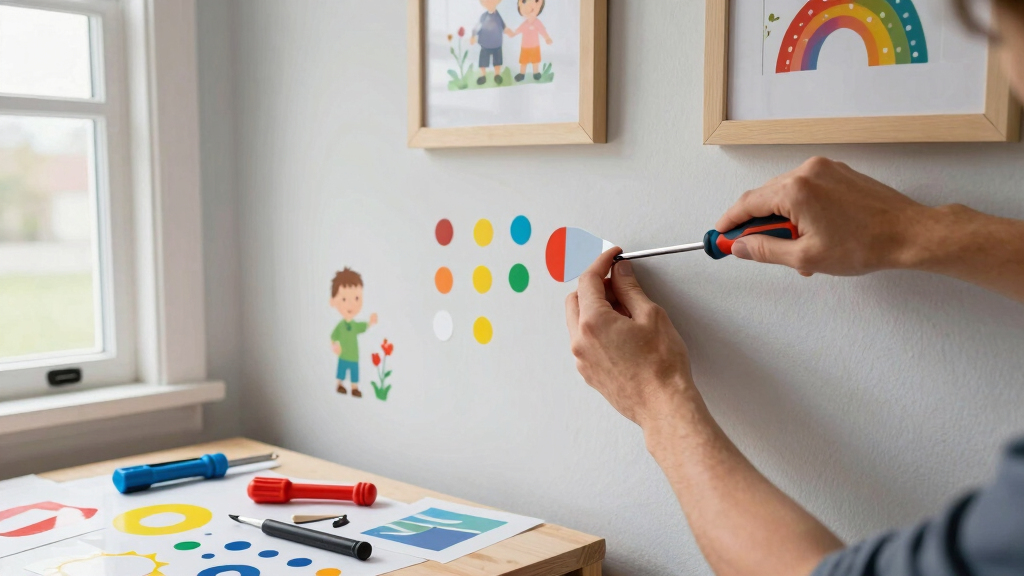
kids room wall decor rotation system
As an affiliate, we earn on qualifying purchases.
As an affiliate, we earn on qualifying purchases.
Frequently Asked Questions
How do I decide what artwork to keep and what to remove?
Ask yourself if the piece holds sentimental value, matches your child’s current interests, or adds to the room’s vibe. Keep the best or most meaningful items, and consider digitizing or storing the rest to reduce clutter.
What are the safest ways to display art for active children?
Use secure hardware like sturdy hooks, wire with clips, or framed pieces with shatterproof glass. Keep hanging points out of reach of little ones, and regularly check attachments for safety.
How often should I update or rotate the wall decor?
Every three to four months is a good rule of thumb, or seasonally if your child’s interests change quickly. Make it a fun routine that involves your child in choosing what to display next.
Can I use digital displays instead of physical artwork?
Absolutely. Digital photo frames or tablets can showcase hundreds of images, reducing physical clutter while keeping the display fresh and engaging. Plus, they’re easy to update with new artwork or photos.
What should I do with sentimental items I can’t display?
Digitize them by taking high-quality photos or scans, then store the originals in a keepsake box or scrapbook. This preserves memories while keeping the room organized and uncluttered.
Conclusion
Creating a balanced, inspiring kids’ room isn’t about filling every inch with decoration. It’s about thoughtful choices—highlighting what truly matters and making space for new memories. When walls breathe, the entire room feels calmer and more inviting.
Remember: a tidy wall isn’t just easier to manage. It’s a space where your child can dream, create, and grow. So pick your favorites, involve your kid, and give those walls the fresh update they deserve.
Columbus Day / Indigenous Peoples' Day Picks
long weekend sales
As an affiliate, we earn on qualifying purchases.