
TL;DR

Get decor and gifts delivered free with Prime
- Fast, free delivery on millions of items
- Prime Video, Amazon Music and more included
- Member-only deals all year
Teaching preschoolers words like *before*, *after*, *later*, and *soon* helps them understand sequences and routines. Using daily examples and fun activities makes these concepts real and memorable for little learners.
Ever notice how little kids ask endless questions about what’s next? Words like *before*, *after*, *later*, and *soon* are their first steps into understanding the flow of daily life. Teaching these words isn’t just about language—it’s about helping them make sense of their world.
By the end of this guide, you’ll have simple, concrete ways to introduce and reinforce these time words. These skills build a foundation that supports routines, patience, and even early planning—crucial for their growing independence and understanding of time.
Introduce *before* and *after* through daily routines and visual sequencing tools.
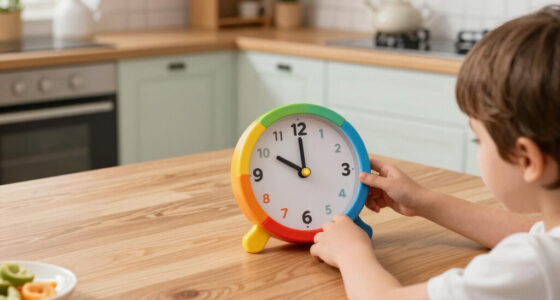
Use timers and clocks to connect *soon* and *later* with real time, making these words tangible.
Create visual aids like charts and stories to reinforce understanding of abstract time concepts.
Incorporate these words into everyday conversations consistently for better grasp.
Most preschoolers understand *before* and *after* by age 4, with *soon* and *later* following shortly after.
Before, After, Later, Soon
Time words help young children understand what comes next, navigate routines, wait with confidence, and begin planning. The secret is to connect every word to something children can see, do, and repeat.
Many children begin grasping before and after during this stage.
Two words explain order; two words describe distance from now.
Meals, dressing, play, stories, and bedtime make time visible.
Give each time word one clear job.
Before
One event happens earlier than another. It helps a child identify what comes first.
“Put on shoes before we go outside.”After
One event follows another. It makes routines and cause-and-effect relationships easier to predict.
“We brush teeth after breakfast.”Soon
Something will happen after a short wait. The word becomes clearer when the wait is visible.
“Snack time is soon—when the timer rings.”Later
Something will happen in the future, but not right away. It introduces simple forward planning.
“We can play outside later today.”Turn an ordinary routine into a visible timeline.
Use a picture chart while speaking the sentence, then complete the action together. Combining language, visuals, and movement makes an abstract sequence concrete and memorable.
“Soon” and “later” need a visible anchor.
Try: “We will tidy up soon—when the timer rings.” For later: “We will paint later, after lunch.” A timer, hourglass, picture card, or familiar routine gives the word a dependable boundary.
Choose the word that matches the relationship.
| Word | What it tells the child | Everyday example |
|---|---|---|
| Before | An action comes first. It supports sequencing, preparation, and early cause-and-effect reasoning. | Eat breakfast before school. |
| After | An action comes next and depends on an earlier event being completed. | Read a story after dinner. |
| Soon | The wait is short. A timer or visible transition can make the promise understandable. | Snack time is soon. |
| Later | The event is planned for the future, but it is not the next immediate step. | We will play outside later. |
Three activities that turn time into experience.
Picture sequencing
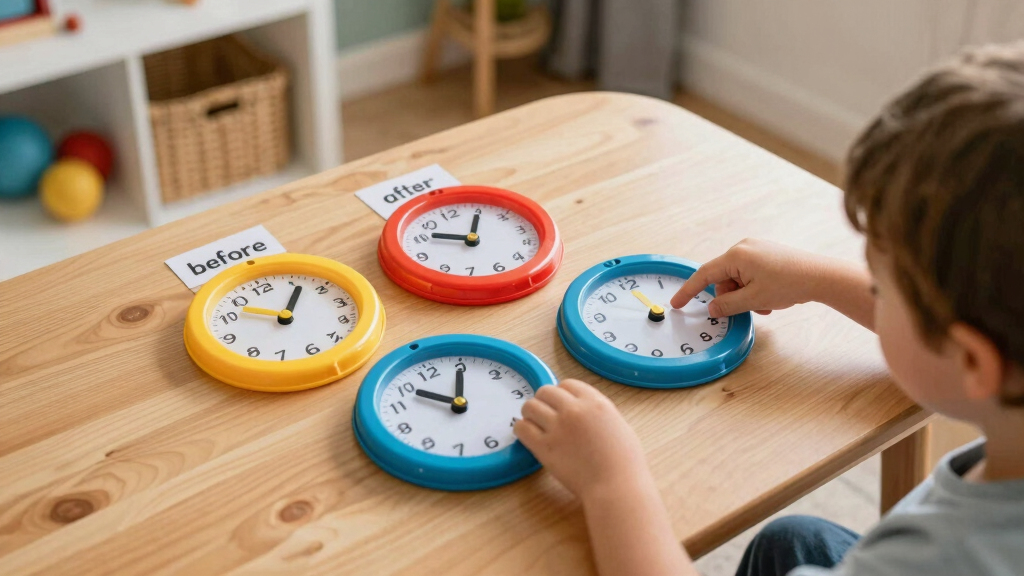
Mix up three routine cards. Let the child arrange them, then ask: “What happens before this?” and “What happens after?”
Story detective
Pause during a familiar story. Ask what happened before, what is happening now, and what might happen later.
Timer challenge
Set a short timer and name the transition: “Cleanup will start soon.” When it rings, connect the word to the event.
Development is a window, not a deadline.
Many preschoolers begin understanding before and after around ages three to four, with soon and later developing shortly afterward. Individual progress varies with language exposure, routines, and experience.
- Model one clear sentence at a time.
- Pair words with pictures and actions.
- Repeat them during predictable routines.
- Ask simple “what comes next?” questions.
- Keep “soon” and “later” promises consistent.
- Offer extra support if confusion persists.
What Do *Before* and *After* Really Mean? Here’s How to Teach It
*Before* and *after* are words that describe the order of events. They are fundamental to understanding sequences, which are essential for children’s cognitive development. Recognizing the order of events helps kids predict what comes next, fostering a sense of control and reducing anxiety about routines. When children grasp these concepts, they can better organize their day and develop patience as they anticipate upcoming activities. Using visual cues and storytelling not only clarifies the sequence but also encourages active participation, reinforcing their understanding through multisensory engagement.
Understanding *before* and *after* also helps children develop a sense of cause and effect. For example, realizing that brushing teeth *after* dinner prevents cavities teaches them about routines that promote health. Moreover, mastering these words aids in developing logical thinking, which is crucial for problem-solving and academic success later on. When children can sequence events, they learn to anticipate outcomes, which builds confidence and independence. Using visual aids like sequencing cards or storytelling makes these abstract concepts tangible, allowing children to connect words with real-world actions and consequences, deepening their comprehension.
Tip: Make a daily routine chart with pictures—breakfast, play, nap, bedtime—and point out what happens *before* and *after*. Repeating this daily helps children internalize the concept, leading to smoother routines and better self-regulation over time.
visual sequencing cards for preschoolers
As an affiliate, we earn on qualifying purchases.
As an affiliate, we earn on qualifying purchases.
Using *Later* and *Soon* to Help Kids Understand Time Gaps
*Later* and *soon* are words that describe the timing of future events relative to the present moment. They are crucial in helping children develop an intuitive sense of time, which is often abstract and difficult to grasp because it involves mental projection into the future. Understanding *soon* helps children develop patience and emotional regulation by setting expectations that something will happen in the near future, reducing frustration during waits. Conversely, *later* introduces the concept of a more distant future, encouraging children to think ahead and understand that not everything is immediate. This distinction supports the development of temporal reasoning, which underpins more complex concepts like days, weeks, and planning for future activities. Using timers and visual aids makes these words concrete, helping children connect language with their internal sense of passing time and expectations, which is vital for daily routines and long-term planning.
Imagine telling your child, “We’re going to the playground *soon*,” versus “We’ll do homework *later*.” To make this concrete, set timers or clocks. Show them an hourglass or a timer on a tablet, and watch how they relate these words to real time. This experiential learning helps them develop a mental timeline, which is essential for understanding schedules and routines as they grow. Recognizing these time gaps also aids in emotional development, as children learn patience and how to manage their expectations, reducing anxiety and tantrums associated with waiting.
Tip: Create a visual schedule with blocks labeled *soon* and *later*. Use timers to reinforce what these words mean in their daily life, fostering patience and anticipation. Over time, children learn to associate these words with real expectations, easing transitions and reducing frustration when routines change or delays occur.
timers and clocks for teaching time to kids
As an affiliate, we earn on qualifying purchases.
As an affiliate, we earn on qualifying purchases.
Comparison Table: When to Use *Before*, *After*, *Later*, and *Soon*
| Word | What It Means | Example |
|---|---|---|
| Before | Something happens earlier than another event, which helps children understand the concept of sequencing and causality. Recognizing what comes first allows children to anticipate and prepare for upcoming activities, fostering independence and confidence in their ability to navigate routines. This understanding also introduces the idea that certain actions can prevent or cause specific outcomes, laying the groundwork for logical thinking. | Eat breakfast before going to school |
| After | Something happens later than another event, reinforcing the understanding of order and routines that follow initial actions. This helps children see the cause-and-effect relationship in daily life, such as knowing that they need to brush their teeth after meals. Recognizing *after* also supports patience, as children learn that some activities are sequential and dependent on previous ones. | Read a story after dinner |
| Later | Refers to a future time that is farther away from the present, supporting children’s ability to think ahead and schedule activities. This concept encourages planning and understanding that not everything is immediate, fostering executive functioning skills. Recognizing *later* also helps children manage expectations about when things will happen, reducing frustration. | Play outside later today |
| Soon | Indicates a short wait from now, helping children develop patience and manage expectations during transitions or waiting periods. Understanding *soon* teaches children that waiting can be temporary and manageable, which is crucial for emotional regulation and reducing impulsiveness. | Snack time soon |
This table helps children see the clear differences and when to use each word in everyday life, fostering a more nuanced understanding of time concepts that supports their cognitive development and independence.
preschool time concept teaching aids
As an affiliate, we earn on qualifying purchases.
As an affiliate, we earn on qualifying purchases.
Fun Activities to Reinforce Time Words — Make Learning Playful
- Sequencing Games: Use picture cards to tell stories in order—what happens *before* and *after*. This develops their understanding of order and causality, which are essential for logical thinking and future academic skills. Engaging in these games also encourages children to think critically about the relationships between events, fostering their reasoning abilities and understanding of cause and effect.
- Story Time: Read stories emphasizing the sequence of events, asking questions like, “What happened *before*?” or, “What will happen *later*?” This promotes active listening and comprehension of temporal relationships. It also helps children recognize how stories are structured in real life, which supports their narrative skills and understanding of time flow.
- Timer Fun: Use a kitchen timer or hourglass to show *soon* and *later* in real-time. For example, “We will start playing *soon*—the timer is almost up!” This bridges language with real experiences of passing time, helping children internalize these concepts. Experiencing the passage of time visually and physically reinforces their understanding of durations and expectations.
- Daily Routine Charts: Create colorful charts showing what happens *before*, *after*, *soon*, and *later* throughout the day. Visual routines help children anticipate and understand the flow of activities, reducing anxiety and encouraging independence. They also support memory, sequencing skills, and the ability to predict what comes next, which are vital for self-regulation and planning.
interactive storybooks about time for children
As an affiliate, we earn on qualifying purchases.
As an affiliate, we earn on qualifying purchases.
Frequently Asked Questions
How do I teach my preschooler the difference between *before* and *after*?
Use daily routines and visual cues, like pictures or charts, to show the order of events. For example, point out that “We brush teeth *after* breakfast,” and use storytelling to reinforce the sequence.
What are some fun ways to help my child understand *soon* and *later*?
Timers and visual schedules work well. Set a timer for *soon*, like 10 minutes, and show them how the clock moves. For *later*, talk about activities planned for the afternoon or after a nap, emphasizing the difference in time.
At what age do kids grasp these words?
Most children understand *before* and *after* by age 3-4, with *soon* and *later* developing shortly after. However, individual development varies—repetition and real-life context speed up understanding.
How can I incorporate these words into daily conversations?
Be consistent—use *before*, *after*, *soon*, and *later* naturally during routines. For example, “We’re leaving *soon*,” or “We’ll eat *after* we get dressed.” Making these words part of your daily talk helps children internalize them.
Why might my child struggle with these concepts?
Difficulty may stem from limited exposure or individual developmental pace. If they seem confused, reinforce with visuals, stories, and simple routines—patience and repetition are key.
Conclusion
Mastering *before*, *after*, *later*, and *soon* turns everyday routines into teachable moments. These words help children understand the flow of events, patience, and planning—skills that grow with them.
Remember: Keep it simple, visual, and consistent. Soon, your little one will start predicting what’s next, with a confident smile on their face—and a better grasp on time.
Columbus Day / Indigenous Peoples' Day Picks
long weekend sales
As an affiliate, we earn on qualifying purchases.