
TL;DR

Get decor and gifts delivered free with Prime
- Fast, free delivery on millions of items
- Prime Video, Amazon Music and more included
- Member-only deals all year
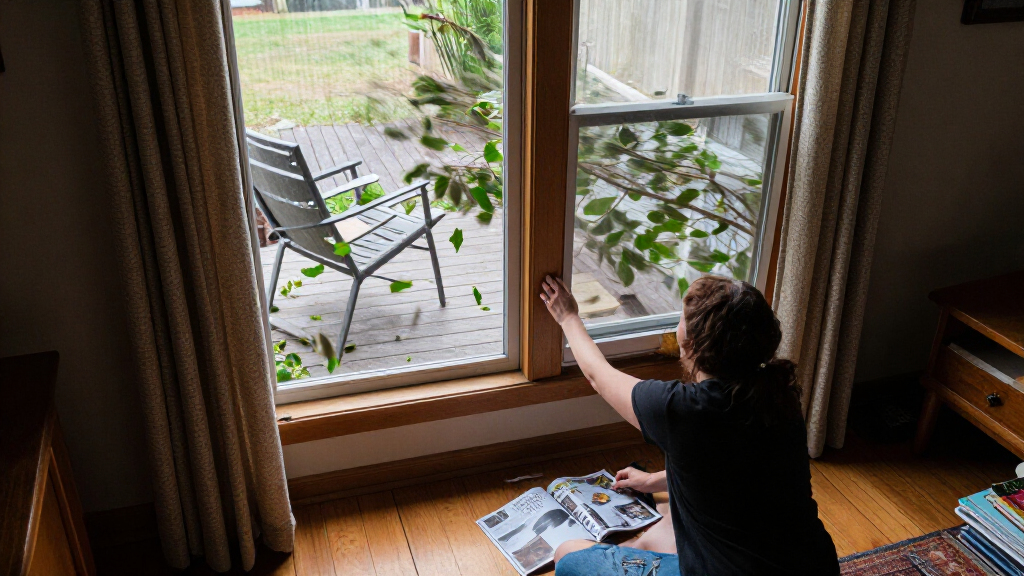
Fall windstorms can put extra stress on deciduous trees that still have their leaves: the canopy presents more surface for wind to push against, and saturated soil may hold roots less securely. Tree condition also matters, and homeowners should keep clear of newly leaning trees, lifted soil and hanging limbs after a storm.
Fall windstorms can put added stress on trees when deciduous trees still have their leaves, according to a Family Handyman report. The canopy gives wind more surface to push against, while rain-soaked soil may provide weaker support for roots, raising the risk of broken branches, leaning or uprooting in some conditions.
Tree professionals sometimes describe a leafy canopy’s effect as a “windsail”: leaves and branches catch wind, increasing pressure on the tree. The report cites research on red maples published in an International Society of Arboriculture journal, which found that crown structure affects the wind load a tree experiences. Trees can respond by turning or clustering leaves and bending branches, but that movement does not remove the risk.
A separate eight-year study of street trees in Rochester, New York, found that most recorded branch failures occurred while the trees were in leaf, the report says. That finding relates to the study’s trees and location; it does not establish that every leafy tree will fail in a storm or quantify the risk for all species and settings.
Rain can compound the strain. The U.S. Forest Service says saturated soil and shallow roots can make trees more vulnerable to windthrow, or uprooting. Penn State Extension likewise notes that trees may lean or uproot if wet soil cannot securely hold their root systems. The combination of a full canopy and loose, waterlogged ground can leave a tree more exposed, particularly if it also has decay, damaged roots or weak branches.
How Canopy and Soil Combine
The risk matters because fall storms can arrive before leaves have dropped, leaving trees exposed to wind at a time when rain may also have saturated the ground. A falling limb or uprooted tree can threaten people and property. The report describes conditions that can increase vulnerability, not a forecast that damage will occur at any particular location.
Tree health and history also affect how an individual tree responds. Decay, root damage, weak limbs and earlier storm damage can change its ability to withstand gusts. For homeowners, the practical takeaway is to watch for signs of movement and damage after a storm, rather than assuming that a tree is safe because it remained standing.
The report cautions against heavily thinning trees just before a storm. Pruning needs vary according to species and condition, so major decisions should be made with a qualified arborist. The cited research does not establish that pre-storm pruning is a reliable way to prevent damage in every case.
Products Worth Considering

DeWalt DCN930P1 20V 30° Framing Nailer Kit

Milwaukee M12 FUEL 12V 1/4-Inch Hex Cordless Impact Driver Kit

Metabo HPT NT1850DG 18V Cordless 18-Gauge Brad Nailer Kit
As an affiliate, we earn on qualifying purchases.
The Fall Storm Risk Factors
Deciduous trees lose their leaves seasonally, but strong winds and heavy rain can arrive while a canopy is still full. A tree’s crown is not a solid sail: leaves can turn or cluster, and branches can bend. Even so, the report says that foliage and branch structure affect how much wind a tree catches.
Ground conditions provide a second part of the picture. After heavy or prolonged rainfall, saturated soil may not anchor roots as firmly. Canopy exposure and root support therefore interact during a storm, while the tree’s underlying condition can affect the outcome. The report draws on arboriculture research, extension guidance and U.S. Forest Service information to describe these factors; it does not offer a location-specific warning.
“Tree professionals sometimes describe a dense canopy as having a windsail effect.”
— Family Handyman report
What Determines a Tree’s Risk
The report does not provide a numerical estimate of how much a full canopy or saturated soil raises the chance of damage. Risk varies by tree, and the material does not establish a single threshold for wind speed, rainfall or soil saturation at which a tree will fail. The Rochester study’s finding applies to the street trees and observation period it examined, not necessarily to all tree species or locations.
It may also be difficult to judge root damage, decay or structural weakness from the ground. A tree that looks intact can still need assessment, while visible movement does not by itself establish how soon it might fall. The report recommends professional evaluation when storm damage could threaten people or property.
After the Windstorm
After a storm, keep away from trees with new leaning, lifted soil, cracked limbs or hanging branches. Do not approach a damaged tree to inspect or remove a limb if it could fall or affect nearby people or property. Contact a qualified tree professional for an assessment when a damaged tree poses a potential hazard.
Before the next storm, homeowners can pay attention to a tree’s condition, but the report does not recommend heavy last-minute pruning as a general solution. Any pruning plan should account for the tree’s species and health and be discussed with a qualified arborist. The report gives no forecast for a particular storm; the immediate concern depends on local wind, rainfall and the condition of the trees involved.
Key Questions
Why can a tree with leaves catch more wind?
Leaves and branches increase the canopy’s surface for wind to push against. Trees can turn leaves and bend branches, but those responses do not eliminate wind stress.
Does wet soil make a tree more likely to fall?
Saturated soil may hold roots less securely, especially in trees with shallow roots, according to the U.S. Forest Service guidance cited in the report. Whether a particular tree will uproot depends on its condition and local storm factors.
Should I prune a tree before a windstorm?
The report does not recommend heavy pre-storm thinning as a universal fix. Pruning depends on species and tree condition; consult a qualified arborist about major work.
What warning signs should I look for after a storm?
Keep clear of a tree with new leaning, raised soil around the roots, cracked limbs or hanging branches. If it could threaten people or property, seek a professional assessment.
Source: rss