
TL;DR

Get decor and gifts delivered free with Prime
- Fast, free delivery on millions of items
- Prime Video, Amazon Music and more included
- Member-only deals all year
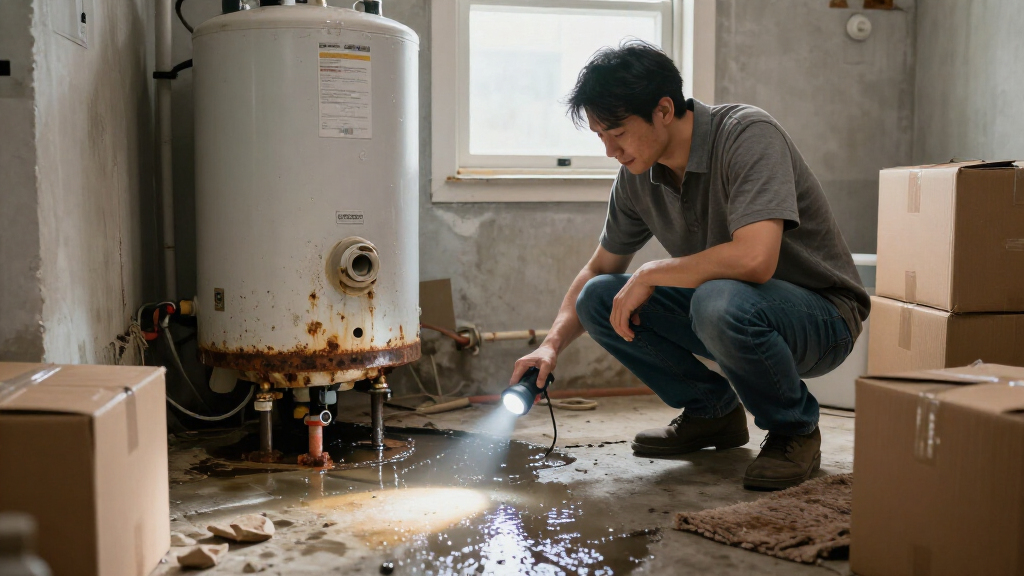
A Minnesota homeowner found a puddle after his 21-year-old water heater rusted through. The supply valve would not stop the water, so he shut off the home’s main supply and replaced the heater. Plumbers interviewed by Family Handyman said he should also have shut off the heater’s gas or electricity before working on it.
A 21-year-old water heater rusted through and flooded a Minnesota homeowner’s basement, while a faulty supply valve kept water flowing until he shut off the home’s main supply, according to a report by Family Handyman. The account highlights how an aging tank and a failed shutoff can turn a leak into a larger household emergency, and why plumbers say safety steps matter during repairs.
The homeowner, identified as Ethan, discovered the leak after finding that the bathtub water was not hot. When he opened the utility closet, he found water covering most of the floor and recognized that the heater tank had rusted through. He closed the supply line valve and attached a hose to the tank’s drain, expecting the remaining water to run out while he went to a home improvement store.
When he returned, water was still draining. That indicated the supply valve was not closing, so Ethan shut off water to the house at the main valve. He installed a replacement heater the next morning and got help from his father-in-law moving the old unit upstairs. The tank weighed more than 120 pounds, and water leaked out as they carried it despite efforts to contain it.
Plumbers consulted by Family Handyman said the tank’s age made corrosion unsurprising. The report says gas and propane heaters typically last 10 to 15 years; Ethan’s was 21. Plumber Travis Hargrave said older heater valves commonly fail because of rotted gaskets or buildup. The report does not establish exactly what caused Ethan’s valve to fail.
When a Leak Defeats the Shutoff
The episode shows why homeowners need to know where the main water shutoff is, especially when a fixture-level valve does not stop a leak. Plumber Brendan Tonks told Family Handyman that shutting off the main is the homeowner’s only move in that situation, and said even a short delay can allow hundreds of gallons of water onto a floor.
A leak can also carry costs beyond the replacement appliance. Family Handyman gives estimated full-replacement costs of about $700 for a DIY installation and $1,500 to $3,500 for professional work. The report says resulting water damage and mold remediation could run from thousands to tens of thousands of dollars if a leak is not caught and fixed promptly. Those are general estimates in the source, not a disclosed bill for Ethan’s home.
The repair also involves gas or electrical connections. Plumbers told the publication that Ethan should have shut off the heater’s energy source before working on it. Tonks advised against DIY replacement because of the hazards; Ethan, by contrast, described the job as manageable for a confident DIYer with help. Readers should treat that as a difference in opinion, and use a licensed professional for gas, electrical or plumbing work they are not qualified to do.
An Aging Tank in a Cold Climate
Family Handyman reported that Ethan lives in Minnesota, where cold conditions can make water heaters work harder. The publication’s experts cited typical lifespans of 10 to 15 years for gas and propane units, while Ethan’s tank had reached 21. The report does not specify the heater’s fuel type, maintenance history or installation date.
The article also describes two possible prevention measures. Replacing an internal anode rod every few years can help slow corrosion, according to the report, with estimated costs of $20 to $50 for a DIY replacement or $150 to $600 for a professional. Plumber Kolby Barnes suggested considering a smart leak monitor that can shut off water during an emergency. The report does not say Ethan had either measure installed.
Age can affect the valves as well as the tank. Barnes noted that older homes may use gate valves for the main shutoff, which can be vulnerable to buildup and may not close properly. Ethan’s home was described as a 1940s bungalow; the source does not say whether its main valve failed or whether it was tested during the incident.
““If there’s a silver lining here, it’s that we were home when this happened.””
— Ethan, the homeowner, speaking to Family Handyman
The Damage and Valve Cause
The report does not state how much damage the flood caused, whether mold developed, or what the total repair bill was. It also does not identify the precise reason the supply valve failed, confirm whether Ethan’s main shutoff worked without difficulty, or say whether the home had a leak detector. The plumbers’ lifespan and cost figures are general estimates, not an inspection of this specific installation.
The source includes Ethan’s account of the replacement and plumbers’ safety advice, but does not provide independent documentation of the repair. It does not say whether permits were required or obtained, or whether the installation was inspected.
Inspecting and Replacing Aging Heaters
Family Handyman’s account points homeowners with aging heaters toward checking the unit and its shutoff valves before a failure. The report recommends turning off the home’s main water supply when a heater valve does not stop flow. Before touching the heater, its guidance says to shut off its gas or electrical power, then drain the tank. Work involving gas, electricity, plumbing, or local permit requirements should be handled by a licensed professional when the homeowner is not qualified.
The report gives no indication of a follow-up inspection or further work at Ethan’s house. For other homeowners, the next practical step depends on the equipment’s age and condition: a qualified plumber can assess the tank, valves and anode rod, and explain replacement options. The source does not set a universal replacement deadline or say that every older heater is about to fail.
Key Questions
What happened to Ethan’s water heater?
His 21-year-old tank rusted through, leaving water across much of the utility closet floor and flooding the basement, according to Family Handyman.
Why did shutting the heater’s supply valve not stop the water?
The water kept draining after Ethan closed the valve. The report says this indicated that the supply valve was not closing. Plumber Travis Hargrave said worn gaskets or buildup can cause older valves to fail, but the exact cause in Ethan’s case was not confirmed.
What should someone do if a heater valve will not shut off the water?
Family Handyman’s plumbers said to shut off the home’s main water supply. Before touching the heater, the report’s guidance also says to shut off its gas or electricity. Call a licensed plumber if you are not qualified to handle the work.
How long does a water heater usually last?
The report says gas and propane water heaters typically last 10 to 15 years before corrosion. Actual service life can vary; the article does not give a specific lifespan for every heater type.
How much can replacing a water heater cost?
Family Handyman estimates about $700 for DIY replacement and $1,500 to $3,500 for professional replacement. These are general estimates in the article, not the amount Ethan paid.
Source: rss
Halloween Picks
halloween
As an affiliate, we earn on qualifying purchases.