
TL;DR

Get decor and gifts delivered free with Prime
- Fast, free delivery on millions of items
- Prime Video, Amazon Music and more included
- Member-only deals all year
Professional organizer Mary Cornetta advises gathering physical photos in one place before sorting, then letting go of blurry images, duplicates and pictures with little meaning. For photos kept, she recommends choosing an organizing system and considering who else in the family might value particular images. The report does not provide a full archival-storage guide or detailed preservation standards.
Professional organizer Mary Cornetta has outlined a method for sorting old physical photographs that includes gathering them in one place, using clear categories and considering whether to discard blurry shots, duplicates and images that no longer hold meaning. Her advice, published by Apartment Therapy, addresses the practical and emotional considerations involved in sorting household photo collections.
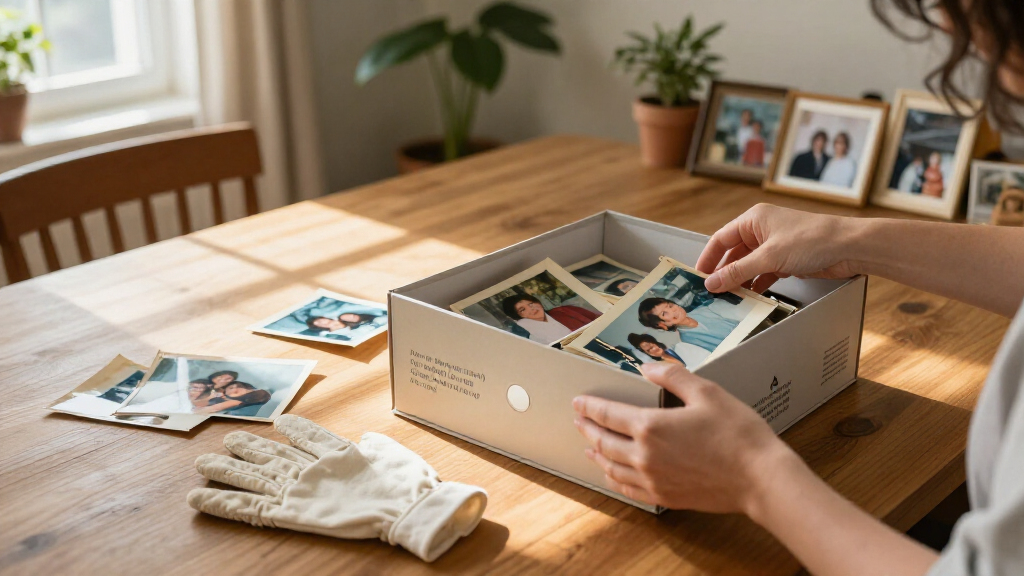
Cornetta recommends putting off photo sorting until after a broader whole-home organizing project, if one is underway. In the meantime, collect photographs found around the house in a box. When ready to begin, bring them together so the full collection can be reviewed at once, and use a clear surface, such as a large table. She also suggests asking for help when the images matter to other family members and using labels or index cards to keep groups organized.
Possible sorting categories include year, location, person, event or theme. Cornetta says people can start by removing photographs that are hard to identify or see clearly, including blurry and awkwardly cropped images. She also recommends choosing one print from a set of duplicates or nearly identical shots rather than holding on to every version.
Other decisions are more personal. Cornetta suggests checking with relatives before discarding unidentified family photos, since they may recognize people or want particular pictures. Images that bring up difficult memories can be kept separately in a personal memory box if someone chooses, rather than mixed in with current family photographs. Photos of other relatives, their children or pets may be passed on—but Cornetta advises asking first rather than handing someone a pile to sort through.
A Method for Organizing Family Photos
Cornetta’s advice outlines a method for reducing a photo collection while making decisions about individual images. A shared sorting area and labeling system can help organize a collection, while consulting relatives may help identify photographs that could be important to other family members.
Albums are one option Cornetta cites for prints people want to browse or share with guests. Her approach distinguishes between photographs to keep, pass on or discard, and includes the option of retaining photographs associated with difficult memories.
Products Worth Considering

Greenworks 24V Brushless Drill and Impact Driver Combo Kit with Two 2.0Ah USB-C Batteries and 65W Charger

DEWALT 20V MAX 5-Tool Cordless Power Tool Combo Kit with Battery and Charger (DCK540D1)

DEWALT 20V MAX 1/4-Inch Hydraulic Impact Driver (DCF870B)
As an affiliate, we earn on qualifying purchases.
From Loose Prints to Albums
The Apartment Therapy report is written by Mary Cornetta, a professional organizer who founded Sort and Sweet Inc. on Long Island in 2017, according to the article. She describes physical photographs as challenging to sort because the process can bring up joy, nostalgia or sadness, while the number of prints can make the work feel overwhelming.
The article’s organization section recommends photo albums for people who want to flip through their pictures or show them to visitors. It also identifies other possible systems, including sorting by year, name, event, location or theme. The supplied report excerpt ends partway through its album guidance, so it does not provide all the article’s stated organizing methods or detailed instructions for long-term storage.
Storage Details Not Supplied
The source excerpt does not specify archival materials, ideal storage conditions, digitizing methods or a complete list of organizing options. It therefore does not establish how readers should protect prints against fading, moisture or other forms of deterioration. The report also offers personal organizing advice, not a universal rule for deciding which family photographs should be kept.
Whether to discard an image can depend on family history and individual feelings. Cornetta’s recommendations leave room to preserve a small number of emotionally complicated photos or to ask relatives for input, but the excerpt does not set a standard for resolving disagreements about shared family pictures.
Sort, Label and Choose Albums
Readers following Cornetta’s approach can first gather prints from around the home, then sort them into labeled groups and review the collection before deciding what to keep. For unidentified family images, the next step may be to consult relatives; for photos featuring other people, ask whether they want the images before passing them along.
Once the selection is made, Cornetta recommends albums as a way to keep chosen prints accessible for browsing. The source excerpt gives no publication date beyond its relative update time and names no follow-up event or scheduled next development.
Key Questions
What should I do before sorting old photos?
Gather photos in one place and set aside a clear surface for sorting. Cornetta advises finishing a broader home-organizing project first, if one is underway, and collecting any photos found along the way in a box.
Which old photographs can I consider discarding?
Cornetta suggests starting with blurry, hard-to-identify or awkwardly cropped images, then looking for duplicates and nearly identical shots. She also says some photos may be better kept by relatives or may no longer feel meaningful to the person sorting them.
Should I throw away photographs I cannot identify?
Not before checking with family, if the pictures may be family photographs. A relative might recognize the people or want to keep the image, Cornetta advises.
How can I organize the photos I keep?
Choose a system such as year, location, person, event or theme, and use labels or index cards to keep groups together. Cornetta also recommends albums for prints people want to flip through or share.
Is it okay to keep photos that bring up difficult memories?
Cornetta’s advice leaves that choice to the individual. Someone may keep a small number of bittersweet photos in a personal memory box, separate from current family photos, while letting go of other images from ended relationships or friendships.
Source: apartmenttherapy.com