
TL;DR

Get decor and gifts delivered free with Prime
- Fast, free delivery on millions of items
- Prime Video, Amazon Music and more included
- Member-only deals all year
Veranda published advice from eight interior designers on shopping for art, including researching prices, assessing a room and setting a budget before buying. The designers recommend choosing work that resonates personally and using dealers, consultants or auction specialists when buyers need help with sourcing or provenance.
Veranda has published advice from eight interior designers on how to shop for art, covering market research, budgeting, sourcing and choosing work for a home. The recommendations offer buyers a practical starting point, while emphasizing that art purchases are personal and that investment-minded buyers may need professional help verifying a work’s history.
New York designer and shop owner Katie Leede recommends looking at available works and prices on sites such as Artnet before buying. She also suggests speaking with gallery staff, art consultants and artists, and researching upcoming auctions. According to Leede, a buyer can sometimes make an offer through an auction house after a work fails to meet its minimum bid.
Christina Nielsen, who works in New York and London, advises building relationships with local dealers and vendors. She says designers can help clients learn about both established and emerging artists, and notes that buying directly from an artist is another option. Nielsen’s central advice is to choose work that appeals to the buyer, even if it does not seem to fit the room at first.
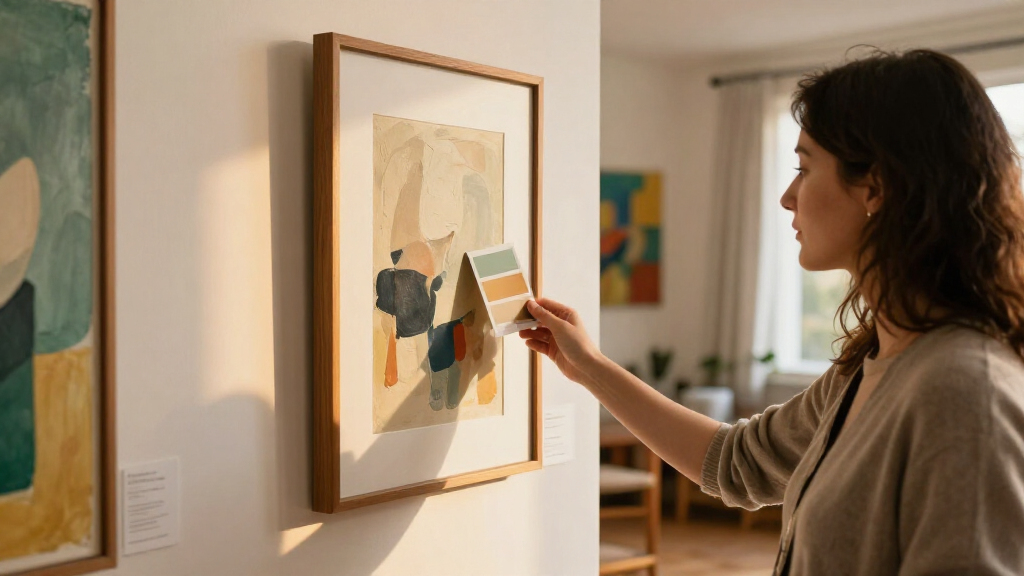
New Orleans designer Hattie Sparks Collins recommends starting with the space: decide where the art will go and whether one large piece, a diptych or several works make sense. Buyers should then set a budget and consider whether they want a reproduction or an original, as well as the subject and medium. Collins says art need not match a room’s colors, but can complement them.
A More Deliberate Art Purchase
The advice addresses two common decisions for home buyers: what to buy and how much to spend. Planning around the wall and budget can help narrow the search, while comparing sources—from artists and dealers to auctions and online platforms—gives buyers different routes to consider.
For higher-value purchases, provenance and authenticity can affect both confidence in the transaction and the work’s value. New York designer Stewart Manger recommends art consultants who can check a work’s provenance and, where appropriate, confirm with artist foundations that it belongs to the artist’s body of work. His advice distinguishes that process from buying less expensive decorative prints or works on paper.
The designers also frame art as something people live with, not simply a way to match a room. Joy Moyler says buyers should select work they want to see every day. That guidance puts personal taste alongside practical considerations such as framing, color and placement.
Products Worth Considering

EGO Power+ Cordless Pole Saw with LED Cut Line Indicator, 56V 2.5Ah Battery and Charger (PS1001)

WORX 20V PowerShare Brushless 18-Gauge Cordless Brad Nailer, WX838L.1

Greenworks 24V 5-Tool Combo Kit with 4.0Ah and 2.0Ah Batteries, USB-C Power Bank, and 65W Charger
As an affiliate, we earn on qualifying purchases.
From Room Planning to Research
The source is a Veranda shopping guide that gathers recommendations from eight designers and discusses a range of buyers, from first-time purchasers to experienced collectors. Its focus is practical home art buying rather than a report on a new market rule, sales trend or specific collection.
The designers point readers toward several kinds of sources. Leede mentions Artnet, galleries, artists, auctions and local Long Island creatives. Nielsen names dealers and artist Lucie De Moyencourt as sources she uses. Moyler describes a mix of specialist platforms and retailers, while Manger points to auction-house specialists and online marketplaces for more decorative, lower-cost works.
For display, Collins discusses choosing a layout and considering the room’s colors. Moyler says a simpler wall treatment can help art stand out and suggests drawing a mat or frame color from the work. These are designers’ preferences and recommendations, not requirements for buying or displaying art.
““Do a little research before buying.””
— Katie Leede, New York designer and shop owner
No Pricing or Market Findings
The guide offers individual designers’ recommendations; it does not provide a market-wide analysis, price data or evidence that one buying route is consistently cheaper. The source also does not specify the guide’s publication date, the designers’ full list of recommendations, or particular prices for the platforms and dealers mentioned.
Advice about auction offers and provenance is not a guarantee that a buyer will secure a discount or verify every work. The source does not describe the procedures or costs involved in hiring a consultant, nor does it give a checklist for assessing condition, shipping, insurance or resale value. Buyers considering a specific piece would need to confirm those details with the seller or relevant specialist.
Steps Before Choosing a Piece
The guide sets out no scheduled follow-up or next announcement. For readers applying its advice, the next steps are to measure the space, set a spending limit and research possible sources. Buyers can then compare works, ask sellers about their history and condition, and decide whether a consultant or auction specialist is appropriate for the purchase.
Before committing, buyers should also clarify the total cost, including framing and any delivery or installation charges. The designers’ guidance leaves the final choice to the individual: select a work that suits the buyer’s interests and consider how it will sit in the home.
Key Questions
What should I do before shopping for art?
Start by assessing the wall or room you want to fill and setting a budget. Then consider the size, subject and medium you are interested in, and research available works and prices.
Does art need to match my room?
No. Collins says art does not need to match a room’s color scheme, though it can complement the colors. Nielsen likewise recommends prioritizing work that appeals to you.
Where can I look for art?
The designers mention artists, galleries, local dealers, auction houses and online platforms. The right source can depend on the work, budget and level of guidance a buyer wants.
When might I need an art consultant?
Manger recommends considering a consultant for an investment purchase, particularly when provenance needs to be checked. The guide does not set a price threshold for when professional help is worthwhile.
Source: veranda.com