
TL;DR

Get decor and gifts delivered free with Prime
- Fast, free delivery on millions of items
- Prime Video, Amazon Music and more included
- Member-only deals all year
Livingetc’s Style Pulse report for spring/summer 2027 identifies the “decorative gesture”: a single ornamental detail used to add contrast and personality to a contemporary interior. Designers quoted in the report say such finishing touches can make a room feel more resolved, but the trend is a design recommendation, not a measured finding about what every room needs.
Livingetc’s Style Pulse report for spring/summer 2027 highlights a design approach it calls the “decorative gesture”: adding one ornamental detail to a largely contemporary room. Examples include a tassel on a light, a fringe on a sofa or an unexpectedly gilded frame. The report presents the idea as a way to introduce contrast without making a modern interior feel traditionally decorated throughout.
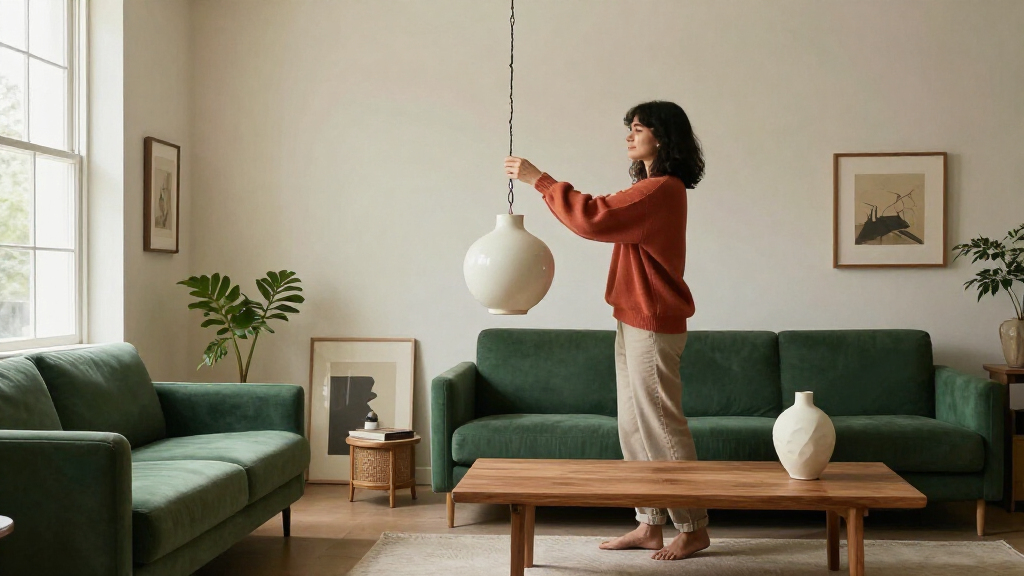
The gesture is intentionally small and distinct from the room’s dominant style. Livingetc describes accents that catch the eye because they sit against cleaner or more restrained surroundings: an ornate brass handle on veined marble, a decorative trim on contemporary upholstery, or a vintage glass light in a modern living room. These are examples in the report, not a prescribed formula or a claim that every space needs an added ornament.
Los Angeles interior designer Ryan Saghian told Livingetc that he looks for an element that challenges the room around it, which may be an antique, an ornate feature or something unexpected. His view is that contrast can make a room more interesting than matching every object or drawing from one period. The report also quotes Marisa Gutmacher, senior vice president of design at Samuel & Sons, who describes a final detail as a way to give a piece presence or connect upholstery to its surroundings.
The article gives particular attention to passementerie, the craft of making decorative trimmings such as tassels, cords and braids. It says these details are appearing in contemporary settings, including as single, graphic drops on lighting and mirrors. Passementerie artist Elizabeth Ashdown argues that custom-made trim can personalize a room; that is her professional assessment, rather than an independently measured result.
How One Accent Changes a Room
The idea offers a relatively limited way for homeowners and renters to try ornament without changing an entire room’s style. A single contrasting detail may be easier to add than new furniture or a full redecoration, while allowing traditional craft or vintage objects to sit alongside contemporary materials. The report’s examples also point to decorative hardware and textile trim as possible routes, not just larger purchases.
There is a practical design distinction here: the featured accents are meant to be deliberate and specific, rather than a general instruction to add more decoration. Saghian and Gutmacher describe how a contrasting or finishing element can make a composition feel more individual or complete. Those are designers’ judgments, and the article does not provide consumer research or evidence that a particular accent improves a room for everyone.
For makers, the coverage also draws attention to passementerie as a specialized craft with historical roots. Ashdown says it involves centuries of skill and knowledge, while Livingetc describes her practice as combining traditional techniques with contemporary design. That perspective helps explain why a small, carefully made trim can carry more meaning than its size suggests.
Products Worth Considering

EGO POWER+ Cordless Leaf Blower, 765 CFM, with 5.0Ah Battery (LB7654)

DEWALT DW074KD Indoor/Outdoor Self-Leveling Rotary Laser Level Kit

WORX WX501L 20V Brushless Cordless Reciprocating Saw
As an affiliate, we earn on qualifying purchases.
From Traditional Trim to Modern Rooms
Livingetc situates the trend against a broader interest in traditional interiors, ornament and what it calls a “storied” sense of decoration. That shift can feel at odds with contemporary rooms built around restrained forms and materials. The decorative gesture is offered as a middle ground: retain a modern overall look while introducing one detail associated with a more ornamental style.
The report’s examples include tassels on minimalist lighting, vintage glass in a contemporary living room, and a gilded frame in a minimally decorated home. It also references Workstead’s Lantern Pyramid collection, in which a single tassel adorns a minimalist form. The point is contrast between object and setting, rather than a return to a fully traditional scheme.
Livingetc publishes Style Pulse as a biannual trend report. Its SS27 edition looks ahead to the spring/summer 2027 season, while the supplied article also discusses design details appearing in 2026. The material is editorial trend coverage, not an industry-wide survey or a report of sales data.
““I think the best interiors have a little contradiction in them.””
— Ryan Saghian, Los Angeles-based interior designer, quoted by Livingetc
How Broad Is the Trend?
The report does not quantify how common the decorative gesture is, identify how many designers or consumers are adopting it, or compare its popularity with other interior trends. It also offers no evidence that adding an ornamental detail will make every room feel more complete. The examples and assessments are editorial and come from designers and a passementerie specialist.
The source does not set out a single definition for how large or conspicuous a gesture should be, or say whether the detail must be vintage, handmade or newly purchased. What works will depend on the room, materials and personal taste. The article’s central recommendation is interpretive: use one intentional contrast, rather than follow a fixed decorating rule.
More SS27 Details Ahead
Livingetc says the decorative gesture appears in its biannual Style Pulse SS27 report, which covers trends for the upcoming spring/summer season. The supplied material does not give a schedule for additional coverage or name a next release date. Readers can look to the rest of the report for other trend forecasts and examples, while the popularity and staying power of this particular approach remain to be seen.
For anyone applying the idea at home, the source offers no required product or project. Its examples range from a tassel or trim to a frame or handle, leaving the choice to the room’s existing style and the person decorating it.
Key Questions
What does “decorative gesture” mean in interior design?
In Livingetc’s report, it means adding one ornamental or unexpected detail to a room that is otherwise more contemporary or restrained. Examples include a tassel on lighting, a fringed sofa detail or a gilded frame.
Does the trend mean traditional interiors are coming back?
The report describes renewed interest in traditional ornament, but presents the decorative gesture as a way to use a small traditional accent without adopting a fully classic interior style.
What is passementerie?
Passementerie is the craft of making decorative trimmings, including tassels, cords, braids and fringes. The report quotes artist Elizabeth Ashdown on its use in contemporary rooms.
Is there evidence that every room needs a decorative accent?
No. Livingetc presents the idea as a design trend and includes opinions from professionals, but it does not provide research showing that every room needs an ornamental detail or that the approach suits everyone.
Source: livingetc.com