
TL;DR

Get decor and gifts delivered free with Prime
- Fast, free delivery on millions of items
- Prime Video, Amazon Music and more included
- Member-only deals all year
Shared kids rooms work best with clearly defined zones, space-saving bunks, and the right clock setup. One clock promotes routines, but two can suit different schedules. Personal touches make it special.
Sharing a room with a sibling can be an adventure — or a challenge. The key is balancing space, personality, and practicality. Instead of a jumble of toys and beds, thoughtful design turns a shared room into a playground and a sanctuary.
In this guide, you’ll learn how to create zones that make sense, choose between bunk beds or other furniture, and decide whether one clock or two helps build routines. Get ready to transform a small space into a hub of creativity and comfort.
Designate specific zones for sleep, play, and study to keep shared rooms organized.
Bunk beds and multi-functional furniture save space and add fun elements.
Use color, decor, and personal touches to make each child feel ownership of their space.
Choose one clock to promote routines or two for different schedules — consider your kids’ ages.
Involving children in decorating helps them feel responsible and happy with their shared room.
How to Create Clear Zones That Make Sharing Easier
Designating specific areas in the room keeps chaos at bay. Think of zones as the room’s heartbeat — each with its own purpose and vibe. For example, a cozy corner for reading, a bright desk for homework, and a soft rug for play.
Using visual cues like rugs, wall decals, or furniture placement helps children understand boundaries and expectations. These cues act as visual anchors, signaling what activity belongs where. This clarity fosters independence, as kids learn to transition smoothly without constant adult intervention. When routines become associated with specific zones, children develop a sense of order and responsibility.
For instance, a colorful rug in the play area invites spontaneous play, while a quiet, darker corner signals a space for reading or resting. These deliberate choices reinforce routines and help children internalize the purpose of each zone, leading to better self-regulation and less conflict during transitions.
As an affiliate, we earn on qualifying purchases.
Bunk Beds and Multi-Functional Furniture: Space Savers That Work
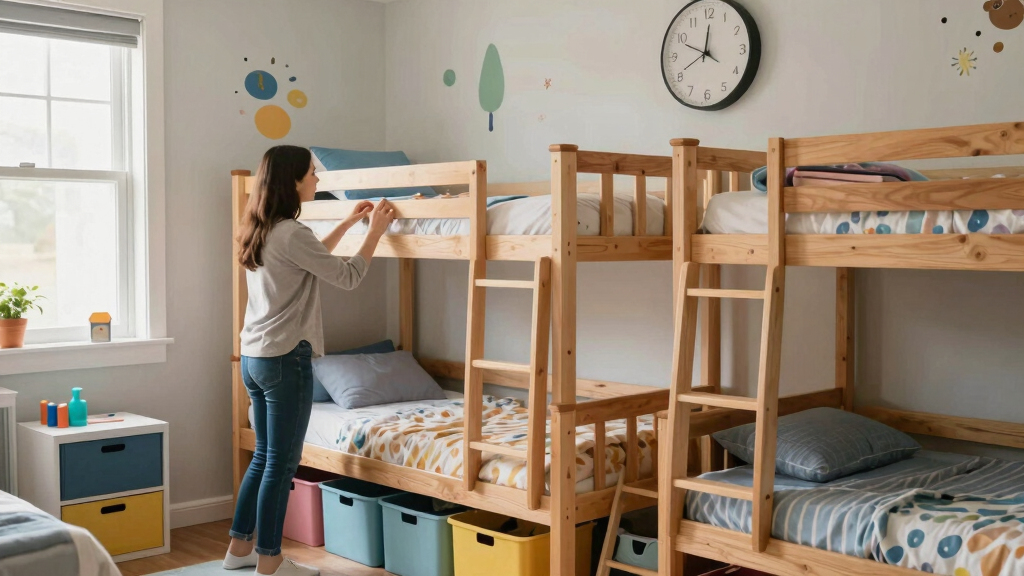
Bunk beds are a popular choice because they maximize vertical space, freeing up the floor for play or other furniture. Beyond just saving space, they add an element of fun that appeals to kids’ imaginations. However, safety considerations are crucial: guardrails prevent falls, sturdy ladders ensure stability, and placement away from ceiling fans or windows reduces hazards. Understanding these tradeoffs helps parents choose wisely.
Multi-functional furniture offers flexibility as children grow and their needs change. For example, loft beds with desks underneath create a dedicated study area without sacrificing space, while beds with built-in drawers reduce clutter and provide organized storage. These options support a dynamic environment but often come at a higher initial cost and require careful planning to ensure safety and longevity.
Choosing between bunk beds and other multi-purpose options involves weighing space efficiency against privacy and routine management. Bunks may reduce privacy but foster camaraderie and fun, while multi-purpose furniture can offer more personal space but may require more complex arrangements. The decision hinges on your children’s ages, routines, and personalities, and understanding these tradeoffs helps create a balanced, functional room.
As an affiliate, we earn on qualifying purchases.
Color and Decor: Making Zones Feel Special and Personal
Color choices influence mood and behavior, making them a powerful tool in zone design. Calming shades like seafoam green or soft lavender promote relaxation and restful sleep, which can help children settle more easily at night. Conversely, vibrant colors like yellow or red energize the space, encouraging active play and creativity. Understanding these effects allows you to craft zones that support the intended activity.
Personal touches deepen children’s connection to their space. Incorporating themes they love—like dinosaurs or fairies—through wall decals, bedding, or accessories fosters a sense of ownership. These details also serve as visual cues, reinforcing the purpose of each zone and making transitions smoother. For example, a jungle-themed corner with lush green walls and animal decals can spark imaginative play and create a mini adventure every day.
Thoughtful color and decor choices do more than decorate—they influence behavior, mood, and ownership. Calmer hues in sleeping areas signal relaxation, helping children wind down, while bright, lively decor in play zones stimulates energy and engagement. Personal touches foster pride and responsibility, encouraging kids to care for their space and keep it tidy, which ultimately supports a harmonious shared environment.
As an affiliate, we earn on qualifying purchases.
Shared vs. Personal Spaces: How to Balance Them
Sharing a room doesn’t mean sacrificing personal space; instead, it’s about creating a balance that respects individuality and promotes harmony. Providing each child with personal storage—such as small shelves, labeled bins, or hanging organizers—allows them to keep their belongings organized and within reach, fostering independence. When children have designated spots for their items, they develop a sense of ownership and responsibility, reducing clutter and disputes over space.
Privacy is also essential for healthy development. Simple solutions like curtains, screens, or fabric dividers around beds create private retreats within the shared environment. These boundaries give each child a sense of control and autonomy, which is critical for developing independence and respecting personal boundaries. For example, a twin bed with a fabric curtain can serve as a cozy nook, providing a retreat for reading or quiet time, helping children feel secure and respected.
Balancing shared and personal spaces is about understanding the importance of autonomy within a communal setting. When children feel they have their own space, they’re more likely to cooperate and less likely to feel overwhelmed or resentful. This balance supports emotional well-being and creates a more peaceful, organized room where everyone feels valued and comfortable.
As an affiliate, we earn on qualifying purchases.
One Clock or Two? Setting Up Routines in a Shared Room
Deciding whether to use one clock or two in a shared children’s room hinges on understanding routines and individual needs. A single clock helps synchronize daily activities, reinforcing shared routines like wake-up times, meals, and bedtimes. This fosters a sense of community and predictability, which is especially beneficial for younger children who thrive on routine. However, it can also lead to conflicts if children have different sleep schedules or wake times, as they might feel pressured to conform or disturb each other’s routines.
Introducing two clocks allows for greater flexibility, particularly when children have varying routines or preferences. For example, an older child who stays up later can have an alarm set for their bedtime without disturbing a younger sibling who needs to wake early. Digital clocks with adjustable alarms support independent management of schedules, encouraging responsibility and autonomy. This setup can reduce conflicts and foster respect for individual routines, which is vital as children grow and develop their independence.
Choosing between one or two clocks involves assessing how routines are managed within your family. A single clock promotes unity and shared responsibility, while two clocks support individual routines and independence. The decision should consider your children’s ages, personalities, and daily schedules, aiming to create a harmonious environment that respects both collective and individual needs.
Latest Trends Making Shared Kids Rooms Smarter and Safer
Today’s shared rooms incorporate smart tech that enhances safety and routine management. Devices like night lights that change color can help children feel secure at night, while alarms with gentle wake-up sounds reduce morning chaos. Clocks with sleep tracking foster healthy sleep habits by providing feedback and encouraging consistent routines. These innovations support children’s independence and well-being by making routines more engaging and less stressful.
Multi-functional furniture is trending because it adapts to growing needs. Modular beds, hidden storage, and adjustable elements allow the room to evolve as children grow, reducing the need for frequent replacements. Eco-friendly materials and calming color palettes are also popular, creating a peaceful, sustainable environment that promotes focus and relaxation, especially in busy households with energetic kids. These elements combine to make shared rooms not only smarter but also safer, more adaptable, and aligned with modern parenting priorities.
Quick Tips for Making Shared Kids Room Work
- Use vertical storage — shelves, hooks, and hanging organizers maximize space and keep clutter off the floor, which is especially important in small rooms where every inch counts.
- Involve kids in decorating — giving them a say in the design fosters pride and responsibility, making it more likely they’ll keep their space tidy and organized.
- Choose multi-purpose furniture — beds with drawers or desks underneath serve dual functions, saving space and providing functional zones within the room.
- Pick calming or vibrant colors based on each zone’s purpose — calming hues for sleep areas and energetic colors for play zones help reinforce routines and mood.
- Set clear routines with one or two clocks — consistency in wake-up and bedtimes fosters security and helps children develop good habits.
How to Divide a Room into Zones Without Losing Space
- Start with furniture placement: beds, desks, and storage units define natural boundaries and help organize the room efficiently.
- Use rugs or curtains as visual dividers that create distinct zones without blocking light or airflow, which maintains a sense of openness and comfort.
- Paint or decal different wall sections to visually reinforce separate themes or functions, making each zone feel purposeful and unique.
- Arrange furniture so that each zone feels cozy yet accessible, encouraging children to use their spaces independently and comfortably.
- Keep pathways clear for easy movement and play, avoiding clutter that can cause frustration or accidents.
For example, a corner with a soft rug and a small bookshelf becomes the perfect reading nook, visually separated but still part of the same shared environment. Thoughtful arrangement and visual cues help children understand boundaries, fostering independence and reducing conflicts while maximizing the use of available space.
Frequently Asked Questions
Use individual bedding, decor, and storage. Let each child pick a theme or color for their zone. Small touches like name plaques or favorite toys also boost their sense of ownership.
What are the best safety tips for bunk beds?
Ensure guardrails are secure, the ladder is stable, and the bed is away from ceiling fans or windows. Always follow manufacturer safety instructions and regularly check for loose parts.
How can I organize a small shared room efficiently?
Maximize vertical space with shelves, hooks, and hanging organizers. Use under-bed bins for storage and choose furniture that doubles as storage or work space. Clear zones help maintain order.
Should I have one clock or two in a shared room?
If your children share routines and wake times, one clock works best to unify schedules. If they have different bedtimes or morning routines, two clocks provide clarity and independence.
What are some creative ways to divide the room into zones?
Use rugs, curtains, or furniture placement for visual separation. Painting different wall sections or adding decals can also define each zone — making the space feel purposeful and fun.
Conclusion
A well-planned shared kids room balances fun, function, and personality. Think of it as creating a tiny universe where your children can sleep, learn, and dream side by side.
Remember, a little creativity and a lot of space-smart choices turn chaos into cozy. So, pick your zones, choose your furniture wisely, and let the kids’ personalities shine — one room, many stories.
Columbus Day / Indigenous Peoples' Day Picks
long weekend sales
As an affiliate, we earn on qualifying purchases.