
TL;DR
A Hunker DIY report describes lightly misting curtains with a mixture of ¼ cup rubbing alcohol and 1 cup distilled water as an occasional fabric refresher. The spray may evaporate quickly, but it does not clean curtains or remove the cause of a stale smell; alcohol is flammable, and fabric compatibility should be checked first.
A Hunker DIY report describes a rubbing-alcohol and distilled-water spray as an occasional way to refresh curtains that smell stale, while stressing that it is not a substitute for cleaning and must be kept away from flames and heat. The advice matters to people looking for a quick fabric refresher, but the report does not present the mixture as a tested odor-removal treatment.

Get decor and gifts delivered free with Prime
- Fast, free delivery on millions of items
- Prime Video, Amazon Music and more included
- Member-only deals all year
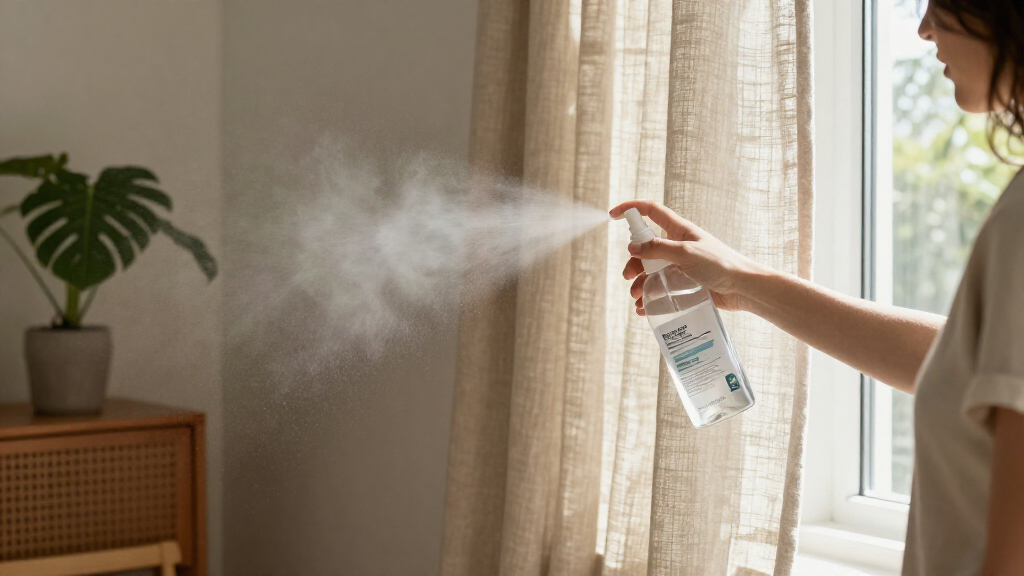
The suggested recipe combines ¼ cup of rubbing alcohol with 1 cup of distilled water in a clean, labeled spray bottle. The article says an optional essential oil can be added for fragrance, but advises testing it on the curtain fabric first because it could leave a stain or residue. If using oil, the bottle should be shaken before each application to disperse it.
Before spraying, the report recommends vacuuming the curtains with an upholstery attachment to remove loose dust. Apply only a light mist, not enough to soak the fabric, and let the curtains air-dry fully. The report says alcohol evaporates quickly and its own scent should not linger, but it does not provide independent testing or measurements of how well the mixture changes odors.
Hunker cautions that dry-clean-only curtains should be checked with a dry cleaner before any homemade spray is applied. It also advises using the mixture in a well-ventilated area, away from candles, heaters and other heat sources because rubbing alcohol is flammable. Store the labeled bottle upright in a cool place away from heat.
A Refresher, Not an Odor Cure
The practical distinction is between freshening fabric and removing the cause of a smell. Hunker says the diluted mixture can serve as an occasional finishing touch after cleaning, but it does not remove whatever is producing a stale odor. Adding essential oil may mask the smell rather than address its source.
That makes the care label and the condition of the curtains more important than the spray itself. Applying liquid to delicate or dry-clean-only fabric may be unsuitable, and fragrance oils can leave marks. Readers should treat the recipe as a household suggestion, not a guarantee that every fabric will tolerate it or that it will resolve persistent odors.
Products Worth Considering

Metabo HPT Brad Nailer, 18 Gauge Cordless, 18V Kit, NT1850DG

EGO Power+ SNT2425 24-Inch Two-Stage Snow Blower with Two 7.5Ah Batteries and Dual-Port Charger

Greenworks 48V Cordless 17-Inch Push Lawn Mower with Two 4.0Ah Batteries
As an affiliate, we earn on qualifying purchases.
How the DIY Method Is Meant to Work
The Hunker report presents the spray as an alternative to linen spray for curtains that have been overlooked during routine room cleaning. Its explanation is that rubbing alcohol evaporates quickly, allowing a lightly misted fabric to dry without leaving the alcohol scent behind for long. The supplied material does not cite a laboratory study or compare the recipe with commercial products.
The instructions place the spray after basic care: vacuum loose dust, follow the fabric’s care label, and continue cleaning curtains as directed. For dry-clean-only panels, Hunker recommends asking a dry cleaner before using the homemade mixture. In other words, the spray is framed as an occasional add-on, not a replacement for laundering, professional cleaning or finding the source of a lingering smell.
“Think of this solution as an alternative to a linen spray.”
— Hunker report
Fabric Compatibility and Results Vary
The supplied report does not identify which curtain fabrics have been tested with the recipe, quantify any odor reduction or establish how often the spray can safely be applied. Results may vary with the fabric, its finish and the source of the odor. The article advises testing essential oils, but the supplied instructions do not give a universal test method or guarantee that a hidden spot test will predict every result.
It is also unclear from the source whether the alcohol concentration varies among products. Hunker gives a recipe but does not specify a particular rubbing-alcohol strength. Readers should check product and fabric-care instructions, avoid soaking fabric, and seek professional guidance for dry-clean-only curtains. Persistent odors may need a different response because the spray does not remove their underlying cause.
Check Labels Before Spraying
Anyone considering the recipe should first read the curtain’s care label and, for dry-clean-only panels, contact a dry cleaner. If the fabric is suitable, the report’s steps are to vacuum first, test optional fragrance on an inconspicuous area, lightly mist and let the curtains dry completely. Use the spray only with good ventilation and well away from flames or heat.
The source does not announce further testing or a follow-up. For readers, the next step is to monitor how the fabric responds and, if the stale odor remains, clean the curtains according to their care instructions and investigate the smell rather than repeatedly covering it with fragrance.
Key Questions
What is the suggested rubbing-alcohol mixture for curtains?
Hunker’s recipe uses ¼ cup of rubbing alcohol mixed with 1 cup of distilled water in a clean, labeled spray bottle.
Does the spray remove the cause of a stale smell?
No. The report describes it as a refresher, not a treatment that removes the source of an odor. Optional essential oil may mask the smell.
Can I use it on dry-clean-only curtains?
Hunker advises checking with a dry cleaner before applying a homemade spray to dry-clean-only curtains. Follow the fabric’s care label.
What safety precautions does the report give?
Use the spray in a well-ventilated area, keep it away from candles, heaters and other heat sources because rubbing alcohol is flammable, and store the labeled bottle upright in a cool place away from heat.
Should the curtains be soaked?
No. The report recommends a light mist, followed by complete air-drying. It also suggests vacuuming first to remove loose dust.
Source: rss