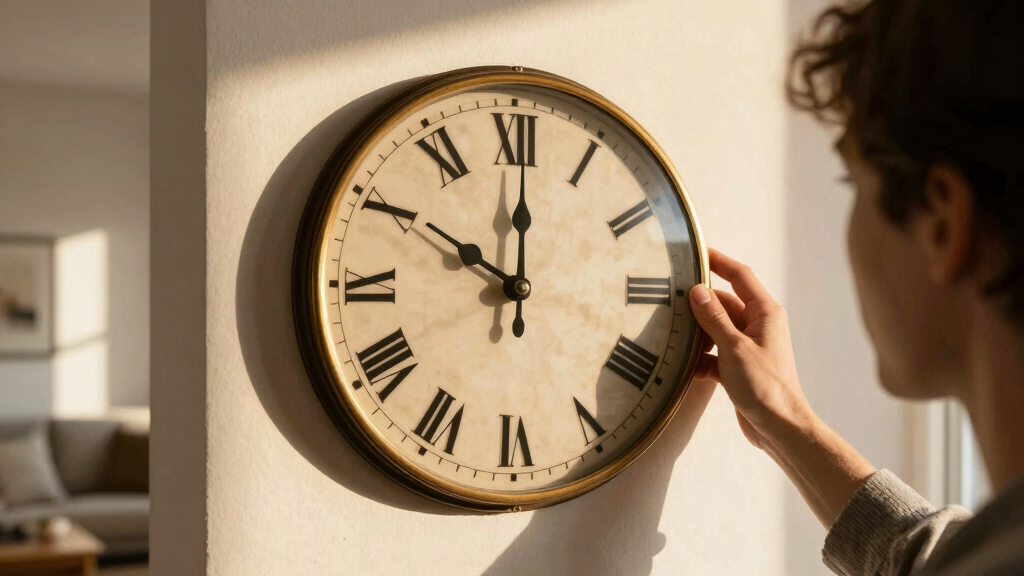

TL;DR
Most clocks display ‘IIII’ for four instead of ‘IV’ because it creates visual balance, simplifies manufacturing, and stems from historical practices. This tradition adds a timeless charm to classic clock design.
Ever wondered why your vintage clock shows ‘IIII’ instead of ‘IV’ for four? It’s a question that pops up often, mixing history, design, and a touch of tradition. This quirk isn’t just a stylistic choice—it’s a centuries-old practice rooted in visual harmony and practical manufacturing.

Get decor and gifts delivered free with Prime
- Fast, free delivery on millions of items
- Prime Video, Amazon Music and more included
- Member-only deals all year
Understanding why clockmakers favor ‘IIII’ reveals how design choices can carry history, cultural preferences, and even simple convenience. Let’s explore this fascinating detail that makes clock faces both charming and historically rich.
Most clock faces use ‘IIII’ for the number four because it creates visual harmony and simplifies manufacturing.
The tradition dates back to the 14th century, rooted in European clockmaking history.
While ‘IV’ is the correct Roman numeral, ‘IIII’ remains popular for its aesthetic appeal and practicality.
Modern clocks sometimes use ‘IV’ for a cleaner, more contemporary look, depending on design goals.
When shopping, look closely at the numeral to understand the clock’s style and historical influence.
Why Do Clocks Use ‘IIII’ Instead of ‘IV’? The Clear Answer
The quick answer? ‘IIII’ balances the clock face visually and simplifies production. While ‘IV’ is the correct Roman numeral for four, many clock faces feature ‘IIII’ because it creates a more harmonious look against the other numerals, especially ‘VIII’.
Imagine a clock face with ‘I, II, III, IIII, V…’—the symmetry is more pleasing than breaking it up with ‘IV’. Plus, using ‘IIII’ reduces the variety of characters needed when casting or engraving, making manufacturing easier and more consistent.
Products Worth Considering

EGO Power+ SNT2122 21-Inch Single-Stage Snow Blower with Two 4.0Ah Batteries and 320W Charger

Greenworks 48V (24V x 2) 21-Inch Self-Propelled Mower, Blower, and String Trimmer Kit

EGO POWER+ LB5302 Cordless Electric Leaf Blower Kit with 2.5Ah Battery
As an affiliate, we earn on qualifying purchases.
The History of ‘IIII’ on Clocks: A Tradition That Started in the 14th Century
Roman numerals have been on clock faces since the 14th and 15th centuries. Early European clocks, especially in churches and town halls, often used ‘IIII’ for four. This wasn’t an accident; it was a deliberate choice rooted in tradition and regional preferences.
For example, some of the oldest surviving clocks in Florence and Paris showcase ‘IIII’. Over time, this became a standard feature, embodying both aesthetic and historical continuity.
Today, you can still spot this in vintage clocks and restored pieces, reminding us how design choices echo through centuries.
The Practical Reasons Behind ‘IIII’ on Clock Faces
Using ‘IIII’ simplifies the manufacturing process. Clockmakers often cast or carve numerals in molds. Fewer character variations—just ‘I’, ‘V’, ‘X’, ‘L’, ‘C’—make the process smoother and faster.
Think of it like a stencil: fewer shapes mean less room for errors. Also, when reading a clock quickly, ‘IIII’ on one side and ‘VIII’ on the opposite balance nicely, making it easier to glance and tell the time.
In addition, some argue that ‘IV’ might be confused with ‘VI’ when viewed at a quick glance, especially on a busy clock face. ‘IIII’ avoids that risk altogether.
Visual Harmony: How ‘IIII’ Makes Clock Faces Look Better
Visual balance on a clock face is key. ‘IIII’ contributes to symmetry, especially because ‘VIII’ mirrors it on the other side. When the clock face is divided into 12 sections, this consistent pattern creates a pleasing rhythm.
Picture a traditional clock with a white face and black numerals. The irregularity of ‘IV’ might stand out, disrupting the harmony. ‘IIII’ blends seamlessly, making the clock more elegant and easier to read at a glance.
This aesthetic choice isn’t just tradition—it’s about creating a piece that looks balanced and timeless.
Comparison: ‘IIII’ vs. ‘IV’ — Which Do Modern Clocks Use and Why?
| Feature | ‘IIII’ | ‘IV’ |
|---|---|---|
| Historical Use | Common since the 14th century, especially in European clocks | Less common historically, more in modern clocks |
| Manufacturing Ease | Simplifies casting and engraving | Requires different character, more complex |
| Visual Balance | Creates symmetry with ‘VIII’ | Less symmetrical, can disrupt harmony |
| Reader Clarity | Clearer at a quick glance due to balance | May cause confusion with ‘VI’ in quick reading |
Modern Clocks and ‘IV’: When and Why They Use It
In contemporary design, some clocks and watches favor ‘IV’ for its cleaner, more authentic look. Especially in minimalist or digital-inspired styles, ‘IV’ feels more precise and historically accurate.
Imagine a sleek modern watch with a simple face. The designer might opt for ‘IV’ to evoke a sense of authenticity or simplicity, breaking with tradition for a fresh look.
This choice often depends on the clock’s style and the brand’s aesthetic goals.
How to Spot the Difference When Shopping for Clocks
- Look at the clock face carefully.
- Check if the fourth hour is marked as ‘IIII’ or ‘IV’.
- Observe the overall style—vintage clocks lean toward ‘IIII’, modern designs vary.
- Read the manufacturer’s description if available; some specify the numeral style.
In many vintage or traditional clocks, ‘IIII’ is almost a guarantee. Modern minimalist clocks may use ‘IV’ for a cleaner look.
Frequently Asked Questions
Why do most vintage clocks use ‘IIII’ instead of ‘IV’?
Most vintage clocks use ‘IIII’ because it offers better visual balance on the face, simplifies manufacturing, and has historical roots dating back to the 14th century. It’s a tradition that combines form and function beautifully.Is ‘IIII’ technically correct in Roman numerals?
‘IIII’ is not the standard Roman numeral for four, which is ‘IV’. However, it was used in certain contexts historically and became a stylistic choice in clockmaking, especially in Europe.When did clockmakers start using ‘IIII’?
The practice began in the 14th and 15th centuries, with some of the earliest examples appearing in European church and town hall clocks, emphasizing tradition and aesthetics.Are there clocks today that use ‘IV’ instead of ‘IIII’?
Yes, many modern clocks and watches prefer ‘IV’ for a cleaner look or to align with more recent design trends. It often depends on the style and brand preferences.Does ‘IIII’ have any symbolic meaning?
Not specifically; it mainly serves aesthetic and practical purposes. Its use reflects a tradition aimed at visual harmony rather than symbolic significance.Conclusion
Choosing ‘IIII’ for four isn’t just about tradition—it’s about balancing beauty with practicality. Next time you glance at a vintage clock, notice how this small detail makes a subtle but powerful difference in its charm.
Remember, design choices like this reveal centuries of craftsmanship and aesthetic wisdom. Whether you prefer the classic ‘IIII’ or the sleek ‘IV’, it’s a reminder that even tiny details shape our experience of time.