
TL;DR
Livingetc’s report examines how designers use silver and gold together in home interiors, challenging the idea that a room must stick to one metal. Experts say the pairing can balance warm and cool reflections, but recommend making the mix feel intentional through scale, lighting and an uneven balance.
Livingetc’s design report makes the case for using silver and gold together in home interiors, drawing on advice from color expert Amy Moorea Wong and designer Pablo López of Casa Josephine. Their guidance challenges the convention of choosing a single dominant metal, while emphasizing that the pairing works best when its warm and cool reflections are treated as a deliberate part of the room’s design.

Give the gift of listening to the book lover on your list
- Choose a 1-, 3-, 6- or 12-month membership
- They pick the audiobooks they love
- Easy to send by email
Wong describes silver and gold as opposing but complementary metallic tones: silver reads cool and pale, while gold appears warm and rich. She says each can sharpen the other’s character, making silver seem crisper and gold more burnished. López says the metals also affect the light and colors around them, adding texture and associations with decorative or jewelry-like objects.
The report stresses that metallic finishes do more than supply a color. Their reflective surfaces respond to changing light: silver can be prominent in daylight, while gold can add warmth under lamps, according to Wong. Those effects can influence the appearance of nearby colors, so the choice of finish and placement matters alongside the room’s broader palette.
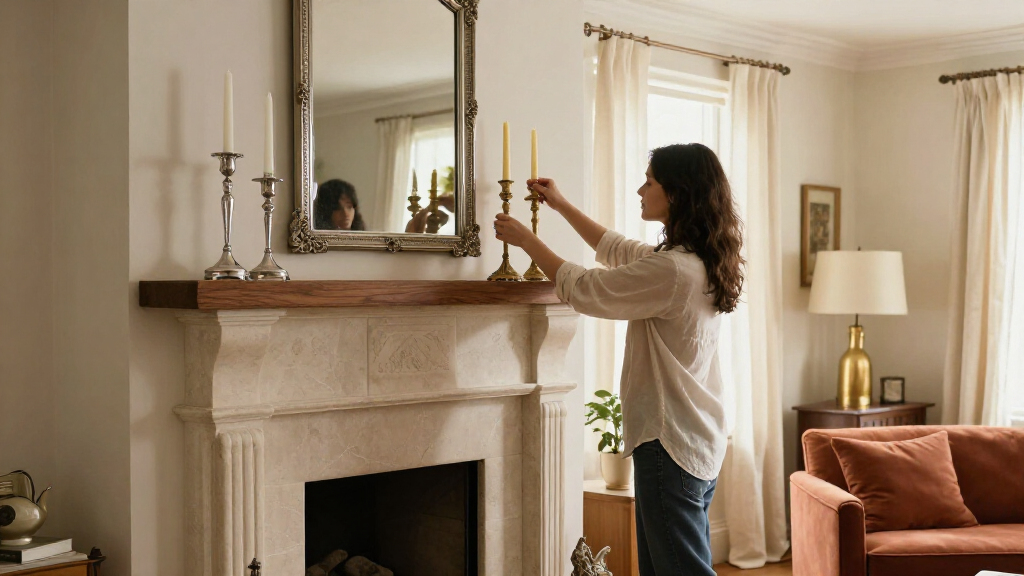
For a controlled look, Wong advises keeping the mix uneven, with one metal dominant and the other in a supporting role. She also suggests introducing a third metal, such as bronze, to soften the shift between the two. López takes a bolder approach, saying he uses silver and gold on substantial surfaces or pieces rather than limiting them to small accents. The report presents both as design approaches, not as a single rule for every home.
How Mixed Metals Change a Room
The advice matters to readers planning renovations or decorating because metal finishes can affect more than hardware or ornament. Their reflective surfaces influence perceived light, and their warm or cool tones can change how surrounding materials and colors appear. Pairing them can give a room a layered, intentional quality, but it can also make the metallic elements visually dominant.
The report’s practical point is that the mix should look purposeful rather than accidental. Choosing a leading finish, considering where light falls, and deciding whether the metals belong on small details or larger surfaces gives homeowners a way to control the effect. The guidance is design opinion, not evidence that mixed metals are a new or universally preferred trend.
Products Worth Considering

EGO Power+ 12-Inch Cordless Electric Snow Shovel with 56V 2.5Ah Battery and Charger

DEWALT Portable Table Saw with Stand, 8-1/4 inch, 48-Degree Angle Cuts (DWE7485WS)

DEWALT 20V MAX XR Brushless 7-1/4-Inch Cordless Circular Saw Kit
As an affiliate, we earn on qualifying purchases.
Why Silver and Gold Contrast
Silver and gold are familiar together in jewelry and decorative objects, but their use in interiors can prompt disagreement over whether mixing them looks coordinated or inconsistent. Wong’s explanation rests on their contrast: silver has a cooler appearance, while gold adds a warmer cast. In the report, that opposition is treated as a potential source of balance rather than a reason to separate them.
Both experts also focus on materials and finishes, not simply color. Wong notes that metallic depth depends on reflective qualities such as foil or leaf, while López describes combining materials including chrome, stainless steel, real silver, mirror and pewter in a project. The examples show that a silver-and-gold scheme can include varied finishes, rather than two uniform blocks of color.
“Silver and gold are the yin and yang of metallic shades, one cool and pale, the other warm and rich.”
— Amy Moorea Wong, Livingetc color expert
What the Design Advice Cannot Settle
The source is an interior-design advice report, not a survey of homeowners or a study measuring how widely the pairing is used. It does not establish that silver and gold together are the dominant or most popular choice in interiors, despite the source headline’s broad trend language. The recommendations reflect the views of the cited design professionals.
The report also does not prescribe measurements for how much of each finish to use, or specify which combinations suit every room, budget or lighting condition. The effect will depend on the materials, surface area, natural and artificial light, and the colors around them. Readers should treat the examples as guidance rather than a fixed formula.
Applying the Mix at Home
The source does not announce a product launch, formal design standard or upcoming industry milestone. For readers considering the approach, the next step is to test finishes in the room where they will be used: compare samples in daylight and lamplight, decide which metal should lead, and check how nearby colors look in reflection. A smaller trial can help clarify the effect before committing to large surfaces.
Homeowners can also compare different finishes within each metal and consider a third material, such as bronze, if the pairing feels abrupt. The central guidance from Wong and López is to make the choice intentionally—whether through restrained accents or larger design elements—and to judge it in the actual lighting and materials of the space.
Key Questions
Can silver and gold be used together in a room?
Yes. The Livingetc report cites designers who use both, describing the contrast between silver’s cooler appearance and gold’s warmer tone as a potential source of balance.
How can mixed silver and gold look intentional?
Amy Moorea Wong recommends an uneven balance, with one metal taking the lead and the other supporting it. She also suggests considering a third metal, such as bronze.
Should the metals be used only as small accents?
No single approach is required. Wong discusses keeping the metals minimal, while Pablo López says he uses them on larger surfaces and pieces as well as details.
Does lighting affect how the pairing looks?
According to Wong, the reflective finishes respond to light: silver can be more evident in daylight, while gold can add warmth under artificial light. The report recommends accounting for those effects in the room.
Does the report prove mixed metals are the leading interior trend?
No. It offers expert design advice and examples, but provides no survey or market data establishing how common the pairing is or whether it leads current interior trends.
Source: livingetc.com