
TL;DR
Apartment Therapy Studio Director Vicky Wasik updated her kitchen without replacing or painting its dark wood cabinets. She changed the surrounding finishes, including the granite countertops, adding white quartz, deep green tile, paint and floral wallpaper.
Apartment Therapy Studio Director Vicky Wasik kept the dark wood cabinets in her kitchen and instead replaced the granite countertops, added white quartz and green backsplash tile, and refreshed the walls and accessories. The makeover offers a documented alternative to cabinet replacement for homeowners who want to change a kitchen’s look without discarding its existing woodwork.

Get decor and gifts delivered free with Prime
- Fast, free delivery on millions of items
- Prime Video, Amazon Music and more included
- Member-only deals all year
Wasik said she had often considered painting the cabinets, but reconsidered after seeing rich wood finishes featured in kitchens. She used digital mockups to test combinations and concluded that the issue was not necessarily the cabinets themselves, but how they worked with the room’s other finishes. Her palette paired the wood with bright white surfaces, deep green and floral details.
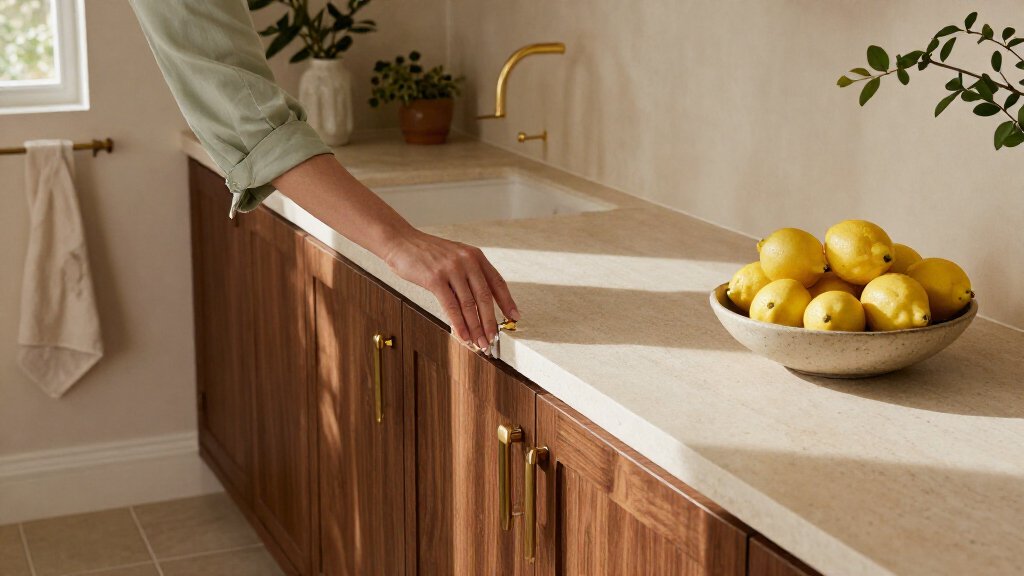
The largest expense was replacing the original granite with plain white quartz countertops, ordered through The Home Depot’s online design tool. Wasik said the new surface made the room feel brighter and more modern. She also paid the countertop crew to remove the old counters, and noted that carrying fees may apply in buildings with difficult access, such as a third-floor walk-up.
With no existing backsplash to remove, Wasik and her father installed green, zellige-inspired tile across both walls of the galley kitchen over about three days. They raised the cabinets slightly to avoid cutting a large number of tiles along the top edge, and used dark charcoal grout. The remaining updates included Benjamin Moore’s Dollar Bill Green paint, forest-themed wallpaper, brass pot rails and outlet covers, a vintage shelf, woven shades, a washable jute runner and glass pendant lights made using a recessed-light converter kit.
A Refresh Without New Cabinets
The project shows how changing the surfaces around existing cabinets can alter a kitchen’s overall appearance without a full cabinet replacement. In Wasik’s case, the white countertops created a lighter contrast with the wood, while the green tile and paint added color and tied the room’s finishes together.
That approach may be relevant to people weighing a kitchen update against the cost and disruption of replacing cabinets. The source does not provide a total project budget, however, and the new quartz was described as the renovation’s largest expense. The makeover is an individual example, not evidence that the same choices will work equally well in every kitchen or cost less in every case.
Products Worth Considering

DEWALT 6-1/2-Inch TrackSaw Kit (DWS520K)

Greenworks 2100 PSI Electric Pressure Washer

DEWALT 20V MAX Cordless Drill Driver and Oscillating Multi-Tool Combo Kit (DCK251D2)
As an affiliate, we earn on qualifying purchases.
Why the Cabinets Stayed
Wasik described her earlier inclination to paint the cabinets as an annual temptation, partly prompted by colorful kitchen makeovers she saw through her work. She said the renewed popularity of rich wood finishes prompted her to reconsider whether she disliked the cabinets or simply their relationship with the rest of the room.
She tested different countertop and tile combinations with online design tools and Photoshop before settling on the final palette. The project kept the existing dark wood cabinets but involved substantial changes to other parts of the kitchen, including new counters, a tiled backsplash and lighting. Apartment Therapy labels the project “rental friendly,” but the report does not explain the lease terms or whether the work could be reversed.
“Do I hate my cabinets, or just how they interact with everything around them?”
— Vicky Wasik, Apartment Therapy Studio Director
Costs and Rental Terms Unreported
The report does not give a total renovation cost, itemized prices or a complete timeline. It identifies the countertops as the biggest expense but does not say how much they cost. The tile work took about three days; durations for the other work are not specified.
It is also unclear what the “rental friendly” label means for this project. Wasik describes installing tile, wallpaper and new countertops, but the article does not say whether she rents her home, obtained permission, or plans to remove any of the changes. The source does not establish whether the lighting conversion kit was installed or inspected by a licensed electrician.
No Further Project Plans Reported
Apartment Therapy’s article presents the kitchen as a completed before-and-after project and does not announce a follow-up renovation or further work. Wasik’s account describes the finished choices and the installation challenges, including the layout calculations for tile and the effort required to adapt recessed lights for pendant fixtures.
Readers considering similar work would need to check product instructions, building or lease requirements, and local rules before beginning. The article does not provide a budget or technical guidance for carrying out the renovation, so those details remain a matter for individual projects.
Key Questions
Did Vicky Wasik replace her dark wood kitchen cabinets?
No. She kept the dark wood cabinets and changed other parts of the kitchen, including the countertops, backsplash, walls and accessories.
What countertop did she install?
Wasik replaced the original granite with plain white quartz, which she said made the kitchen feel brighter and more modern.
How long did the backsplash take to install?
Wasik said she and her father spent about three days tiling both walls of the galley kitchen. Planning the tile layout around outlets and corners involved trial and error.
How much did the makeover cost?
The article does not give a total. It says the quartz countertops were the project’s largest expense, but does not state their price or provide an itemized budget.
Source: apartmenttherapy.com