TL;DR
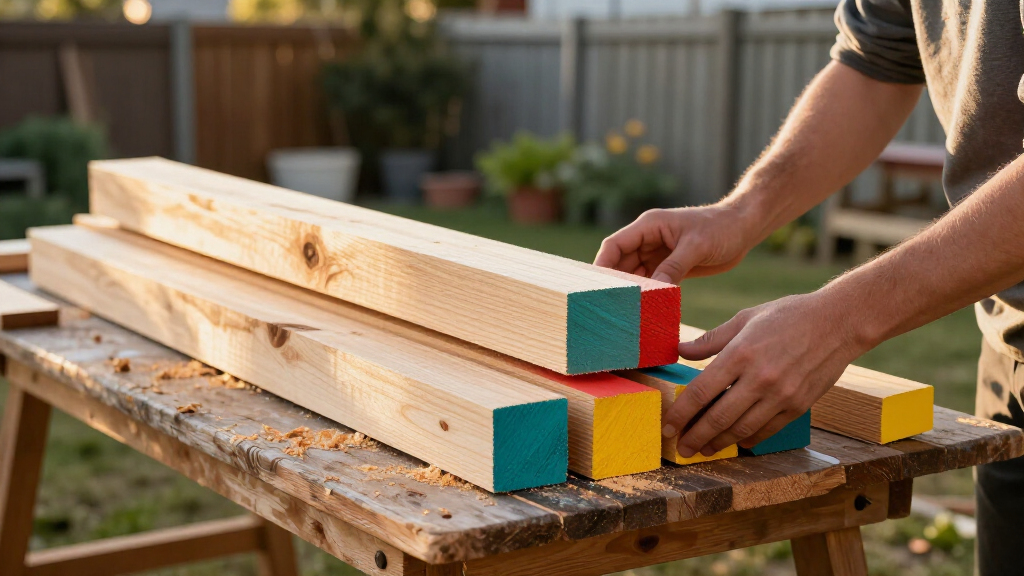
Paint on the ends of lumber can help limit cracking as wood dries, and mills or retailers may also use colors to identify products. There is no standard U.S. color code, so shoppers should not infer a board’s grade, species or length from color alone.
A Family Handyman report explains that paint on lumber ends can help slow moisture loss during drying or identify a product for a mill or retailer, but there is no standard U.S. color code. That means shoppers cannot reliably identify a board’s grade, species or length from its end color alone.

Give the gift of listening to the book lover on your list
- Choose a 1-, 3-, 6- or 12-month membership
- They pick the audiobooks they love
- Easy to send by email
Freshly cut lumber can lose moisture more quickly through its exposed ends than through its sides. A coating on the end grain slows that loss, helping the board dry more evenly and reducing the risk of cracks and splits, sometimes called checks. The coating does not stop the wood from drying.
The report cites research by the U.S. Department of Agriculture Forest Service and Forest Products Laboratory, which says end coatings are typically used to help prevent end checks during lumber drying. The research notes that drying defects can reduce the value of lumber.
End paint may also function as an identification mark. Mills and suppliers can use colors to distinguish products, species, grades or brands, but their systems vary. Family Handyman points to Dunn Lumber’s signature blue-end studs as a company-specific example: the blue identifies its product line, not a universal lumber category.
Why End Color Can Mislead Shoppers
For someone selecting boards at a lumber yard, the practical takeaway is that paint is not a substitute for the product label. A color might be meaningful within one supplier’s system, but it cannot, by itself, confirm dimensions, grade, species or suitability for a project.
That distinction matters because lumber is sold in varied sizes and grades, and shoppers often compare boards by visible defects and markings. Treating a paint color as a universal code could lead to choosing the wrong material. Buyers should check the board’s printed or posted specifications and ask the retailer what its markings mean.
Products Worth Considering

EGO Power+ 12-Inch Cordless Electric Snow Shovel with 56V 2.5Ah Battery and Charger

EGO Power+ LV5000 Cordless Leaf Vacuum, Mulcher, and Blower

Greenworks 24V Cordless Car Jack Kit – 3 Ton Max Loading, 2 Ah Battery and Charger
As an affiliate, we earn on qualifying purchases.
Two Uses for Painted Board Ends
The report describes two separate reasons lumber ends may be painted. During drying, an end coating can slow water loss through the end grain, helping reduce checking. In other cases, color is used as a supplier or mill identifier. A board may carry a marking for both practical production and identification purposes, but the color itself does not explain which use applies.
The cited USDA Forest Service and Forest Products Laboratory research concerns end coatings and defects during air-drying. U-C Coatings, a lumber-paint manufacturer, describes end paints as products that can also support identification. Timber Custom Woods similarly says it paints slab and log ends to slow drying and help prevent cracking. These sources describe uses of coatings; they do not establish a shared color standard.
Family Handyman also references a Reddit discussion about blue-painted 2-by-4s, where commenters offered different explanations tied to particular mills or sellers. Those comments illustrate how local practices can differ, but they do not establish a general rule for blue ends—or any other color.
“End coatings are typically used to help prevent end checks on sawn lumber during the drying process.”
— U.S. Department of Agriculture Forest Service and Forest Products Laboratory research, as quoted by Family Handyman
What the Paint Color Cannot Confirm
The meaning of a particular color depends on the company or supplier using it. The source material does not provide a nationwide lookup system, nor does it establish what a specific painted board in a particular store represents. Without information from that seller, it is not clear whether a mark identifies a product line, a production category or something else.
The report also does not say that every painted end was applied for the same reason, or that every board needs an end coating. The cited examples describe common purposes and individual practices, not a universal rule. Shoppers should verify a board’s specifications directly rather than treating a color as proof.
Check the Label Before Buying
When choosing lumber, shoppers can inspect each board for straightness, knots and other visible defects, then confirm its size and grade from the label or store information. If the end paint appears to indicate a particular product or specification, ask the retailer to explain its marking system.
The report identifies no pending industry-wide change or new color standard. For now, the practical guidance remains the same: use paint as a possible clue about a supplier’s process, not as a reliable code unless that supplier confirms what it means.
Key Questions
Why are some lumber ends painted?
Coatings can slow moisture loss through the end grain while wood dries, helping reduce cracks or checks. Mills and retailers may also use color to identify products.
Does blue paint mean a particular lumber size or grade?
No universal U.S. code gives blue—or any other color—a fixed meaning. A color may identify a specific supplier’s product, but its meaning varies.
Can I identify a board’s species from its end color?
Not reliably. Some suppliers may use paint to distinguish products or species, but color alone is not a standard identifier. Check the product label or ask the seller.
Does end paint prevent lumber from drying?
No. According to the sources cited by Family Handyman, an end coating slows moisture loss through the exposed ends; it does not stop the wood from drying.
Source: rss