TL;DR
A Hunker report describes a DIY coffee-table bowl made by joining seven woven coasters with raffia or thread. The finished piece is intended as a decorative accent, not a sturdy container, and can be customized with trim, beads or a base.
A Hunker DIY project shows how to turn seven woven coasters into a bowl-shaped coffee-table decoration, using raffia or thread to join the pieces. The design offers a way to repurpose a common thrift-store find, but Hunker cautions that the bowl is decorative rather than sturdy and has gaps that can let small objects fall through.

Get decor and gifts delivered free with Prime
- Fast, free delivery on millions of items
- Prime Video, Amazon Music and more included
- Member-only deals all year
The project is based on a bowl created by Tina Le, according to Hunker. It uses one coaster as the base and six around it to form the sides. Round, rattan-style coasters are a natural fit because their open weave gives raffia or thread places to pass through. Other round, lightweight coasters may also work; heavier materials such as ceramic could be difficult to keep upright in the outer ring.
Before assembly, Hunker recommends brushing or vacuuming loose debris from used coasters. If they need more cleaning, wipe them with a soft cloth dipped in soapy water, using limited moisture on materials such as rattan. The coasters should dry fully before being stitched together, since trapped dampness could contribute to mold.
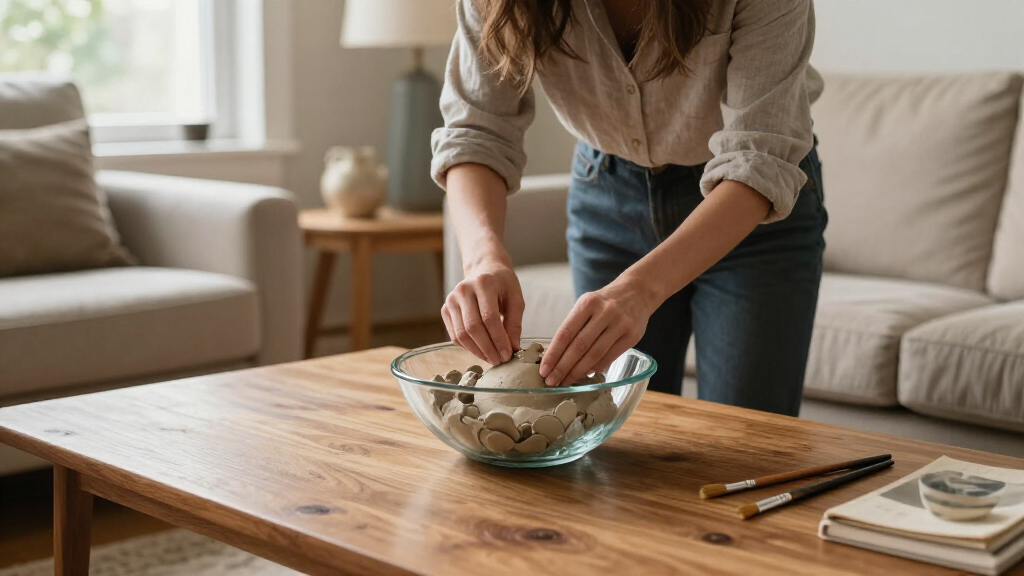
To build the bowl, thread raffia or thread through the edges of neighboring coasters and tie the pieces together. Join three coasters in a row, then attach the remaining four on either side, offsetting them so they sit between the circles in the middle row. Hunker suggests draping the coasters over a separate bowl and using tape to help hold their positions while stitching the outer edges together. Two stitches at each joint can add stability, and rope or ribbon around the outside may help the shape hold.
A Low-Cost Use for Thrifted Coasters
The project gives shoppers a practical creative option for unusual or surplus thrift-store finds. Rather than leaving a set of woven coasters unused, a maker can combine them into a single accent piece with a different shape and purpose. The instructions also use simple materials—coasters, raffia or thread, and basic cleaning supplies—rather than requiring a specialized kit.
Its limits matter as much as its appeal. The finished bowl has open spaces between the coasters, so it is not suited to holding small items, and the joined pieces may not be sturdy enough for frequent handling. Hunker presents it as a styling accessory for a coffee table, where it could hold a small potted plant or other larger decorative object. Readers should treat those uses as decoration, not as a reliable storage solution.
Products Worth Considering

Bosch GTS15-10 10-Inch Portable Jobsite Table Saw with Gravity-Rise Wheeled Stand

DEWALT 15-Amp 8-1/4-Inch Compact Portable Jobsite Table Saw (DWE7485)

Greenworks 80V Cordless Electric Leaf Blower with 2.5Ah Battery and Charger
As an affiliate, we earn on qualifying purchases.
How the Seven-Coaster Shape Works
The layout separates the bowl into a center coaster and a six-piece rim. The center provides the base, while the surrounding rounds rise to create the bowl’s sides. Because the coasters are joined at their edges, the spaces between them remain part of the design rather than forming a continuous surface.
Hunker also describes alternatives for makers who want a different finish. Rope can be glued around each coaster to emphasize its outline, while trim, macrame-style fringe, beads, bows or fabric cutouts can add detail. Small rope coasters could be glued over some gaps, although the source does not say that doing so would make the bowl suitable for holding small objects.
For a wider or more stable foundation, the report suggests using a rattan placemat or vintage wicker paper-plate holder as a base and attaching coasters around it. That variation may require more coasters, depending on the base’s diameter. Small wooden blocks, wooden beads or a wood platform are further decorative options.
“The bowl is “more decorative than functional.””
— Hunker, describing the finished piece
Durability and Everyday Use
The source does not provide testing, measurements or durability results for the assembled bowl. It does not specify how much weight the stitched construction can support, how long it will keep its shape, or whether different coaster materials will behave similarly. Hunker warns that the bowl will not be especially sturdy, but gives no more precise performance limits.
It is also unclear whether adding a base, rope, extra stitches or glued embellishments would make the project substantially more stable. Those are presented as possible design adaptations, not tested fixes. The finished piece’s suitability for a particular plant or object will depend on its size, weight and the stability of the bowl.
Choose Materials Before Assembly
Anyone attempting the project can start by checking that the coasters are round, lightweight and clean, then letting them dry completely if they have been wiped down. The maker can decide whether to use raffia or thread for a sewn version, or hot glue as an alternative, as described by Hunker. The source does not compare the strength or longevity of those methods.
After arranging the seven coasters into a bowl shape, the next step is to secure the joints and decide whether to add a base or decorative trim. Hunker’s instructions point toward using the finished bowl as a coffee-table accent. No further testing or follow-up on the project is included in the source material.
Key Questions
How many coasters does the project use?
The basic design uses seven round coasters: one in the center and six around it to make the sides.
What kind of coasters work best?
Hunker identifies lightweight woven coasters, including rattan-style rounds, as suitable options. Their openings make it easier to pass raffia or thread through the edges. The report cautions that heavier materials such as ceramic may be difficult to keep upright.
Can the bowl hold small objects?
It is not recommended for that purpose. Hunker says the gaps between coasters can let small items fall through and describes the finished bowl as more decorative than functional.
How can the bowl be customized?
Options in the report include adding fringe, rope, beads, bows or fabric cutouts, or using a rattan placemat or wicker paper-plate holder as a wider base. These are design suggestions; the source does not report tests of their effect on durability.
Source: rss