
TL;DR

Get decor and gifts delivered free with Prime
- Fast, free delivery on millions of items
- Prime Video, Amazon Music and more included
- Member-only deals all year
Clocks are sensitive to environmental conditions. Avoid hanging them in bathrooms, kitchens, above radiators, and outside walls to prevent damage from heat and moisture. Stable, climate-controlled spots keep clocks working well for years.
Ever wonder why some clocks seem to run fast or slow, no matter what you do? It’s not just the movement — it’s where you hang them. The wrong spot can turn a beautiful timepiece into a rusty, warped mess or a timekeeper that’s minutes off daily.
Understanding where not to place your clocks isn’t just about protecting their looks; it’s about keeping them ticking accurately for years. You’ll learn which environments threaten your clocks, how heat and humidity sneak in to cause trouble, and the best spots to hang your favorites so they stay precise and pristine.
Avoid hanging clocks in bathrooms, kitchens, or above heat sources like radiators and fireplaces.
Keep clocks in stable environments with 45–55% humidity and away from rapid temperature swings.
Modern clocks with temperature compensation or atomic sync are more resilient but still need proper placement.
Interior walls, away from vents and direct sunlight, are the best spots to preserve clock accuracy and condition.
Regular monitoring and adjusting placement help clocks stay on time through seasonal changes.
Environmental Horology / Placement Guide / No-Go Zones
Humidity, Heat, and Clocks: Where Not to Hang One
Clocks are precision instruments living in hostile rooms. The wrong wall can turn a beautiful timepiece into a rusty, warped mess — or a timekeeper that drifts minutes off every year. Placement matters as much as the movement itself.
Key Insight
−0.5 s/day
An uncompensated steel pendulum loses roughly half a second per day for every +1 °C rise in temperature — enough to drift several minutes per year with seasonal swings.
45–55%
Ideal relative humidity — stable above all
7 zones
Rooms & walls to avoid entirely
−0.5 s
Daily drift per +1 °C, steel pendulum
~3 min
Yearly drift per sustained +1 °C
18–24 °C
Conservation comfort range
45–55%
Target RH for mixed collections
±1 s/yr
Citizen Cal. 0100 TCXO accuracy
01 / The Thermal Threat
Heat Is the Hidden Enemy of Your Clocks
Heat makes steel pendulum rods expand. The pendulum lengthens, its period slows, and the clock loses time. Every 1 °C rise costs about half a second a day — and the physical stress of repeated expansion and contraction weakens delicate components over the clock’s lifetime.
Thermal Expansion
The Pendulum Problem
A steel rod stretches when warm, lengthening the pendulum and slowing the beat. Winter cold shrinks it back. Historic fixes: Harrison’s mercury and gridiron pendulums, later Invar and wood rods.
Lubrication
Oil Thins, Then Gums
High heat thins clock oil, accelerating pivot wear and eventually leaving gummed-up bearings. Extreme cold does the opposite — thickening lubricant until a movement can stop entirely.
Quartz Quirks
Crystals Drift Too
Quartz is far more stable, but the crystal’s frequency is temperature-dependent — its accuracy curve centers near room temperature, so hot attics and cold garages still pull it off time.
Heat Rises
Radiator, fireplace, or sun-warmed wall heats the case
Rod Expands
Steel pendulum rod elongates microscopically
Period Slows
Longer pendulum swings more slowly per beat
Clock Loses
−0.5 s/day per °C compounds to minutes per year
Annual Time Drift — Uncompensated Steel Pendulum
Approximate accumulated error per year at a sustained temperature elevation above the rated ~20 °C baseline.
02 / The Moisture Threat
Humidity’s Quiet Damage — What You Can’t See
Humidity barely changes a clock’s rate directly. Instead it attacks the clock physically and invisibly — swelling cases, lifting veneer, corroding steel, and feeding mold — months before you notice a single symptom.
Case & Finish
Wood Swells & Warps
Wooden cases swell, warp, and crack as moisture cycles in and out. Veneer and marquetry lift; painted and paper dials bubble or stain.
Corrosion
Brass & Steel Rust
Damp air corrodes movement plates, pivots, and screws — leading to sluggish or stuck trains. Battery contacts corrode too, and leakage accelerates.
Abrasion & Mold
Paste on the Gear Teeth
High RH degrades lubricants and invites dust to stick, forming an abrasive paste on gear teeth. In chronically damp rooms, mold grows inside the case.
Relative Humidity Spectrum — Where Your Rooms Sit
Conservation consensus: hold 45–55% RH — and above all, keep it stable. Rapid swings do more damage than a slightly-off-but-constant level.
≈20% — Heated Rooms
Winter forced-air heat dries cases out — wood shrinks, joints open, glue fails.
≈72% — Damp Basement
Chronic damp: rust, mold, lubricant breakdown. A no-go without climate control.
≈88% — Bathroom Spike
Steam surges fog glass and corrode movements within months, not years.
03 / Placement Blacklist
Where NOT to Hang a Clock — The No-Go Zones
Some spots are a clock’s worst enemies: frequent temperature swings, moisture surges, grease aerosols, and UV. The wrong wall means frequent repairs or early replacement — costing far more in the long run.
Bathrooms
SevereSteam and RH spikes are the worst offenders. Expect rust and foggy glass within months. Only sealed, damp-rated quartz belongs here.
Kitchens
SevereSteam plus grease aerosols coat and corrode movements, while cooking swings the temperature daily.
Above Radiators & Fireplaces
SevereHot, dry, rising air and wild heat cycling. The mantel clock over a working fireplace is a classic casualty.
Direct Sunlight / Sunrooms
HighSouth- and west-facing sun fades dials and finishes, heats cases unevenly, and warps wood. UV degrades finishes.
Damp Basements & Garages
HighMold, rust, and lubricant failure — unless you add climate control or choose marine-rated, sealed clocks.
Exterior Walls / Vents / Doors
ModerateUninsulated walls run cold and risk condensation behind the case; AC vents and slamming doors add rapid cycling and vibration.
| Location | Primary Threat | Typical Damage | Risk | Verdict |
|---|---|---|---|---|
| Bathroom | Steam, RH spikes to 80%+ | Corrosion, fogged glass, case warp | SEVERE | ✗ Avoid |
| Kitchen | Grease aerosols, heat swings | Coated movement, gummed pivots | SEVERE | ✗ Avoid |
| Over radiator / fireplace | Rapid heat cycling | Rate drift, dried oil, cracked case | SEVERE | ✗ Avoid |
| Sun-facing wall / sunroom | UV, uneven heating | Faded dial, warped case | HIGH | ✗ Avoid |
| Basement / garage | Chronic damp, cold | Mold, rust, lubricant failure | HIGH | ~ Climate control only |
| Exterior uninsulated wall | Cold surface, condensation | Moisture trapped behind case | MODERATE | ~ Caution |
| Interior wall, lived-in room | Minimal — stable climate | None; accuracy preserved | LOW | ✓ Best practice |
04 / Engineering Around the Environment
Modern Solutions for Harsh Environments
New movements either compensate for temperature and drift — or make accuracy independent of the room entirely. The tradeoff is higher initial cost; the benefit is a reliable, low-maintenance clock that survives less-than-ideal spots.
| Technology | How It Copes | Typical Accuracy | Placement Still Matters? |
|---|---|---|---|
| Standard quartz | Crystal rate set near room temp; drifts off-peak | ±15 s/month | ✗ Yes — avoid extremes |
| TCXO (Grand Seiko 9F) | Thermocompensated circuit corrects for temp shifts | ±10 s/year | ~ Mostly physical care |
| Citizen Caliber 0100 | High-grade TCXO, continuously adjusted | ±1 s/year | ~ Mostly physical care |
| Radio-controlled (WWVB / DCF77 / MSF / JJY) | Syncs nightly to atomic time — drift becomes irrelevant | Atomic-synced | ~ Physical preservation only |
| Invar / carbon-fiber regulator | Near-zero thermal expansion rod; some add barometric sensors | Sub-second / month | ✓ Highly resilient |
| Marine-rated sealed quartz | Gasketed case blocks steam, grease, and damp | ±15 s/month | ✓ Bathroom/viable |
Monitor
Log the Room
A digital hygrometer/logger reveals seasonal RH and temperature swings — catch drift before damage sets in.
Control
Dehumidify Tricky Spots
A small dehumidifier holds basements and sunrooms near 50% RH, extending case and movement life dramatically.
Adjust
Regulate Seasonally
Raising or lowering the pendulum bob slightly compensates summer expansion and winter contraction.
05 / The Safe Chain
From the Right Wall to Decades of Accuracy
Good placement is a chain of small wins: each stable condition protects the next link, ending in a clock that stays precise and pristine.
No condensation — insulated from outdoor cold and damp
No heat cycling — away from radiators, vents, and direct sun
No swell or rust — wood, brass, and lubricant stay stable
Consistent rate — pendulum and crystal hold their calibration
Accurate & pristine — ticking reliably for generations
Simple Steps to Keep Clocks Happy
Choose an interior wall away from heat sources, vents, and direct sunlight — a climate-stable living room is ideal.
Hold 45–55% RH with a dehumidifier if needed; stability matters more than perfection.
Skip bathrooms, kitchens, and exterior walls unless the clock is sealed and damp-rated.
Use TCXO or radio-controlled movements when placement options are limited.
Monitor and re-adjust seasonally — check for time drift and tweak placement or pendulum regulation as seasons change.
Log conditions with a digital hygrometer near valuable pieces; data beats guesswork.
Why Heat Is the Hidden Enemy of Your Clocks
Heat causes steel pendulums to expand, stretching out and slowing down the clock’s timing. Every 1°C rise can make a pendulum lose about half a second daily. Over a year, that adds up to several minutes of drift.
Imagine a vintage grandfather clock hanging above a fireplace. During winter, the cold shrinks its parts; come summer, the rising heat elongates the pendulum, messing with its rhythm. Modern quartz clocks aren’t as sensitive but still suffer from temperature swings, as crystal oscillators have their own quirks.
High heat also thins clock oil, speeding up wear and increasing the risk of parts gumming up. Cold, on the other hand, thickens lubricants and can stop a movement entirely. So, placing a clock in a hot attic or near a radiator is asking for trouble.
Understanding these effects is crucial because even small temperature fluctuations can cause cumulative inaccuracies. Over time, these tiny shifts can lead to significant time errors, making your clock unreliable. Additionally, the physical stress from expansion and contraction can weaken delicate components, reducing the clock’s lifespan. The tradeoff is clear: protecting your clock from heat preserves both its accuracy and its structural integrity.
As an affiliate, we earn on qualifying purchases.
Humidity’s Quiet Damage — What You Can’t See
Humidity doesn’t directly change how fast your clock runs, but it does a slow, unseen number on it. Wooden cases swell, warp, and crack with moisture cycling in and out. The veneer lifts, and painted dials can bubble or stain. Metal parts, especially brass and steel, rust, leading to sluggish or stuck movements.
Consider a clock in a humid basement or sunroom. Over time, mold can grow inside, and corrosion can corrode battery contacts, causing power issues. High humidity also speeds up lubricant breakdown and invites dust to form abrasive paste on gear teeth.
The importance of stable humidity levels lies in preventing these silent but damaging effects. Fluctuations in moisture levels cause expansion and contraction of internal components, which can misalign gears or loosen fittings. This can lead to inaccurate timekeeping or even mechanical failure. Maintaining a consistent environment around 45-55% relative humidity minimizes these risks. The tradeoff is that unstable humidity accelerates wear and tear, so controlling moisture levels is essential for long-term clock health.
temperature compensated pendulum clock
As an affiliate, we earn on qualifying purchases.
As an affiliate, we earn on qualifying purchases.
Where NOT to Hang a Clock — The Top No-Go Zones
Some spots are a clock’s worst enemies. Bathrooms, kitchens, and near heat sources top the list. These environments see frequent temperature swings, moisture surges, and airborne contaminants that accelerate wear and tear.
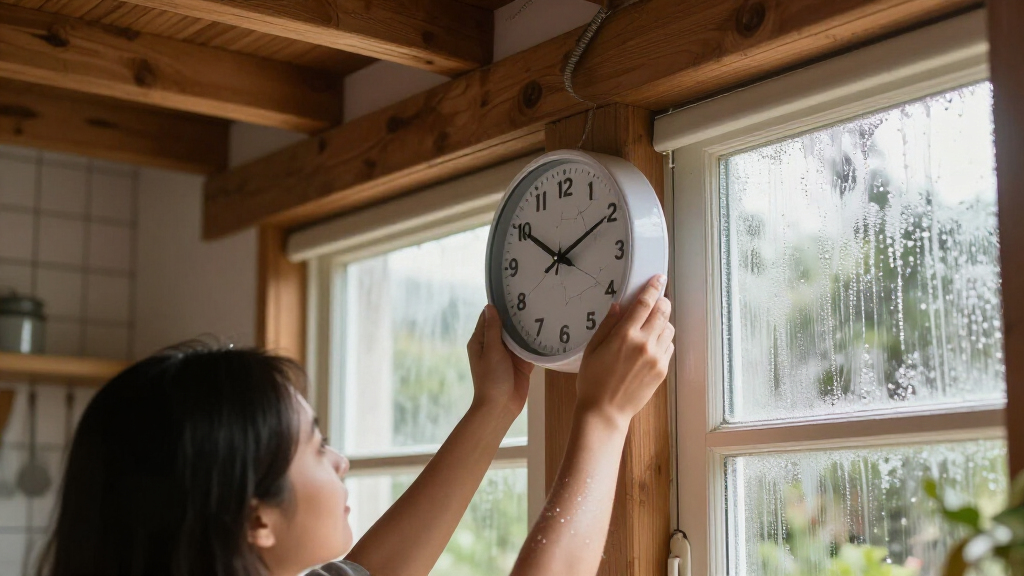
For example, a bathroom clock exposed to steam and humidity will likely develop rust and foggy glass in just months. Similarly, hanging a clock directly above a radiator or fireplace subjects it to rapid temperature changes and heat cycling, damaging the movement and case.
Sun-facing walls and uninsulated exterior walls are also risky—they cause uneven heating and condensation behind the clock. Damp basements and garages are a no-go unless you add climate controls or choose marine-rated, sealed clocks.
Choosing the wrong spot exposes your clock to conditions that can cause immediate and long-term damage. For instance, high humidity and temperature fluctuations can warp wooden cases, cause internal corrosion, and impair the delicate gears. These environments force the clock’s materials to expand and contract repeatedly, increasing the likelihood of mechanical failure. The tradeoff is that placing clocks in such environments often results in frequent repairs or replacements, ultimately costing more in the long run.
Instead, opt for an interior wall away from vents, direct sunlight, and heat sources. A stable, climate-controlled living room wall is ideal.
As an affiliate, we earn on qualifying purchases.
Modern Solutions for Harsh Environments
Thanks to advances in clock technology, some models stand up better to environmental challenges. Thermocompensated quartz (TCXO) movements, for instance, adjust for temperature shifts, keeping accuracy within ±10 seconds per year. Brands like Citizen and Grand Seiko lead the way here, with some models achieving near-perfect precision.
Radio-controlled clocks sync with atomic signals, making environmental factors almost irrelevant for accuracy. Instead, focus on physical placement—these clocks need stable, protected spots.
High-end regulators now use carbon-fiber or Invar rods, which resist thermal expansion, and some incorporate barometric sensors to fine-tune timing. For collectors, monitoring humidity with digital loggers and using dehumidifiers can extend clock life in tricky spots.
These innovations are significant because they address the core issues of environmental stress—temperature variation and humidity fluctuations—by either compensating for or resisting these factors. The tradeoff is often higher initial cost, but the benefit is a reliable, low-maintenance clock that can survive in less-than-ideal conditions.
As an affiliate, we earn on qualifying purchases.
Simple Steps to Keep Clocks Happy and Accurate
- Choose an interior wall away from heat sources and direct sunlight.
- Maintain a stable environment, ideally 45–55% RH, with a dehumidifier if needed.
- Avoid hanging clocks in bathrooms, kitchens, or uninsulated exterior walls.
- Use clocks with advanced temperature compensation if placement is challenging.
- Regularly check and adjust your clock’s placement if seasons change or if you notice time drift.
If you follow these steps, your clocks will thank you — ticking accurately and looking good for decades.
Frequently Asked Questions
Can I hang a clock in the bathroom?
It’s generally not a good idea. Steam and high humidity cause corrosion, foggy glass, and damage to internal components. If you must, choose a sealed, damp-rated quartz clock specifically designed for humid environments.
Is it okay to hang a clock above a radiator or fireplace?
No. The heat cycling damages movement and case materials over time. While it might look good, expect a shorter lifespan and more maintenance. Keep clocks in stable, cool places instead.
Why does my pendulum clock gain or lose time with the seasons?
This happens because the pendulum rod expands in summer and contracts in winter. Adjusting the pendulum’s length slightly—raising or lowering the bob—can help restore accurate timing.
What humidity level is safe for clocks?
Ideally, keep your clocks in a room with 45–55% relative humidity. Avoid swings larger than 10% in a single day to prevent physical damage and corrosion.
Will high humidity make my clock stop working?
Indirectly, yes. Excess moisture can cause rust, corrosion, and battery contact failure, leading to stoppages or slow running. Proper placement and environment control prevent this.
Conclusion
Your clock is a tiny precision instrument that hates chaos — heat, moisture, and sudden temperature swings are its enemies. Finding the right spot is your best defense against slow drifts, corrosion, and damage.
Imagine a clock in a cozy, climate-controlled corner of your living room, quietly keeping perfect time year after year. That’s where your clocks should live — out of harm’s way, in a place they can thrive.
Halloween Picks
halloween
As an affiliate, we earn on qualifying purchases.