
TL;DR

Get decor and gifts delivered free with Prime
- Fast, free delivery on millions of items
- Prime Video, Amazon Music and more included
- Member-only deals all year
Moving a clock without breaking it requires disassembly, careful packing, and gentle handling. Use sturdy materials and professional help for antique or valuable pieces. Proper planning ensures your clock arrives ticking perfectly.
Ever tried to carry a clock without knocking off a hand or cracking its face? It’s trickier than it looks. A tiny slip can turn a treasured heirloom into a pile of shards or a non-ticking hunk of metal. So, whether you’re moving across the street or shipping your vintage wall clock across the country, knowing how to do it right saves you money and keeps your clock’s charm intact.
In this guide, you’ll learn exactly how to prepare, pack, and reassemble your clock with minimal risk. Think of it as giving your clock a mini spa day — wrapped, protected, and ready for a smooth journey.
Always disassemble the clock, removing pendulums and fragile parts before packing.
Use sturdy boxes with ample padding — think of your clock as a tiny sculpture needing a cushioned bed.
Photograph each step during disassembly to simplify reassembly later.
Support the clock upright and avoid tilting during transit to prevent damage.
For antiques or high-value clocks, consider professional movers and climate-controlled transport.
Know Your Clock: Why Different Clocks Need Different Treatment
Not all clocks are created equal when it comes to moving. An antique grandfather clock, with its heavy wood case and delicate pendulum, needs gentle handling and extra steps. A modern wall clock? More resilient but still vulnerable to shocks.
For example, a vintage cuckoo clock often has tiny, intricate parts and a fragile wooden case. Moving it without disassembly risks breaking the tiny figurines or the clock’s mechanism. On the other hand, a sleek digital clock is mostly plastic and glass, so it’s less delicate but still needs careful packing.
The key is knowing what’s inside and how it’s built. Check the manufacturer’s instructions if available. If not, treat antique or mechanical clocks as fragile art. Modern clocks? Still handle with care, especially for the glass face.
Understanding the internal structure helps you determine the level of protection needed. For instance, a clock with exposed gears or a pendulum requires disassembly to prevent parts from shifting or breaking during transit. Failing to recognize these nuances can lead to costly repairs or irreversible damage, especially for high-value pieces where even tiny cracks diminish worth. The tradeoff is time—disassembling takes longer but significantly reduces risk, whereas skipping steps might save effort initially but can cause expensive damage later.
As an affiliate, we earn on qualifying purchases.
Step-by-Step: Disassembling Your Clock for a Safe Move
- Start by unplugging and removing batteries. Safety first! This prevents accidental activation or electrical issues during handling, which could cause damage or injury.
- Take off any pendulums, weights, or detachable parts. Use a soft cloth or tape to secure moving parts. This prevents them from swinging or bouncing, which could cause internal damage or breakage.
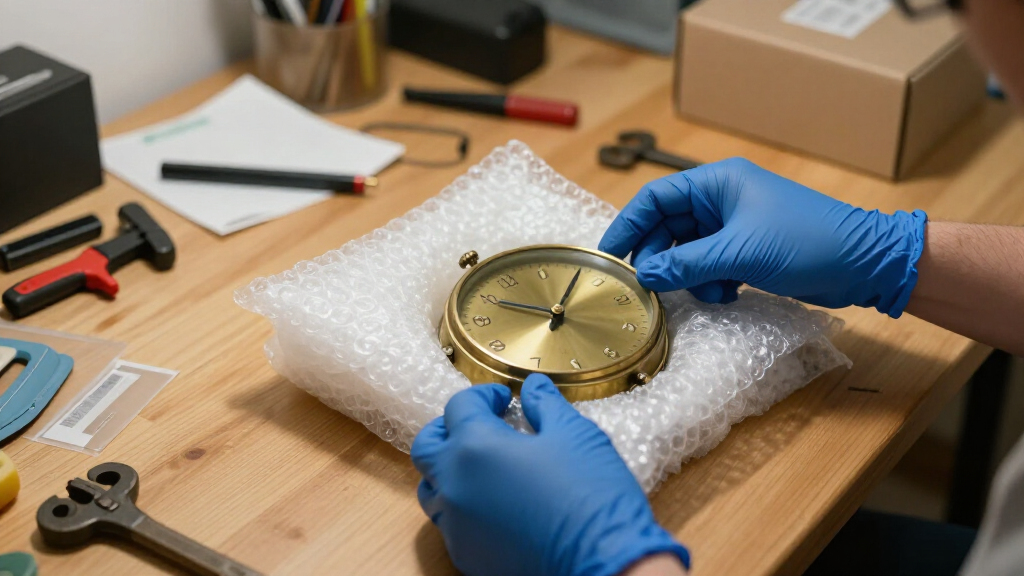
- Wrap these parts separately in bubble wrap or foam. Label each piece clearly to avoid confusion during reassembly, saving you time and frustration later. Proper labeling ensures you don’t mistakenly reattach parts incorrectly, which could impair the clock’s function.
- If your clock has a glass cover, remove it carefully using gloves to avoid fingerprints or slips. Glass is fragile, and even slight impacts can cause cracks or shattering. Removing it reduces the risk of breakage during transit.
- Photograph each step. This makes reassembly much easier later. Detailed images act as visual instructions, especially for intricate clocks with many small parts, helping you avoid mistakes that could impair functionality or aesthetic appearance.
For example, with an antique wall clock, the pendulum swings freely and can snap if jostled. Removing it and wrapping it separately saves you a headache later. Think of disassembly as giving your clock a gentle ‘unplugging’ moment—an essential step to prevent internal damage caused by shocks or sudden movements during transport. This process also allows you to assess and address any potential issues beforehand, such as loose joints or worn parts, which might need repair or reinforcement before moving.
As an affiliate, we earn on qualifying purchases.
Packing Like a Pro: Protect Your Clock with the Right Materials
Proper packaging is the secret to avoiding damage. Use a sturdy cardboard box, ideally double-walled, with plenty of padding. Wrap the entire clock with foam or soft blankets, especially around fragile edges and protruding parts. This cushioning absorbs shocks and prevents direct impacts that could crack glass or dent wood.
Include shock-absorbing materials like foam peanuts, bubble wrap, or custom foam inserts. For example, a vintage clock with ornate carvings benefits from custom foam molds that fit every curve, providing tailored protection that standard padding can’t offer. Label the box as “Fragile” and “This Side Up” to inform handlers of its delicate contents and proper orientation, reducing the risk of mishandling.
Imagine your clock as a delicate sculpture — it needs a soft, supportive bed. The better your packing, the lower the chances of a broken glass or bent hands. Investing in quality packing materials may seem costly upfront but pays off by preventing costly repairs or replacements. Remember, the goal is to create a secure environment that mimics the clock’s original safe display setting, minimizing vibrations and shocks during transit. Tradeoffs include the extra effort and cost of meticulous packing versus the significant expense and disappointment of damage upon arrival.
As an affiliate, we earn on qualifying purchases.
Handling and Transport: Moving Your Clock Without Shaking It Apart
When it’s time to move, lift with your legs, not your back. Support the base or sturdy frame. Keep the clock upright and avoid tilting or shaking during transit. This prevents internal components from shifting or breaking, which could cause misalignment or damage that’s difficult to repair.
If you’re using professional movers, specify that your clock is fragile. Ask for climate-controlled trucks if it’s valuable or antique, to avoid humidity or extreme temperature swings that can warp wood, damage delicate mechanisms, or cause condensation inside the glass. Proper environment control preserves the clock’s integrity and prevents long-term deterioration.
For example, during a move from a downtown apartment to a new house, a friend carefully carried a large wall clock in a padded box, holding it close. They avoided sudden turns or bumps, knowing a jolt could crack the face or bend the hands. Supporting the clock properly minimizes vibrations and shocks, which are the main causes of internal damage during transit.
Think of your clock as a glass sculpture — gentle, supported, and upright is the way to go. The tradeoff here involves extra caution and possibly higher moving costs for specialized handling, but it significantly reduces the risk of damage that could be costly and heartbreaking to repair.
As an affiliate, we earn on qualifying purchases.
Reassembling and Setting Up Your Clock After Moving
Once at your new place, take your photos and carefully reattach all parts. Use soft cloths and gentle pressure. Check that the movement isn’t jammed or misaligned. Reassembly is like putting together a puzzle—patience and gentle handling are key to making it work perfectly again, preventing unnecessary stress on delicate components.
If it’s a mechanical clock, you might need to adjust the pendulum to restart the ticking. Follow the manufacturer’s instructions or seek a professional if you’re unsure. Proper adjustment ensures the clock keeps accurate time and avoids internal damage caused by incorrect setup.
A quick tip: let the clock settle for a few hours after reassembly before setting the time. This allows internal lubricants to distribute evenly and prevents overexerting the movement, which could cause early wear or malfunction.
Reassembly is like putting together a puzzle — patience and gentle handling are key to making it work perfectly again. Rushing this step can lead to misalignments or damage, so take your time and verify each connection carefully.
Comparison: Moving a Vintage, Modern, or Antique Clock — Which Is Easiest?
| Type of Clock | Handling Difficulty | Special Needs | Best Moving Method |
|---|---|---|---|
| Vintage/Antique | High | Disassembly, padding, climate control | Professional movers, careful disassembly |
| Modern Wall Clock | Medium | Protect glass, wrap securely | DIY with sturdy packing |
| Digital/Plastic | Low | Minimal, just protect from shocks | Support with padding during transit |
Antiques are the most delicate, requiring extra care and sometimes professional help. Modern clocks are simpler but still need protection, especially from impacts. Understanding these distinctions helps you prioritize resources and effort, ensuring your clock arrives in working order. The tradeoff involves balancing the time and cost of meticulous packing against the risk of damage. For high-value or fragile clocks, investing in professional help and specialized packing minimizes the risk of costly repairs or replacements later.
Key Do’s and Don’ts for Moving Clocks That Save Your Sanity
- Do disassemble fragile parts first. Protect each piece separately, as this prevents internal movement that can cause damage, especially to delicate mechanisms or decorative elements.
- Do use quality packing materials — bubble wrap, foam, sturdy boxes. These materials absorb shocks that could otherwise cause cracking or internal misalignments.
- Do take photos during disassembly for easy reassembly. Visual references reduce errors and help ensure each part is correctly positioned, crucial for maintaining accuracy.
- Don’t tilt or shake the clock during transport. Even small tilts can cause internal components to shift or dislodge, risking damage or misfunction.
- Don’t forget to label the package as fragile. Clear labeling helps handlers recognize the delicate nature of the contents, reducing rough handling.
- Don’t skip professional help for antiques or high-value clocks. The risks of improper handling outweigh the costs of expert assistance, which can prevent costly repairs or total loss.
Frequently Asked Questions
How do I safely disassemble my clock for moving?
Start by unplugging the clock and removing batteries. Carefully take off pendulums, weights, or detachable parts. Photograph each step to help reassemble later. Wrap all parts separately in bubble wrap or foam for extra protection.
What packing materials are best for protecting a clock?
Use double-walled boxes, bubble wrap, foam padding, and custom foam inserts if possible. Wrap the entire clock and all loose parts separately. Label the package as “Fragile” and “This Side Up” to guide handlers.
Should I hire professionals or move a clock myself?
If your clock is antique, valuable, or especially fragile, hiring professional movers experienced with delicate items is wise. For simpler modern clocks, careful DIY packing and transport can suffice, but always prioritize safety and support.
What if my clock stops working after the move?
First, check if any parts are misaligned or jammed. Sometimes, clocks need a gentle reset or minor adjustments. If unsure, consult a clock repair specialist to avoid further damage.
How do I reassemble and set up my clock after moving?
Use your photos and gently reattach parts. For mechanical clocks, restart the pendulum and give it a test run. Allow the clock to settle before setting the time. Patience is key for a smooth setup.
Conclusion
Think of your clock as a piece of delicate art. Treat it with patience, respect, and gentle hands. A little extra effort now means your treasured timepiece will keep ticking for years to come.
When in doubt, remember: safety, support, and patience are your best friends. Moving a clock isn’t just about transportation — it’s about preserving a piece of history and craftsmanship.
Columbus Day / Indigenous Peoples' Day Picks
long weekend sales
As an affiliate, we earn on qualifying purchases.