
TL;DR

Get decor and gifts delivered free with Prime
- Fast, free delivery on millions of items
- Prime Video, Amazon Music and more included
- Member-only deals all year
Church and town clocks served as the community’s heartbeat, marking time before personal watches and digital tech. They evolved from mechanical giants to synchronized systems, shaping daily routines and societal organization.
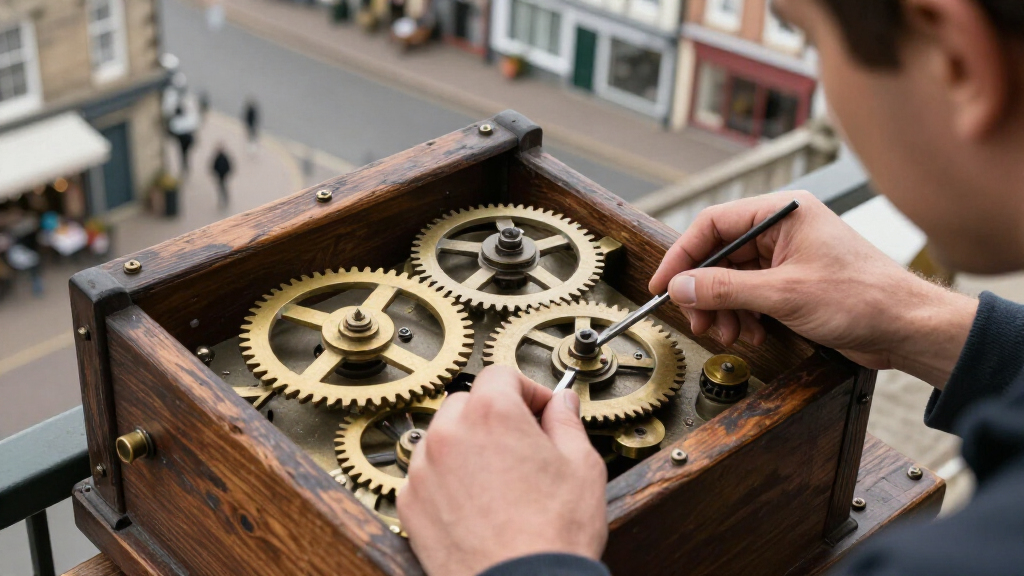
Early public clocks used weight-driven mechanisms and required regular manual winding to stay accurate.
Town clocks became symbols of civic pride, helping coordinate work, religious, and social activities.
Modern synchronization via GPS and internet ensures public clocks are accurate to the second, far surpassing mechanical precision.
Historic clock towers remain cultural landmarks, often updated with digital technology for reliability while preserving their heritage.
Public clocks played a vital role in the creation of standardized time zones, shaping global coordination.
How Church and Town Clocks Kept Communities on Time
Before watches and smartphones, a tower dial and the sound of its bells gave an entire community one shared schedule. Public clocks coordinated worship, work, markets and social life—turning time into civic infrastructure.
One clock organized many lives
A prominent tower offered both a visible dial and an audible signal. Even residents who could not see the clock could hear the hour and adjust their activity together.
Prayer & worship
Church bells announced services and canonical hours, making religious time part of the settlement’s daily soundscape.
Markets & trade
Opening hours, meetings and market activity gained a common reference—essential in busy trading centres such as 17th-century Amsterdam.
Work & routine
Striking bells signalled starts, pauses and endings long before workers could consult an affordable personal watch.
Order & belonging
A shared hour strengthened social cohesion. Everyone occupied the same temporal framework, whether at home, in a workshop or on the street.
Landmark & symbol
Ornate faces, bells and towers became declarations of prosperity, craftsmanship and civic ambition.
Standard time
Public clocks prepared society for wider synchronization and helped make standardized time zones practical in the late 19th century.
Five generations of synchronization
Each advance reduced the amount of local judgment and labour needed to keep the public display accurate.
Weights drive gears
Gravity supplies energy; an escapement regulates its release.
Sun & stars correct drift
Clockkeepers compare the mechanism with celestial observations.
Master clocks lead
Wired networks distribute a central reference to multiple dials.
Radio signals adjust
Receivers automatically correct public and historic clocks.
GPS & internet sync
Global references align clocks to fractions of a second.
The same mission, transformed machinery
Modern systems vastly improve precision, yet their social purpose remains familiar: make a trustworthy time reference visible to everyone.
| Dimension | Medieval mechanical | Electric master clock | GPS / internet synchronized |
|---|---|---|---|
| Energy | ~Falling weights | ✓Electrical supply | ✓Electronic system |
| Correction | ~Sun, stars and judgment | ✓Central master reference | ✓Automatic global signal |
| Human winding | ✓Regularly required | ×Usually unnecessary | ×Not required |
| Typical weakness | Wear, weather and neglect | Power or wiring failure | Network, cyber or signal disruption |
| Social reach | Local congregation or town | Building or municipal network | National and global coordination |
✓ supported · × unnecessary or absent · ~ dependent on local conditions
How a time signal becomes social order
The technology matters because its signal passes through a chain—from reference and mechanism to shared behaviour and wider coordination.
Public clocks made time tangible: something a whole community could see, hear and trust together.
Key insight · civic infrastructurePreserve the face. Upgrade the signal.
Restoration teams often conserve historic dials, bells and mechanisms while adding radio or electronic correction. The result balances authenticity with the precision modern communities expect.
That compromise also carries a new responsibility: resilient power, secure networks and maintenance plans for both antique and digital components.
How Old-School Clocks Kept Communities on Schedule
In medieval Europe, church clocks were among the first public devices to keep everyone on the same page. They relied on weight-driven mechanisms—think of a giant pendulum swinging inside a tower—that needed winding every day. These clocks often had large faces visible from blocks away, with bells that struck the hour, calling people to prayer or work.
Take the Salisbury Cathedral clock, built around 1386. It’s still ticking today, a marvel of engineering. Back then, maintaining accuracy meant regular manual winding and occasional adjustments based on the stars or the sun. These clocks didn’t just keep time—they connected communities, creating a shared rhythm for centuries. This shared rhythm was crucial because, in a time without personal timepieces, a common time reference was vital for coordinating everything from religious services to market days. The tradeoff was that these clocks were susceptible to inaccuracies caused by mechanical wear, environmental factors, and the need for constant manual intervention, which sometimes led to discrepancies that could disrupt daily routines.
As an affiliate, we earn on qualifying purchases.
Why Town Clocks Became the Civic Heartbeat
Town clocks weren’t just about telling time; they symbolized civic pride and order. They marked market hours, work shifts, and religious services, often with bells that echoed through the streets. For example, in 17th-century Amsterdam, town clocks coordinated the bustling trade, ensuring everyone was synchronized for the busy market day.
Large clock towers became landmarks—think of Big Ben in London or the Jeanne d’Arc Tower in Rouen. Their striking faces and bells created a sensory experience—sight, sound, and the sense of belonging. They made time tangible, a shared asset for the entire community. These clocks fostered social cohesion by providing a reliable reference point, which was especially important in densely populated towns where individual timekeeping devices were rare or less accurate. The tradeoff was that reliance on a single public source of time could lead to collective disruptions if the clock failed or was inaccurate, highlighting the importance of regular maintenance and community trust in these structures.
As an affiliate, we earn on qualifying purchases.
How Clocks Stayed Accurate Without GPS or Electricity
Before digital synchronization, keeping a town clock precise was a real challenge. Clockmakers relied on mechanical escapements—tiny levers that regulated the gear movement—and manual winding. Some used celestial observations, aligning the clock’s time with the sun or stars, especially in the 14th and 15th centuries. These methods required a deep understanding of astronomy and craftsmanship, as well as consistent effort from skilled clockkeepers.
A good example is how a 17th-century clockkeeper would adjust the clock based on the sun’s position or nearby astronomical instruments. Regular winding was like giving the clock a daily dose of energy, keeping it ticking reliably for days or weeks. The implications of this were significant: it meant that communities depended on the skill and diligence of individual clockmakers, and any mistake or neglect could lead to discrepancies that might cause social or economic disruptions. The tradeoff was that, despite these efforts, the technology’s inherent limitations meant perfect accuracy was nearly impossible, which occasionally led to debates over the correct time, especially for critical activities like trade or religious observance.
As an affiliate, we earn on qualifying purchases.
The Shift From Mechanical to Electric and Digital Clocks
By the 19th century, electric power revolutionized public timekeeping. Clocks became more reliable, needing less manual winding. They connected via wired networks to master clocks—massive timekeeping systems kept in central locations. This shift meant towns could keep their clocks synchronized with unprecedented precision. The technological leap reduced human error and made maintenance more manageable, which was vital as societies grew more complex and the demand for precise scheduling increased.
Today, many clocks are synchronized via radio signals, GPS, or internet. Some historic towers still operate their original mechanisms but are now linked to modern systems for perfect accuracy. It’s like giving an old friend a new, high-tech voice—preserving history while embracing innovation. The implication is that communities can now rely on a global network to ensure even the oldest clock towers display accurate time, reducing the risk of social or economic chaos caused by time discrepancies.
As an affiliate, we earn on qualifying purchases.
How Modern Clocks Keep Communities on the Same Minute
Today, digital systems sync public clocks within milliseconds. Time signals broadcast via GPS satellites or radio signals ensure that a clock in Paris and one in New York show the exact same second. Many historic clock towers now have electronic modules that automatically adjust for daylight saving or leap seconds, all without manual intervention. This level of synchronization supports the interconnected nature of modern society, where even seconds can impact financial markets, transportation schedules, and international communications.
The implication is that while the technology is highly advanced, it continues a fundamental human desire: to keep communities and nations aligned, minimizing chaos and maximizing efficiency. This seamless synchronization is the culmination of centuries of innovation, built on the initial need for a shared sense of time that public clocks once provided. The tradeoff today is that reliance on electronic systems can make societies vulnerable to cyber disruptions or technical failures, underscoring the importance of robust and secure global timekeeping infrastructure.
Preserving History While Staying Accurate
Many historic clock towers are preserved as cultural landmarks. Restoration teams carefully maintain the original mechanics, often incorporating modern synchronization tech. For example, the Old Town Hall clock in Prague keeps its antique look but now receives time updates via radio signals. This approach allows communities to enjoy their heritage while benefiting from the precision of modern technology. It also raises questions about the balance between authenticity and functionality—should a clock be restored to its original mechanical state or integrated with contemporary systems for accuracy? The answer often lies in a compromise that respects history while meeting modern needs.
This blending of old and new ensures that communities can enjoy their heritage without sacrificing precision. It’s like giving a vintage watch a Bluetooth connection—keeping the beauty intact while adding modern reliability. The implication is that cultural preservation and technological progress can coexist, enriching our understanding of history and ensuring the accuracy necessary for today’s interconnected world.
Public Clocks and the Birth of Time Zones
Before the 19th century, communities kept different local times based on the sun’s position. The advent of synchronized public clocks helped push the idea of standard time—crucial for the rise of railways and global trade. In 1884, the International Meridian Conference established Greenwich Mean Time, paving the way for time zones. These advancements meant that a train leaving London or New York wouldn’t need to agree on a local time, but instead could rely on a shared, standardized reference, vastly improving safety and efficiency.
So, the giant clock in New York or London didn’t just tell local time; it contributed to a shared system that made the world more connected. Without these clocks, coordinating international schedules would be chaos, and economic development would be hampered by inconsistent timing. The tradeoff was that adopting standardized time required societal adjustments and the willingness to trust a centralized system over local variations, which was sometimes met with resistance.
Are Public Clocks Still Relevant Today?
Many historic clocks are still ticking, often maintained as cultural symbols or tourist attractions. They continue to serve as visual anchors—reminding us of a time when communities relied heavily on visual cues to stay on schedule. Modern systems, however, now handle most precise synchronization behind the scenes. Despite this, these clocks remain powerful symbols of communal identity and historical continuity, bridging the past and present. Their chimes and displays evoke a sense of stability and shared history, which can be especially meaningful in an era dominated by digital and mobile devices.
In some towns, the clock’s chime still marks the hour, serving as a communal ritual and a reminder of the importance of shared time. These clocks are not just relics—they reinforce local identity, serve as educational tools, and foster community pride. The challenge is balancing preservation with technological upgrades, ensuring that these landmarks continue to function accurately while respecting their historical significance.
Frequently Asked Questions
How did early town clocks stay accurate without modern technology?
They relied on mechanical escapements, manual winding, and sometimes astronomical observations. Regular adjustments kept them ticking reliably, even centuries ago.Why were church clocks so important in communities?
Church clocks served both religious and civic purposes, marking prayer times and coordinating daily activities. Since churches were central gathering points, their clocks became community anchors.How are historic clock towers maintained today?
Preservation involves mechanical repairs, modern synchronization systems, and restoring aesthetic details. Many are now connected to digital networks to keep accurate time without compromising their look.Did public clocks influence the creation of time zones?
Yes, their need for synchronization across regions helped promote standardized time, leading to the establishment of time zones in the late 19th century to coordinate global travel and trade.Are there still functioning public clocks today?
Many historic clocks still operate, often as cultural landmarks, maintained with a mix of traditional mechanics and modern tech for accuracy. They remain symbols of community and history.Conclusion
Public clocks are more than just ways to tell time—they’re milestones of societal progress, community pride, and technological ingenuity. Their evolution from mechanical giants to digital anchors mirrors how our relationship with time has become more precise and interconnected. When you pass a clock tower today, remember: it’s a symbol of how communities have always sought to stay in sync—and that drive continues in every digital sync we rely on now.Columbus Day / Indigenous Peoples' Day Picks
long weekend sales
As an affiliate, we earn on qualifying purchases.