
TL;DR
Grandfather clocks are intricate timepieces with components like the case, dial, movement, weights, and pendulum. Regular maintenance—winding, cleaning, and calibration—preserves their accuracy and beauty for generations, especially with recent trends blending traditional craftsmanship with modern tech.
Few home accents carry as much history, charm, and craftsmanship as a grandfather clock. These towering beauties, often standing between 6 and 8 feet tall, are more than just timekeepers—they’re heirlooms, conversation starters, and symbols of tradition. But behind that stately exterior lies a complex dance of gears, weights, and pendulums working in harmony.
In this guide, you’ll learn what makes a grandfather clock tick—literally—and how to keep it running smoothly for decades. Whether you own one or dream of owning a vintage piece, understanding its anatomy and care basics can turn clock maintenance from a mystery into a manageable task.
Regular winding and calibration are key to keeping your grandfather clock accurate and running smoothly.
Understanding the main parts—like weights, pendulum, and movement—helps you troubleshoot and maintain your clock better.
Cleaning and proper placement prevent damage and extend the lifespan of these heirloom pieces.
Modern clocks blend traditional craftsmanship with quartz or smart tech, offering new options for enthusiasts.
A well-cared-for grandfather clock can last over 200 years, becoming a treasured family heirloom.
What’s Inside a Grandfather Clock? A Closer Look at the Parts
Think of a grandfather clock as a miniature universe of moving parts, each serving a purpose. The case, usually crafted from rich oak or cherry, not only protects the delicate mechanisms but also influences the clock’s overall stability and aesthetic. A sturdy, well-crafted case minimizes vibrations and external shocks that could disrupt the clock’s precision. The face, or dial, displays hours, minutes, and sometimes seconds, moon phases, or even a calendar, serving as the primary interface for reading time. Its design and clarity directly impact how easily you can interpret the clock’s readings, blending functionality with style.
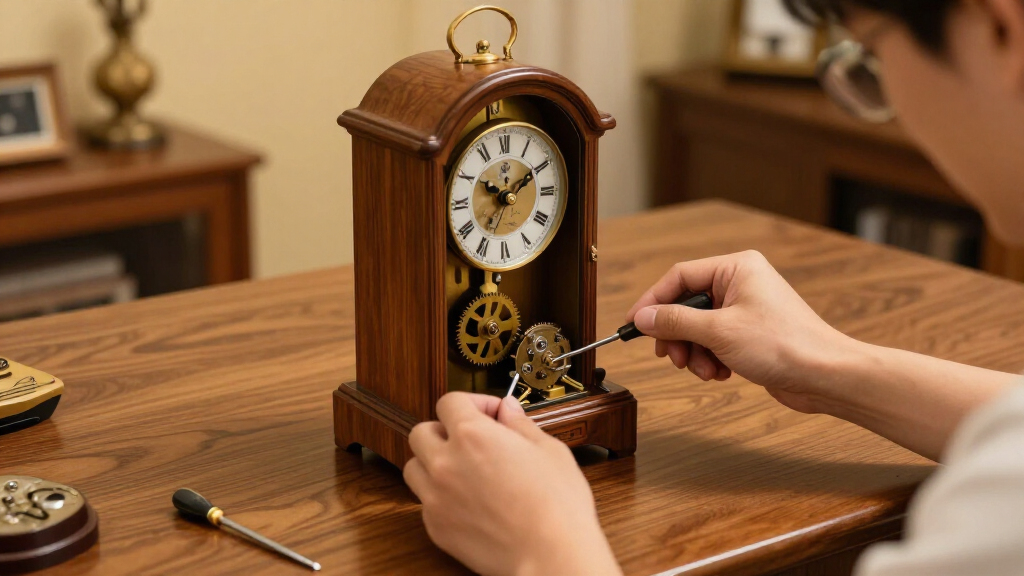
Inside, the heart beats with the movement, the mechanism that keeps time. This can be weight-driven or spring-driven, with weights providing consistent power and a pendulum regulating the timing. Weights descend slowly, pulling the gears in a controlled fashion, which is vital for maintaining accuracy over long periods. The pendulum swings like a heartbeat, with its length and mass directly affecting the clock’s precision. Small adjustments to the pendulum’s position can fine-tune the clock, making it run fast or slow—this is why understanding these components is crucial for proper maintenance. The chime mechanisms—often Westminster, Whittington, or St. Michael—strike at set intervals, filling your home with melodious sounds that mark the passage of time. All these parts work together, creating a symphony of craftsmanship that requires careful attention to preserve its harmony and accuracy.
As an affiliate, we earn on qualifying purchases.
Your Step-by-Step Guide to Winding and Adjusting Your Clock
- Locate the winding points—usually on the clock face or inside the case. Recognizing these points is essential because improper winding can cause damage or misalignment of the gears, leading to inaccurate timekeeping or mechanical failure.
- Use the winding key or crank—turn clockwise until you feel resistance. This resistance indicates the mainspring or weights are fully wound. Winding once a week is standard, but over-winding can stress the components, so gentle, controlled turns are best. Consistent winding maintains steady power, preventing the clock from losing or gaining time unexpectedly.
- Adjust the pendulum for accuracy—if the clock runs fast, lower the bob; if slow, raise it. The tradeoff here involves balancing precision with the clock’s mechanical limits. Small, incremental adjustments prevent overcorrecting, which could cause the clock to stop or function improperly. Understanding how the pendulum’s length affects timing helps you make informed tweaks that keep the clock reliable without risking damage.
- Set the correct time—move the minute hand clockwise, stopping at each quarter to let the chimes catch up. Moving the hand counterclockwise can sometimes damage the mechanism unless the clock is designed to handle it, so clockwise movement is recommended for safety and accuracy. Patience during setting ensures the chimes and time display remain synchronized, preserving the clock’s integrity and aesthetic harmony.
- Check the chimes—make sure they strike on time and sound clear. If they are off, minor adjustments to the chime hammers or the chime train may be necessary. Properly tuned chimes enhance the clock’s musical quality and ensure they mark the hours correctly, which is essential for maintaining the clock’s overall accuracy and charm.
For example, if your clock gains a minute per day, lowering the pendulum’s bob by about a quarter-inch can improve accuracy. Regular winding and calibration—done thoughtfully—are vital to keeping your clock singing the right tune and functioning as a reliable heirloom for generations.
As an affiliate, we earn on qualifying purchases.
Compare Common Movement Types: Weights vs. Springs
| Feature | Weight-Driven | Spring-Driven |
|---|---|---|
| Power Source | Weights fall slowly, pulling gears, providing a steady and consistent force that mimics natural gravity. This consistency often results in superior accuracy over long periods, especially in high-quality clocks. | Coiled spring contracts and expands, storing energy that powers the movement. While more compact and easier to conceal, springs can vary in tension over time, potentially affecting accuracy and requiring more frequent adjustments. |
| Maintenance | Requires weekly winding to raise the weights—neglecting this can cause the clock to stop or lose accuracy. Proper winding technique minimizes wear on the gears and ensures longevity. | Needs winding less frequently—usually every 1-4 days—depending on the design. However, springs wear out over time, losing tension and necessitating eventual replacement or professional servicing to maintain precision. |
| Accuracy | Very stable, historically preferred for precision timekeeping. The consistent force from weights minimizes variations, making these clocks reliable over centuries when properly maintained. | Can be very accurate, especially in modern hybrid designs, but tension fluctuations in springs can cause slight variations, requiring periodic calibration to stay precise. |
| Appearance | Large weights are often visible inside the case, adding a visual element of tradition and mechanical beauty. Their presence emphasizes the clock’s craftsmanship and historical authenticity. | Spring mechanism is typically hidden, offering a sleeker, less obtrusive look. This can be advantageous in modern or minimalist interiors but may sacrifice some traditional charm. |
Choosing between weights and springs involves understanding the tradeoffs: weights offer historical authenticity and consistent accuracy, but require more space and regular winding. Springs are more convenient and discreet but may need more frequent adjustments and repairs. Your choice depends on your preference for tradition versus ease of use, and the level of maintenance you’re willing to undertake.
grandfather clock pendulum adjustment tool
As an affiliate, we earn on qualifying purchases.
As an affiliate, we earn on qualifying purchases.
Easy Care Tips to Keep Your Clock Running Beautifully
- Winding: Wind your clock once a week, using gentle turns to avoid damaging the gears. Consistent winding prevents the clock from stopping unexpectedly and maintains accurate time.
- Cleaning: Dust the case with a soft cloth regularly. For the movement, professional cleaning every 5-10 years is crucial because accumulated dust and old oil can cause wear and reduce accuracy. Attempting DIY cleaning of internal parts risks damaging delicate mechanisms, so professional servicing is recommended for longevity.
- Lubrication: Apply clock oil to the pivot points every few years—don’t overdo it, as excess oil attracts dust and grit, which can accelerate wear. Proper lubrication reduces friction, prolongs the life of gears, and ensures smooth operation.
- Placement: Keep your clock on a stable, level surface, away from direct sunlight, heat vents, or humidity. For example, placing it in a corner away from windows minimizes wood warping and movement disturbances, thus protecting both the case and internal mechanisms.
- Calibration: Adjust the pendulum periodically to keep accurate time, especially after moving or servicing. Small tweaks to the pendulum length can compensate for environmental changes or minor mechanical shifts, ensuring your clock remains a reliable timekeeper for generations.
Imagine a clock sitting on a sturdy oak table, catching the soft glow of afternoon sunlight. Proper placement and regular care preserve both its appearance and mechanics, turning it into a family heirloom that can be enjoyed for centuries.
vintage grandfather clock repair parts
As an affiliate, we earn on qualifying purchases.
As an affiliate, we earn on qualifying purchases.
Modern Twists: What’s New in Grandfather Clocks?
While tradition rules, modern grandfather clocks are blending old-world charm with new tech. Some incorporate quartz movements, which use electronic regulation to achieve higher accuracy with less maintenance. Others feature smart technology, enabling remote adjustments or monitoring via smartphone apps, making clock management more convenient than ever. Restoration projects are booming, with enthusiasts restoring 100-200-year-old clocks to their original splendor. Customization options—like unique chime melodies, personalized cases, or integrating modern materials—are also growing in popularity, reflecting a desire to preserve tradition while embracing contemporary aesthetics. According to clock restorers, this fusion of old and new keeps grandfather clocks both timeless and relevant, appealing to a new generation of collectors and homeowners seeking both heritage and innovation.
Frequently Asked Questions
How often should I wind my grandfather clock?
Most grandfather clocks need winding once a week. Check the clock’s instructions, but typically, winding for about 15-20 turns is enough to keep it running accurately for seven days.
What’s the best way to clean the clock’s movement?
Professional cleaning every 5-10 years is recommended. Avoid DIY cleaning of internal parts, as improper handling can damage delicate gears. Regular dusting of the case keeps it looking sharp.
How do I adjust the pendulum for better accuracy?
To slow down the clock, lower the pendulum’s bob by about a quarter-inch. To speed it up, raise it slightly. Small adjustments have a big impact—test and tweak until it keeps perfect time.
Can I replace the mechanical movement with a quartz one?
Yes, some restorers convert antique clocks to quartz for convenience. However, this alters the original craftsmanship and value. If you love the mechanical feel, consider maintaining the original movement instead.
What are common signs my clock needs professional service?
If the clock stops unexpectedly, chimes are off, or it runs noticeably fast or slow despite adjustments, it’s time to consult a clockmaker. Regular servicing keeps everything in prime condition.
Conclusion
Owning a grandfather clock isn’t just about telling time. It’s about preserving craftsmanship, history, and beauty. With simple care—winding, cleaning, and calibration—you keep that legacy ticking.
Imagine a clock that not only marks each passing second but also becomes a cherished part of your home’s story for generations. That’s the magic of caring for these timeless treasures.