
TL;DR

Get decor and gifts delivered free — and shop member deals
- Fast, free delivery on millions of items
- Access to Prime Big Deal Days deals on October 6–7
- Prime Video, Amazon Music and more included
Babies sleep best in a room dark enough to hide your hand in front of your face. Use blackout solutions to block light leaks and support better naps and early wake-up prevention. Even dim light suppresses melatonin, so darkness is key.
Imagine a nursery bathed in soft, shadowy silence—nothing to distract a sleepy baby. Darkness isn’t just about comfort; it’s about science. A truly dark room can make naps longer, help set your child’s internal clock, and even reduce early wake-ups. But how dark is dark enough? And what’s the best way to get there?
In this guide, we’ll explore the magic of darkness, how it influences sleep hormones, and share real-world tips for creating a blackout haven. Whether you’re dealing with light leaks or wondering if your newborn needs total darkness, you’ll find practical advice here to make every nap count.
Darkness drives melatonin, making naps longer and sleep cycles more consistent.
Use the hand or book test during the day to check your nursery’s darkness level.
Combine blackout curtains with side channels or magnetic seals for best light blocking.
Safety first: choose cordless window treatments and secure hardware away from the crib.
Gradually increase darkness as your baby grows—full blackout isn’t necessary forever.
Why Darkness Matters: The Sleep Hormone and Your Baby’s Rest
Darkness triggers melatonin, the hormone that signals sleep. When light hits your baby’s eyes, even a little, it suppresses melatonin production. This makes falling asleep harder and shortens nap times.
Research from the University of Colorado Boulder shows that even dim light—around 15 lux—can cut melatonin levels by up to 90% in preschoolers. To put that into perspective, 15 lux is roughly the glow of a nightlight or a streetlamp filtering through curtains. This is significant because it shows how even minimal light exposure can drastically interfere with sleep hormone production.
For your baby, a dark room isn’t just cozy; it’s essential for their sleep rhythm to develop properly. Without enough darkness, naps tend to be shorter, more fragmented, and early waking becomes a common problem. In essence, the brain’s ability to recognize sleep cues relies heavily on darkness, which acts as a reliable signal that it’s time to rest. If the environment is too bright, your baby might struggle to settle or stay asleep, leading to a cycle of disrupted naps and fatigue that can impact growth and development.
As an affiliate, we earn on qualifying purchases.
How to Test if Your Nursery Is Dark Enough (The Simple Hand & Book Test)
Wondering if your nursery is truly dark? Here’s a practical approach. During nap time, turn off all lights and close the curtains. Then, hold your hand about six inches from your face. Can you see your fingers? If yes, then the room isn’t dark enough for optimal sleep. This simple test helps you gauge whether the environment provides enough darkness for your baby to produce melatonin effectively.
Alternatively, use the ‘book test’: hold a book open at eye level. If you can easily read the pages or see the words clearly, the room likely has too much light. For best sleep support, aim for a level where you can’t see your hand in front of your face—this indicates a room dark enough for deep sleep. Think of it as creating a cave-like environment, similar to the darkness a baby would experience in the womb or a natural night setting, which signals the body that it’s time to rest.
Perform this check during the brightest part of the day—midday sunlight makes the test more accurate because it’s when the room is likely to be lightest. If your room passes the test, you’re set; if not, it’s time to consider blackout solutions.
As an affiliate, we earn on qualifying purchases.
The Best Solutions to Block Light Leaks (DIY & Professional Options)
Light leaks are the biggest obstacle to creating a truly dark nursery. Gaps around curtains, above window frames, or under doors allow stray light to seep in, disrupting your baby’s sleep. Think of these leaks as tiny cracks in a cave’s wall—small but enough to let in unwanted light that can wake a sleeping baby prematurely or prevent them from falling asleep deeply.
Here’s a tiered list of blackout solutions, with explanations of why they matter:
- DIY fixes: Aluminum foil secured with painter’s tape or blackout fabric attached with tension rods can be quick, inexpensive solutions. For example, wrapping foil around window edges creates a sealed barrier, much like lining a cave’s entrance to block out light. These fixes are ideal for temporary or travel use but may not be durable long-term.
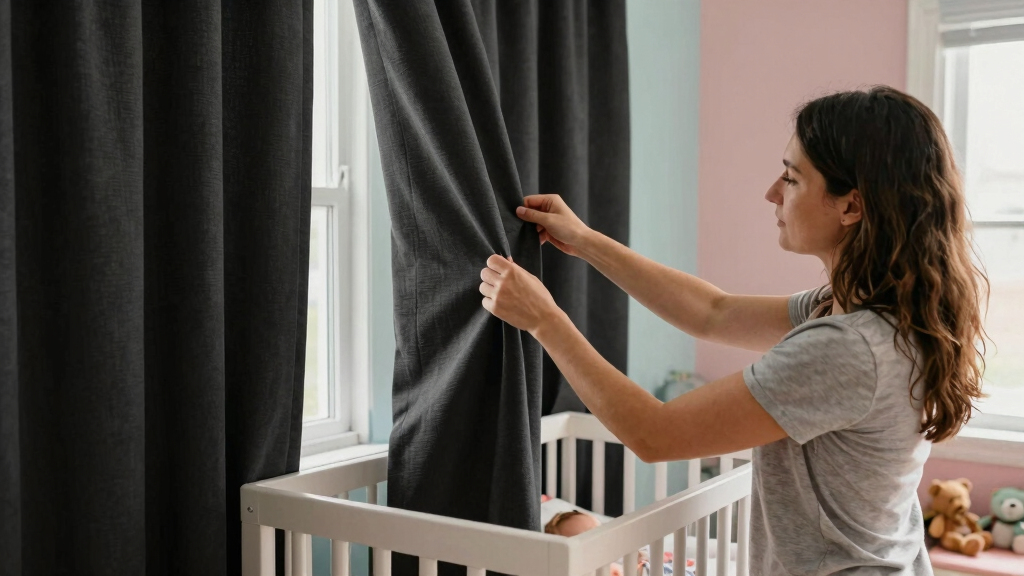
- Blackout curtains: Thick, opaque fabrics with proper mounting—using curtain rods with side channels or magnetic seals—can create a more permanent barrier. They act like a cave’s heavy door, preventing light from entering and maintaining a consistent sleep environment. Choosing curtains with a thermal lining can also help with temperature regulation, preventing heat buildup that might disturb sleep.
- Side-tracked shades: Cellular shades with built-in side channels form a tight seal around the window edges, akin to a cave’s reinforced entrance. While more costly, they provide a high level of light blockage and are a long-term investment in sleep quality.
- Portable blackout products: SlumberPod or SnoozeShade are fabric enclosures that fit over the crib, creating a mini cave for naps outside the nursery or during travel. They block nearly all light, making them ideal for flexible sleep environments. Think of these as portable caves—convenient and highly effective.
Combining these solutions—for instance, using blackout curtains with magnetic seals—can eliminate nearly all light leaks, creating a sleep sanctuary that mimics the darkness of night regardless of outside conditions. The key is understanding that small gaps can significantly compromise sleep, so paying attention to detail pays off.
As an affiliate, we earn on qualifying purchases.
Why Darkness Is Key for Daytime Naps and Early Mornings
Even during the day, a dark environment plays a crucial role in helping your baby’s body recognize sleep time. Bright light, especially early in the morning, acts as a natural wake-up cue. For example, if your baby wakes at 5 a.m. during summer, it’s often because dawn light filters into the room, signaling the body that it’s time to wake up. This can lead to a cycle of early rising that’s hard to shift.
Blackout solutions aren’t just for nighttime; they help establish a reliable sleep routine. By creating a consistent dark environment during naps, you reinforce the brain’s understanding of sleep cues, making naps longer and more predictable. For instance, if your child naps in a room that’s dark enough to block out morning sunlight, they’re less likely to wake early due to external cues. This consistency helps develop a stable circadian rhythm, which is essential for overall health and mood regulation.
Many parents notice that blackout curtains significantly reduce early wake-ups, especially when combined with a sound machine and a regular routine. Think of it as setting a reliable sleep alarm—if the environment signals sleep consistently, your baby’s internal clock learns to follow that pattern, leading to better rest for everyone.
As an affiliate, we earn on qualifying purchases.
Safety First: How to Use Blackout Products Safely in the Nursery
Safety is paramount when using blackout solutions. Always select window treatments that are cordless, as cords pose a strangulation risk—this is a standard safety requirement in most regions. For example, cordless blinds or shades eliminate the danger of entanglement, especially important in a nursery where little hands reach.
Secure curtain hardware away from the crib or play area to prevent your baby from pulling or getting tangled. Heavy or loose fabrics can pose suffocation hazards if they fall into the crib, so opt for products designed specifically for nurseries with safety features like tension rods or magnetic seals. For instance, blackout curtains with built-in safety cords or tension-mounted shades are safer choices.
Ensure proper ventilation to prevent overheating. Blackout materials can trap heat, similar to a cave that gets warm during the day. Keep the room temperature between 68–72°F (20–22°C), and use a fan or air conditioning if necessary. Regularly check the room’s temperature and humidity to maintain a safe and comfortable environment. Think of it as creating a cozy but breathable cave—warm enough for comfort but not so hot that it disrupts sleep or poses health risks.
Remember: blackout doesn’t mean covering the crib with loose fabric or heavy panels. Use purpose-designed, safety-certified products to create a dark, secure sleep space for your baby.
The Best Blackout Options for Different Budgets & Situations
Every parent has unique needs—and budgets. Here’s a quick comparison:
| Solution | Cost | Effectiveness | Best For |
|---|---|---|---|
| DIY Aluminum Foil & Tape | Low | Moderate | Travel, Quick Fixes |
| Blackout Curtains | Moderate | High | Home nursery upgrade |
| Cellular Shades with Side Tracks | Higher | Very high | Long-term, toddler rooms |
| Portable Pods (SlumberPod) | Varies | Almost complete blackout | Travel, naps outside |
Choosing the right option depends on your budget and how often you need blackout. Combining solutions often gives the best results. For example, using blackout curtains with magnetic seals and a blackout blind on the window can create an almost cave-like environment, even if your window has gaps. Consider your specific needs: if you travel frequently, a portable pod might be worth the investment; if you’re setting up a permanent nursery, more durable, integrated solutions may be better. The key is understanding that each option has tradeoffs—higher cost usually means more effective and durable, but even simple DIY fixes can make a significant difference in sleep quality.
Do Babies Need Total Darkness All the Time? When Flexibility Is OK
Many parents worry that creating a consistently dark environment might lead to dependency, making it hard for their child to sleep in different settings later. The good news? Most sleep experts agree that some flexibility is acceptable as your child grows. For young babies, especially under 6 months, darkness is crucial because their sleep patterns are still developing, and light can cause early waking or difficulty settling.
For example, keeping daytime naps in a normal lit environment can help newborns differentiate between day and night, aiding their circadian development. As your baby matures—say, around 6 to 12 months—you can gradually introduce more darkness during naps and bedtime, which helps reinforce sleep cues. Think of it like training a muscle: initial dependence on total darkness is beneficial, but over time, your child’s sleep can adapt to slightly lighter environments without issue.
Occasional naps in lighter settings won’t undo the progress—what matters most is overall consistency at home. If your goal is to promote long-term healthy sleep habits, aim for a balance: use darkness when possible but be flexible with travel or unexpected situations. The key is understanding that the environment is a tool, not a rigid rule, and adjusting as your child’s sleep needs evolve.
Smart Tips for Making Your Nursery Dark Without Overheating
Blackout solutions can trap heat, especially during hot summer days, which can make the room uncomfortable or unsafe. To prevent overheating while maintaining darkness, focus on ventilation and breathable materials. For example, cellular shades with good air flow can allow heat to escape, much like a cave with natural ventilation. Similarly, blackout curtains with side channels can be combined with window fans or open windows during cooler parts of the day, ensuring fresh air circulates.
Open windows during the day—if it’s safe and secure—can help reduce trapped heat. Use a fan or air conditioning to maintain a comfortable temperature, aiming for 68–72°F (20–22°C). Think of it as creating a cozy but breathable cave—warm enough to be comfortable but not so hot that it disrupts sleep or risks overheating. Regularly check the room’s temperature and humidity levels to adapt your ventilation strategies accordingly, ensuring your baby sleeps in a safe, cool environment that promotes restful naps and nighttime sleep.
Frequently Asked Questions
How dark is dark enough for a nursery?
A nursery is dark enough when you can’t see your hand in front of your face. Use the hand or book test during nap time to ensure the room blocks out enough light to support melatonin production and deep sleep.Should newborn naps be in the dark?
For the first 6–8 weeks, keeping newborn naps in normal household light can help with day-night confusion, since their melatonin production is low. Transition to darkness gradually as they grow.Will blackout curtains make my baby dependent on pitch black?
Most sleep experts say some flexibility is fine. Young babies benefit from darkness, but toddlers can sleep well with some light, especially if the environment stays consistent at home.Are blackout curtains safe for nurseries?
Yes, provided they’re cordless, secured properly, and made from non-toxic, breathable fabrics. Always check for safety standards and avoid loose fabrics or heavy panels that could pose risks.How can I block light leaks around curtains?
Use side-tracked cellular shades, magnetic seals, or attach blackout fabric with velcro or tension rods. Combining these methods ensures minimal light seepage and a truly dark sleep environment.Conclusion
Darkness isn’t just about making the nursery look cozy; it’s about giving your baby the best chance to nap longer and sleep more soundly. A well-placed blackout solution can turn a restless, early-waking baby into a peaceful sleeper.
Remember, the goal isn’t perfect darkness—it’s creating a calm, safe space that signals sleep. As your baby grows, you can adjust the level of darkness, but don’t underestimate how much a truly dark room can improve nap quality and reduce early mornings.
Fall Picks
fall essentials
As an affiliate, we earn on qualifying purchases.