
TL;DR
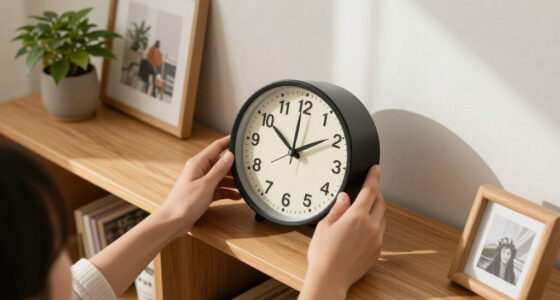
Decorative wall clocks for the kitchen work best when their size, contrast, and placement make them easy to read from the places you cook and eat. Match the finish to your room, choose a movement and power source that suit your routine, and keep the clock away from direct heat, steam, and splashes.
A clock can make a blank kitchen wall feel finished, then tell you exactly how long the potatoes have been in the oven. That double duty is the charm of decorative wall clocks: they bring a little color or texture to the room while keeping everyday routines on track.

Get decor and gifts delivered free with Prime
- Fast, free delivery on millions of items
- Prime Video, Amazon Music and more included
- Member-only deals all year
The best pick is not always the biggest or fanciest one. You want a face you can read from the counter, a finish that can handle an occasional wipe, and a style that feels at home beside your cabinets and lights. A clock should be a practical timekeeper and a visible part of your kitchen’s design.
This guide walks you through styles, sizing, placement, movement, and care. You’ll also find a simple way to compare analog and digital clocks, plus answers to common questions, so you can choose one that looks good on an ordinary Tuesday and works when dinner is running late.
Choose a face you can read from the counter and dining area, not just one that looks good up close.
Match the clock to cabinet hardware, lighting, or wood tones, or repeat one of its accent colors elsewhere.
Compare analog and digital based on your routine: visual time and decor versus exact digits and possible extra features.
Keep clocks away from direct heat, steam, and splashes; ordinary kitchen use does not make a clock waterproof.
Check movement sound and power needs, especially in an open-plan room or when choosing a plug-in digital model.
Why a Kitchen Clock Can Make the Whole Room Work Better
A kitchen clock gives you a quick way to check the time while cooking, eating, or getting out the door, and it can bring a bare wall into the room’s overall design. That combination makes it more useful than wall art you only glance at once in a while. A readable face helps with a roast timer or school morning; a thoughtful frame adds warmth beside cabinets and lighting.
Think of it like a well-chosen serving bowl: useful every day, but nice enough to leave out. If your kitchen has pale cabinets and brushed metal handles, a dark-rimmed clock can echo the hardware and add contrast. In a breakfast nook with a timber table, a wood-finish clock can help connect the wall to the furniture.
For a family, a large analog face can help a child connect the minute hand to “five minutes until we leave.” A digital display may suit you better if you want to read the exact minute while juggling lunchboxes. Either way, a clock is a small fixture with a surprisingly public job: everyone in the room needs to see it.
Choose a clock that works from the doorway as well as the dining chair. A beautiful face that disappears across the room is mostly decoration.
Products Worth Considering

WORX Landroid Vision Cloud WR310 Robot Lawn Mower for Lawns up to 1/4 Acre

Metabo HPT 36V MultiVolt 6-1/2 Cordless Track Saw Kit (C3606DPA)

DeWalt 9-Inch Band Saw with 3.5-Amp Motor and Two Speeds
As an affiliate, we earn on qualifying purchases.
Pick a Style That Looks At Home Beside Your Cabinets
Decorative wall clocks for the kitchen come in styles that range from clean and minimal to bold and vintage-inspired. The easiest way to choose is to look at what already sets the room’s mood: cabinet fronts, handles, light fixtures, and table surfaces. A clock can repeat those cues or create one deliberate point of contrast.
For example, a slim black metal clock may suit a modern kitchen with simple hardware, while a distressed wood face can soften painted cabinets and open shelving. A colorful retro rim can add cheer to a mostly white breakfast corner. An oversized sculptural face can work as wall art, provided you leave enough room around it and can still read the hands.
Materials change both the look and the upkeep. Wood feels warm, metal feels crisp or industrial, and glass can look light and polished. Plastic can be easy to wipe and comes in playful shapes. In a kitchen, the finish matters as much as the style: a textured clock may gather dust, while a smooth surface is simpler to clean. This is a practical tradeoff: a highly detailed frame can bring character, but its grooves may take more effort to keep free of dust or cooking residue. If the clock will hang where you clean often, a smooth finish can preserve the look with less fuss.
- Modern: simple hands, clear markers, and a restrained frame.
- Farmhouse: wood tones, vintage numerals, or a softened finish.
- Industrial: metal edges and bold numbers that stand out.
- Retro: a colorful rim or diner-inspired shape.
- Statement: an unusual form that acts as wall art as well as a clock.
Repeat one or two colors elsewhere—perhaps the clock’s teal rim in a tea towel or planter—and a bold choice feels intentional rather than dropped in from another room. Repeating a small accent helps the clock feel connected to the room without requiring every finish to match.
Choose a Clock You Can Read From the Counter
Choose a kitchen clock with a face large and high-contrast enough to read from the main places where you cook and eat. Before shopping, measure the open wall and note nearby cabinets, shelves, and lights. The right size depends on the wall and viewing distance, so a single diameter does not suit every kitchen.
Picture a clock above a narrow breakfast bench: a huge face may crowd the wall, while a tiny one can vanish behind a vase. On a broad wall across from the stove, a larger dial with dark hands and clear numerals may be easier to check while a pot simmers. The clock should have breathing room, like a picture frame above a sofa, rather than squeezing into the last available patch.
Size and contrast work together. A large face is easier to spot at a distance, but it will not help much if thin hands blend into a busy background. Clear markers and contrasting hands reduce the effort of reading the time during a quick glance, which matters when your attention is on a hot pan or a child at the table. The tradeoff is visual weight: a clock that is easy to see can dominate a small wall, so consider both the viewing distance and the amount of open space.
Use this quick check before you order:
- Measure the wall: note the clear width and height, including the space around cabinet doors.
- Mark the viewing spots: stand at the counter and sit at the table. Can you read a sample clock face at a glance?
- Check the contrast: light hands on a light face can disappear; strong contrast usually reads faster.
- Check the swing and glow: make sure doors, task lights, and nearby displays will not conflict with the clock.
A decorative face with tiny Roman numerals might look lovely in a product photo but frustrate you when you’re checking whether the bread has another ten minutes. If quick glances matter, favor clear hands and markers over elaborate detail; if the clock is mainly a focal point in a small nook, you may accept less immediate readability for a more distinctive design.
Compare Analog and Digital Clocks for Your Daily Routine
An analog clock gives the kitchen a classic face and lets you read the passage of time visually, while a digital model displays the exact time and may add features such as a date, timer, alarm, or indoor temperature. Your routine decides which is more useful. Neither format wins for every household.
Imagine you are checking a tray of cookies while packing a child’s lunch. An analog clock with bold hands gives a fast sense of how much time has passed; a digital display makes it easy to confirm the minute. If you already use a separate oven timer and prefer a traditional room, an analog design keeps the wall calm. If your kitchen also serves as a work or homework station, a digital display’s extra information might earn its space. The extra features matter only if you will use them: otherwise, they add visual activity without replacing the timers or devices you already rely on.
| Feature | Analog | Digital |
|---|---|---|
| At-a-glance style | Traditional face; shows time visually | Exact digits; direct to read |
| Extra functions | Usually focused on telling time | May include date, timer, alarm, or temperature |
| Decor feel | Wide choice of frames, faces, and finishes | Often a more practical display |
| Power and placement | Commonly battery-operated | May use batteries or mains power; check the model |
Power affects where the clock can go. A battery model gives you more choice of wall, while a plug-in digital clock needs a reachable outlet and a cable route you are comfortable seeing. That can make a feature-rich display less convenient if the best viewing spot has no outlet nearby.
Smart-home functions are not standard on wall clocks. If you want app control or voice-assistant support, look for those details in the exact product specifications instead of assuming the clock connects to Wi-Fi.
Hang It Where You Can See It, but Steam Can’t Reach It
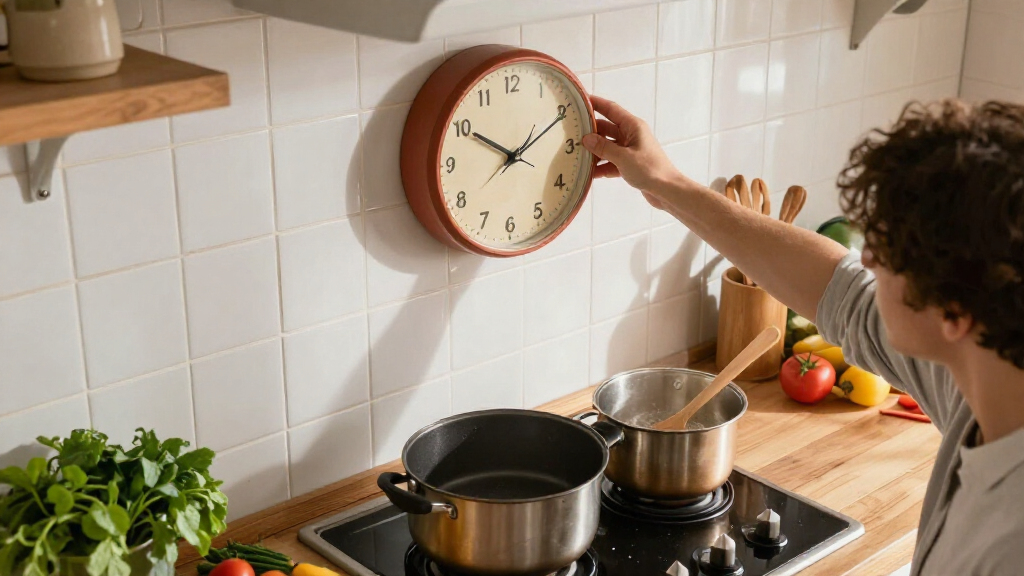
Hang a kitchen clock where you can see its face from the counter or table, while keeping it clear of direct heat, steam, and cooking splashes. A high, open wall away from the stove or sink often works better than the nearest empty patch. Also check that the clock will not block a cupboard or sit in the beam of a bright task light.
For instance, if the stove sits below a hood and the sink faces a window, the wall beside the breakfast nook might offer the safest clear view. That small shift can mean less grease on the frame and a more comfortable glance while you cook. A clock near a kettle may catch steam over time, so the inviting spot beside the tea station is not automatically the best one. Placement is a balance: move it too far from the work area and it may be harder to check; put it too close to heat or moisture and cleaning and wear can become more of a concern.
Placement also affects sound and power. Quartz clocks are common and generally simple to maintain; some tick regularly, while others advertise a quieter sweep movement. In an open-plan kitchen, ticking may carry into a dining or living area, especially when the room is quiet. A quieter movement may matter more in that shared space than in a busy kitchen, though individual models can still sound different. Battery operation gives you more freedom to choose a good wall, while a digital model that plugs in needs a nearby outlet and a tidy cable route.
“Silent” usually describes a movement designed to reduce or avoid regular ticking. Check the model’s description and reviews, since a quiet kitchen can make small sounds easier to notice.
Before drilling, hold a paper circle where you want the clock and view it from your usual spots. Check the cabinet doors and nearby shelves, too. That quick mock-up can save you from hanging a beautiful clock where it is awkward to see.
Keep the Finish Looking Fresh With a Simple Cleaning Habit
A kitchen wall clock stays looking its best when you clean it gently and keep it away from regular grease, moisture, and direct heat. The right surface makes the job easier, but the manufacturer’s care instructions should guide your cleaning. Ordinary kitchen use does not automatically make a clock waterproof.
For example, a smooth metal rim beside a dining area may need little more than regular dusting and an occasional wipe with a soft, lightly damp cloth. A clock above the stove may collect a faint sticky film that takes longer to remove—and heat or steam may affect some materials. Move the clock away from splash zones if you find yourself cleaning it every few days. Frequent buildup is a sign that the placement is working against the finish; shifting it a little farther away can reduce both cleaning effort and exposure.
Use a small, careful routine:
- Dust the frame and face with a dry, soft cloth.
- Check the instructions before using moisture or a cleaning product.
- Wipe suitable surfaces lightly with a soft cloth; do not spray cleaner onto the clock.
- Keep moisture out of the hands, display, and movement.
Cleaning gently helps avoid damage to finishes and keeps liquid away from the clock’s internal parts. Battery-powered clocks can be easier to place, but remember to check their battery requirements. For plug-in digital models, decide whether a visible cable will bother you before choosing the wall. A little thought about care and power now can make the clock pleasant to live with long after the first week.
Frequently Asked Questions
What size wall clock works best in a kitchen?
Choose a size you can read from the main work and dining areas, and scale it to the open wall. Measure around cabinets, shelves, and lights before picking an oversized design; a clock that fits the wall should still have room to breathe.
Where should I hang a kitchen clock?
Place it where you can see it from the counter or table, away from direct heat, steam, and splashes. Check that it will not obstruct a cabinet door or compete with task lighting.
Are silent kitchen clocks really silent?
“Silent” usually refers to a movement designed to reduce or avoid regular ticking. Sound can vary by model, and a quiet open-plan kitchen may make even a small noise easier to hear, so check the product details and reviews.
Are digital or analog clocks better for a kitchen?
Analog clocks offer a traditional decorative look and show time visually; digital clocks display exact digits and may include a timer, date, or temperature. Choose based on what you will use and which face you prefer to see on the wall.
Can I hang a decorative clock near the stove?
It is generally better to keep a clock away from direct heat, steam, and cooking splashes. Those conditions can affect materials and leave grease on the face, making the clock harder to clean.
How do I clean a kitchen wall clock?
Follow the manufacturer’s instructions. In general, dust it with a soft cloth and wipe suitable surfaces with a lightly damp cloth; do not spray cleaner directly onto it or let moisture reach the movement.
Conclusion
Choose a kitchen clock that you can read in one glance, that fits the wall without crowding it, and that suits the way you actually use the room. Then give it a spot clear of heat and splashes, with a finish you can keep clean.
When the light turns golden over the counter and dinner is nearly ready, a good clock is both a steady guide and a small piece of the room you enjoy seeing every day.