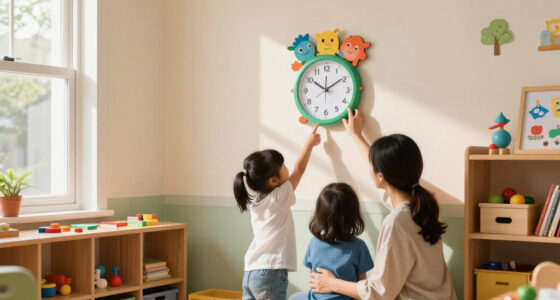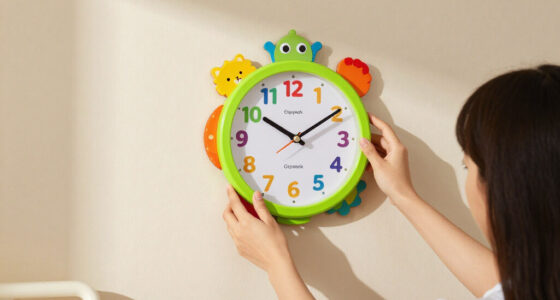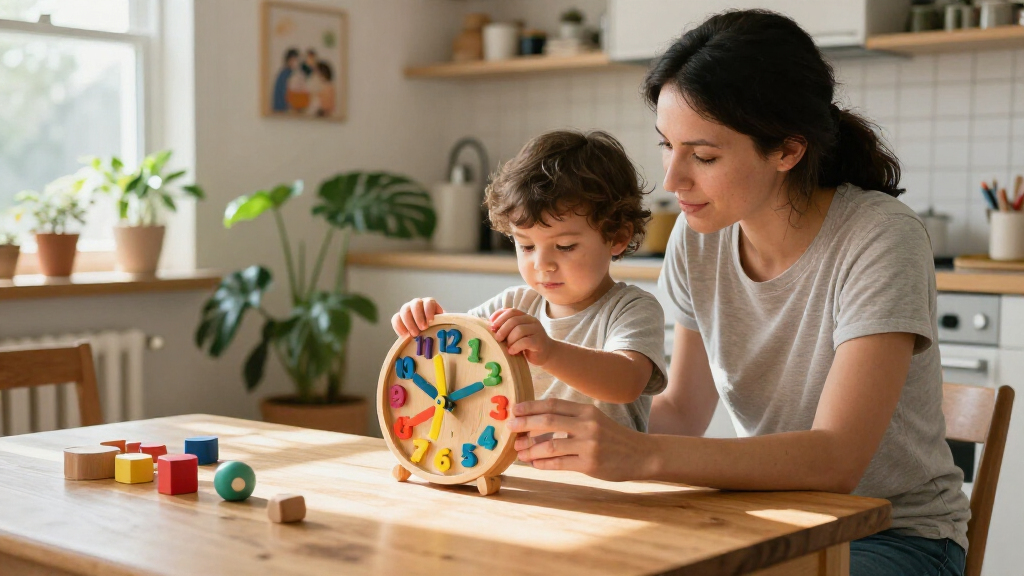
For most families, I’d start with the Melissa & Doug Turn & Tell Wooden Clock: its double-sided time cards give children a clear way to practise beyond moving the hands. The Costzon Montessori Wooden Daily Learning Clock and Calendar Toy stands out for pairing time with everyday calendar routines, while the MERRYHEART Wooden Fraction Learning Clock suits children ready to connect clock faces with fractions. The main tradeoff is between a simple, hands-on clock that keeps attention on telling time and a broader activity set that offers more ways to practise. Age, piece size, and whether a child benefits from cards, sorting, or guided games can change which option makes sense. Read on for my full comparison of these 12 wooden learning clocks for kids and how I’d match each one to a learner.

Get decor and gifts delivered free with Prime
- Fast, free delivery on millions of items
- Prime Video, Amazon Music and more included
- Member-only deals all year
Complete the kit


Key Takeaways
- Practice support separates the strongest teaching picks: the Turn & Tell clock includes double-sided cards, while a basic movable-hand model may suit children who need less structure.
- Learning clocks vary in scope: Costzon pairs time with calendar concepts, while the MERRYHEART model adds a fraction connection; choose the extra lesson only if it suits your child’s current stage.
- Sorting-focused clocks teach through matching and handling pieces: the Melissa & Doug Shape Sorting Clock and Wooden Sorting Clock Toy are better suited to children who learn by fitting shapes than those seeking extensive time practice.
- Not every useful teaching clock is wooden: Learning Resources Big Time Student Clock and Time Activity Set broaden the roundup, but buyers focused on an all-wood construction should check materials before choosing.
- More components do not automatically mean better learning: cards, boards, calendars, and game elements help when a child will use them; a simpler clock can be the clearer choice for first lessons.
| Tender Leaf Toys Bear Colors Wooden Learning Clock |  | Best for Early Number and Color Play | Brand: Tender Leaf Toys | Model: TL8408 | Material: Rubber tree wood | VIEW LATEST PRICE | See Our Full Breakdown |
| Costzon Montessori Wooden Daily Learning Clock and Calendar Toy |  | Best for Broad Daily-Routine Learning | Brand: Costzon | Model: HY9228 | Material: Beech wood and plywood | VIEW LATEST PRICE | See Our Full Breakdown |
| Wooden Learning Clock for Kids with Movable Hands and Practice Cards |  | Best for Structured Analog-Time Practice | Material: Wood | Display type: Analog | Operation mode: Manual | VIEW LATEST PRICE | See Our Full Breakdown |
| MERRYHEART Wooden Fraction Learning Clock for Children |  | Best for Linking Fractions and Time | Pieces: 29 | Materials: Beech wood and plywood | Board diameter: 6.9 inches | VIEW LATEST PRICE | See Our Full Breakdown |
| Learning Resources Big Time Student Clock |  | Best for Clear, Accurate Hand Movement | Brand: Learning Resources | Model: LER2095 | Clock format: 12-hour analog | VIEW LATEST PRICE | See Our Full Breakdown |
| Janod Wooden Teaching Clock for Learning to Tell Time |  | Best for Guided Analog-to-Digital Practice | Brand: Janod | Model: J05076 | Recommended age: 5–6 years | VIEW LATEST PRICE | See Our Full Breakdown |
| Wooden Teaching Clock Set for Kids |  | Best for Time Learning with Extra Math Practice | Brand: GBuoBlmk | Model: YB-209 | Age range: 3 years and up | VIEW LATEST PRICE | See Our Full Breakdown |
| Learning Resources Time Activity Set |  | Best for Classroom or Multi-Stage Practice | Brand: Learning Resources | Model: LER3220 | Age range: 5–8 years | VIEW LATEST PRICE | See Our Full Breakdown |
| Melissa & Doug Turn & Tell Wooden Clock with 13 Double-Sided Time Cards |  | Best for Independent Answer Checking | Brand: Melissa & Doug | Model: 4284 | Age range: 4–7 years | VIEW LATEST PRICE | See Our Full Breakdown |
| Melissa & Doug Shape Sorting Clock Wooden Educational Toy |  | Best for Preschoolers Starting with Shapes and Numbers | Brand: Melissa & Doug | Model: 8593 | Age range: 3 years and up | VIEW LATEST PRICE | See Our Full Breakdown |
| Coogam Wooden Clock and Time-Telling Board Game |  | Best for Group Practice | Brand: Coogam | Material: Wood | Recommended age: 3 years and up | VIEW LATEST PRICE | See Our Full Breakdown |
| Wooden Sorting Clock Toy for Kids |  | Best for Shape-Sorting Beginners | Brand: Skrtuan | Material: Wood | Diameter: 8.43 inches | VIEW LATEST PRICE | See Our Full Breakdown |
| wooden learning clocks for kid | Brand | Material | Model | Age range |
|---|---|---|---|---|
| Tender Leaf Toys Bear Colors W | Tender Leaf Toys | Rubber tree wood | TL8408 | 36 months to 12 years |
| Costzon Montessori Wooden Dail | Costzon | Beech wood and plywood | HY9228 | — |
| Wooden Learning Clock for Kids | — | Wood | — | — |
| MERRYHEART Wooden Fraction Lea | — | — | — | — |
| Learning Resources Big Time St | Learning Resources | Plastic | LER2095 | 4–9 years |
| Janod Wooden Teaching Clock fo | Janod | Wood | J05076 | — |
| Wooden Teaching Clock Set for | GBuoBlmk | Wood | YB-209 | 3 years and up |
| Learning Resources Time Activi | Learning Resources | — | LER3220 | 5–8 years |
| Melissa & Doug Turn & Tell Woo | Melissa & Doug | Wood | 4284 | 4–7 years |
| Melissa & Doug Shape Sorting C | Melissa & Doug | Wood | 8593 | 3 years and up |
| Coogam Wooden Clock and Time-T | Coogam | Wood | — | — |
| Wooden Sorting Clock Toy for K | Skrtuan | Wood | — | — |
More Details on Our Top Picks
Tender Leaf Toys Bear Colors Wooden Learning Clock
The bear-shaped board makes this a playful first step for children who are still matching numbers, colors, and shapes as well as exploring time. Its 12 pegged number pieces give little hands a clear matching task, while the wooden format keeps the activity tactile and screen-free. Compared with the Costzon Montessori Wooden Daily Learning Clock and Calendar Toy, this is a more focused, less crowded choice: it centers on number recognition and the clock rather than adding months, weather, and seasons. That simplicity suits younger learners, but it offers less practice with dates and broader calendar concepts. The pieces are not magnetic, so they need to be fitted into the board rather than placed loosely on a metal surface. I’d choose it for playful early learning, not as a detailed tool for mastering analog time.
Pros:- Combines number, color, shape, and time recognition in one activity
- Pegged number pieces fit into the board for hands-on matching
- Bear-shaped design gives early learners an approachable visual cue
- Made from renewable rubber tree wood
Cons:- Number pieces are not magnetic and must be fitted into their peg spaces
- Provides less structured analog-time practice than clocks with activity cards
- Does not cover calendar concepts such as days, months, or seasons
Best for: Families with preschoolers who are beginning to recognize numbers, colors, and shapes alongside basic time concepts
Not ideal for: Caregivers seeking guided practice with minute intervals or calendar topics such as months, seasons, and weather
- Brand:Tender Leaf Toys
- Model:TL8408
- Material:Rubber tree wood
- Included pieces:1 bear-shaped board and 12 number labels
- Age range:36 months to 12 years
- Dimensions:9.37 x 8.74 x 0.79 inches
- Weight:14.08 ounces
- Educational objective:Numeracy and literacy
Our verdict“Choose this bear-shaped clock for a young child who benefits from colorful matching play, but pick a card-based clock for more step-by-step time practice.”
Costzon Montessori Wooden Daily Learning Clock and Calendar Toy
The Costzon stands apart from the other picks by treating the clock as one part of a wider daily calendar board. Children can explore time, dates, weeks, months, seasons, weather, and day and night using the clock and movable sliders. That makes it a stronger fit for families who want a recurring morning routine or a shared classroom prompt, rather than just an analog-time exercise. Compared with the Tender Leaf Toys Bear Colors Wooden Learning Clock, it covers far more concepts but is less focused on simple number-and-color matching. Its wall-mounted or freestanding setup can keep the board visible between activities, though at 12 inches square it needs more display space than a compact tabletop clock. The sliders and small parts may need screw tightening if they loosen, so it calls for occasional checks.
Pros:- Covers time alongside dates, months, weeks, seasons, weather, and day and night
- Movable sliders make several concepts hands-on
- Can be hung on a wall or used on a flat surface
- Made from beech wood and plywood with smooth, rounded edges
Cons:- Small parts and sliders may need screw tightening if they become loose
- The broad range of topics can be less focused than a dedicated time-practice clock
- Its 12-by-12-inch board takes more display space than a small tabletop model
Best for: Parents and teachers who want one visible board for practicing time, dates, seasons, weather, and daily routines with children aged three and up
Not ideal for: Buyers seeking a compact, clock-only toy or a set of structured exercises for learning minute-by-minute time
- Brand:Costzon
- Model:HY9228
- Material:Beech wood and plywood
- Dimensions:12 x 12 x 0.4 inches
- Weight:1 lb (0.5 kg)
- Recommended age:3+
- Mounting options:Wall-mounted or freestanding
- Safety compliance:ASTM and CPSIA compliant
Our verdict“Pick the Costzon if you want a display-ready routine and calendar board, rather than a compact clock devoted mainly to telling time.”
Wooden Learning Clock for Kids with Movable Hands and Practice Cards
For children ready to move beyond recognizing the clock face, this set offers the clearest practice sequence in the group: 30 activities on 15 double-sided cards, paired with movable hands. Exercises cover o’clock, half past, quarter hours, and five-minute intervals, so a parent or teacher has prompts ready instead of having to invent each lesson. Compared with the Learning Resources Big Time Student Clock, this option is made of wood and includes a substantial set of activities; the Big Time clock instead has color-coded hands and a geared mechanism that keeps the hour hand aligned as minutes advance. The built-in card storage helps keep the materials together, but this model is intended for indoor tabletop use and its recommended age range is narrower. I’d favor it for guided practice at home or in class, not for a broad calendar-learning board.
Pros:- Includes 30 activities across 15 double-sided practice cards
- Movable hands let children set times themselves
- Covers o’clock, half past, quarter hours, and five-minute intervals
- Built-in storage keeps the practice cards with the clock
Cons:- Designed for indoor use
- Recommended age range is limited to four through eight years
- Focuses on time practice rather than calendar or broader daily-routine concepts
Best for: Families and early-grade teachers who want ready-made, screen-free exercises for children aged four to eight learning analog time
Not ideal for: Buyers who want calendar and weather activities, outdoor use, or a clock intended to suit learners well beyond age eight
- Material:Wood
- Display type:Analog
- Operation mode:Manual
- Mounting type:Tabletop
- Recommended age:4–8 years
- Included components:Clock with movable hands and built-in storage; 15 double-sided practice cards
- Practice activities:30
Our verdict“Choose this set when you want structured analog-time lessons and activity cards; choose the Learning Resources clock if geared hand movement matters more.”
MERRYHEART Wooden Fraction Learning Clock for Children
The MERRYHEART is the most specialized pick here: its interchangeable fraction pieces help children connect parts of a circle with parts of an hour. That gives it a different teaching purpose from the Wooden Learning Clock for Kids with Movable Hands and Practice Cards, which is better suited to repeated reading of specific times across five-minute intervals. With a 6.9-inch board, the MERRYHEART takes little space and can support a learner who is ready to discuss how different fractions combine to make an hour. The tradeoff is scale: its small board and pieces may be harder for some children to handle than a larger clock face. The product information also gives conflicting age recommendations, so I would check the packaging guidance before buying for a younger child. This is a focused learning aid, not the most flexible first clock.
Pros:- Connects telling time with hands-on fraction concepts
- Interchangeable pieces show different ways to make an hour
- Compact 6.9-inch board is easy to store
- Supports learning as children progress from time concepts to fractions
Cons:- Small board and pieces may be difficult for some children to handle
- Product information contains conflicting age recommendations
- Its fraction focus is narrower than a clock with a range of time-reading exercises
Best for: Families or teachers introducing fractions through time to children aged five and up who can manage small pieces
Not ideal for: Buyers seeking a large, beginner-friendly clock for basic time reading or wanting unambiguous age guidance
- Pieces:29
- Materials:Beech wood and plywood
- Board diameter:6.9 inches
- Fraction circle diameter:5.6 inches
- Product weight:0.84 lb
- Package dimensions:6.9 x 6.9 x 1.42 inches
- Recommended age:5 years and up; product information also contains conflicting age recommendations
- Educational objectives:Fractions and telling time
Our verdict“Choose the MERRYHEART for a child ready to connect fractions with an hour, but choose a larger practice clock for basic time-reading lessons.”
Learning Resources Big Time Student Clock
The Big Time Student Clock is the practical pick for children who need to see how the minute hand affects the hour hand. Its geared mechanism advances the hour hand as the minute hand moves in one-minute increments, making their relationship visible instead of leaving children to set each hand independently. Color-coded hands and easy-to-read markings add useful visual cues, while the stand and activity guide suit a desk or classroom lesson. Compared with the Wooden Learning Clock for Kids with Movable Hands and Practice Cards, this model offers a more mechanically linked clock face, but it is plastic rather than wood and does not include the same set of 30 card activities. Its 12-hour analog format is focused and straightforward; it is a teaching aid, not a clock for keeping time. I’d choose it for guided demonstrations where accurate hand coordination matters more than wooden construction.
Pros:- Geared hands keep the hour and minute relationship accurate
- Minute hand moves in one-minute increments
- Color-coded hands and clear markings support visual learning
- Includes a removable stand and activity guide
Cons:- Made of plastic rather than wood
- Designed as a learning tool rather than a timekeeping clock
- Does not include the extensive card-based activities offered by the wooden practice-card model
Best for: Parents, homeschoolers, and teachers helping children aged four to nine understand how minute and hour hands move together
Not ideal for: Buyers who specifically want an all-wood learning clock, a fraction activity, or a clock that functions as a household timekeeper
- Brand:Learning Resources
- Model:LER2095
- Clock format:12-hour analog
- Age range:4–9 years
- Mechanism:Geared hands; minute hand moves in 1-minute increments
- Included components:Removable stand and activity guide
- Material:Plastic
- Unit count:1
Our verdict“Choose the Big Time Student Clock for clear, linked hand movement in lessons, but skip it if wooden construction is a firm requirement.”
Janod Wooden Teaching Clock for Learning to Tell Time
The Janod set suits children who benefit from a clear route between reading clock hands and recognizing the matching digital time. Its 13 double-sided model cards provide prompts, while the erasable card and markers let children try their own examples. Day and night backgrounds add context, and the minute tabs give beginners visual help with minute positions. Compared with the Melissa & Doug Turn & Tell, Janod offers more varied practice materials, but Turn & Tell has an answer-checking digital window built into the clock. Janod is a better fit for adult-led activities than for independent checking. Its 5–6 age recommendation and beginner focus also mean older children may move through the material quickly; buyers seeking broader early-learning play may prefer the Melissa & Doug Shape Sorting Clock.
Pros:- Model cards and an erasable card support both prompted and original practice
- Combines analog and digital time learning
- Day and night backgrounds help connect times to daily routines
- Made with wood, plant oil, and non-toxic water-based paint
Cons:- Beginner-level activities may offer limited challenge once a child has learned the basics
- No manufacturer warranty is specified
- Uses adult-guided cards rather than a built-in answer-checking display
Best for: Families with children around ages 5–6 who want guided practice connecting analog clock faces with digital time.
Not ideal for: Older children who already read time confidently or families who want a clock that checks answers without adult help.
- Brand:Janod
- Model:J05076
- Recommended age:5–6 years
- Material:Wood
- Dimensions:9.84 x 1.18 x 9.37 inches
- Practice materials:13 double-sided model cards and 1 erasable blank card
- Included accessories:2 markers, 2 backgrounds, 4 minute tabs, and clock with stand
- Operation:Manual
Our verdict“Choose Janod for a young beginner who needs structured analog-to-digital practice, but pick Turn & Tell for built-in answer checking.”
Wooden Teaching Clock Set for Kids
This set reaches beyond clock reading with 10 daily activity cards, 36 practice cards, and four dry-erase pens. That mix gives parents more ways to work on time alongside basic addition, subtraction, number comparison, and schedule awareness. Its movable hands keep the core lesson hands-on, much like the Janod Wooden Teaching Clock, but Janod includes day-and-night backgrounds and minute tabs for more explicit visual scaffolding. The GBuoBlmk set instead leans on its larger card collection and broader stated learning goals. One limitation is that the listing does not specify a digital display, so buyers should not assume children can practice matching analog times to a clock window. The compact, thin format is also described for indoor use, making this a practical tabletop activity rather than an all-purpose play clock.
Pros:- 36 practice cards and 10 daily activity cards offer varied prompts
- Dry-erase pens support reusable practice
- Adds basic math and schedule-awareness activities to time learning
- Movable hands provide tactile clock practice
Cons:- The listing does not specify a digital display for analog-to-digital matching
- Specified for indoor use
- The very thin listed profile may be less suited to rough handling than a sturdier wooden clock
Best for: Caregivers of children aged 3 and up who want one card-based activity set for time practice and basic math.
Not ideal for: Families seeking a clearly specified digital answer display or a clock for outdoor play.
- Brand:GBuoBlmk
- Model:YB-209
- Age range:3 years and up
- Material:Wood
- Dimensions:7.16 x 7.85 x 0.19 inches
- Included clock:Wooden clock with movable hands
- Cards:10 daily activity cards and 36 practice cards
- Writing tools:4 dry-erase pens
- Operation and use:Manual; indoor use; no batteries required
Our verdict“Pick this set when card variety and basic math matter as much as time telling, but choose Janod if visual time cues are a priority.”
Learning Resources Time Activity Set
Learning Resources is the most activity-rich choice here for children who need repeated practice across several stages of time learning. The set pairs a teaching clock with a write-and-wipe clock, puzzle and activity cards, time dice, and a guide, giving adults options beyond simply moving the hands. Its stated range of hours and half-hours through more advanced time concepts gives it more room to grow than the beginner-focused Janod set. The tradeoff is that this is a specialized learning kit rather than a wooden clock designed to double as a general play toy; the product data also does not specify that its components are wooden. Compared with the Melissa & Doug Turn & Tell, it offers more activity formats, while Turn & Tell is the simpler pick for matching card prompts to a clock face.
Pros:- Includes both a teaching clock and a write-and-wipe clock
- Puzzle cards, activity cards, dice, and a guide offer varied practice
- Activities can cover basic and more advanced time concepts
- Listed for both classroom and at-home use
Cons:- The product data does not specify wooden construction
- Its time-learning focus may have limited use after a child masters the skill
- No manufacturer warranty is specified
Best for: Teachers, homeschoolers, and families who want varied, repeatable time lessons for children aged 5–8.
Not ideal for: Buyers specifically seeking an all-wood clock toy or a simple, self-contained matching activity.
- Brand:Learning Resources
- Model:LER3220
- Age range:5–8 years
- Included clocks:Teaching clock and write-and-wipe clock
- Puzzle cards:24 double-sided puzzle cards
- Activity cards:12 double-sided activity cards
- Other materials:3 time dice and an activity guide
- Warranty:No warranty
Our verdict“Choose this for guided lessons with multiple activity formats, but opt for a wooden Melissa & Doug clock if material and simple play matter more.”
Melissa & Doug Turn & Tell Wooden Clock with 13 Double-Sided Time Cards
Turn & Tell makes the learning loop easy to follow: a child moves the hands to match a card, then checks the result in the digital answer window. That built-in feedback sets it apart from the Janod Wooden Teaching Clock, whose cards and minute tabs offer more visual prompts but no specified answer-checking window. The color-coded face also separates hours, minutes, and quarter- and half-hour intervals, which can make explanations less abstract for a new learner. Its 13 double-sided cards keep practice focused, while rear storage helps contain them between sessions. Compared with the Learning Resources Time Activity Set, Turn & Tell is much simpler and more self-contained, but it does not offer that set’s mix of dice, write-and-wipe activities, and broader lesson formats. It is best treated as a focused learning tool, not a toy with lasting play variety.
Pros:- Digital window lets children check a time after moving the hands
- Color coding distinguishes hours, minutes, and common intervals
- 13 double-sided cards provide ready-made practice prompts
- Rear compartment keeps the cards with the clock
Cons:- Focused on time telling, so play options may narrow after the skill is mastered
- No manufacturer warranty is specified
- Offers fewer activity formats than the Learning Resources Time Activity Set
Best for: Families with children aged 4–7 who want a wooden clock that lets kids practice and check card-based answers independently.
Not ideal for: Buyers looking for broad classroom activities, varied play after time skills are learned, or a warranty-backed product.
- Brand:Melissa & Doug
- Model:4284
- Age range:4–7 years
- Material:Wood
- Time cards:13 double-sided cards
- Clock hands:Movable
- Answer checking:Digital window
- Card storage:Compartment at the back of the clock
- Warranty:No warranty
Our verdict“Choose Turn & Tell for focused, self-checking practice; choose Learning Resources for a wider range of lesson activities.”
Melissa & Doug Shape Sorting Clock Wooden Educational Toy
This clock is the most play-led option in this group: children fit 12 numbered shape pieces into the matching wells, sort colors, and turn the hands while encountering early time concepts. That combination makes it a stronger starting point for preschool fine-motor and matching skills than the card-driven Janod or Turn & Tell clocks, which expect more direct practice with reading times. The tradeoff is depth. It introduces clock hands, but the product description does not include time cards, a digital answer window, or structured analog-to-digital exercises. Compared with the Wooden Teaching Clock Set for Kids, it offers a more tactile shape-sorting task but fewer stated math and schedule activities. This is a good choice for early play that includes a clock, not a substitute for a dedicated time-telling lesson set.
Pros:- 12 removable numbered pieces combine shape matching with number recognition
- Recessed wells give children a clear place to fit each piece
- Color-coded rotating hands introduce the parts of a clock
- Supports fine-motor practice and problem solving through play
Cons:- Does not provide cards or specified exercises for matching analog and digital times
- Early clock exposure is less structured than the Janod or Turn & Tell sets
- No manufacturer warranty is specified
Best for: Families with preschoolers aged 3 and up who are developing shape matching, color recognition, and fine-motor skills alongside early clock familiarity.
Not ideal for: Parents seeking structured analog-to-digital time lessons, practice cards, or answer checking.
- Brand:Melissa & Doug
- Model:8593
- Age range:3 years and up
- Material:Wood
- Removable pieces:12 numbered shapes
- Clock hands:Rotating, color-coded hour and minute hands
- Included components:Wooden clock and 12 numbered shapes
Our verdict“Choose this for preschool play built around shapes and numbers, but select Turn & Tell or Janod for direct time-reading practice.”
Coogam Wooden Clock and Time-Telling Board Game
For families or classrooms that want children to practice together, the Coogam Wooden Clock and Time-Telling Board Game offers more variety than a clock alone. Its movable hands support analog time practice, while the double-sided dry-erase cards add reusable activities for both analog and digital time, including hours, half-hours, and quarter-hours. The board game is designed for 2–4 players, giving learners a social way to revisit the skills rather than working through cards by themselves. Compared with the Wooden Learning Clock for Kids with Movable Hands and Practice Cards, Coogam adds a group-play element, but the listed details for that alternative make its contents clearer. Here, the product description mentions several pieces while the included-components spec lists only the clock, so buyers should verify what arrives. Its broader set may also be more than a child needs for simple first exposure to clock hands.
Pros:- Practices analog and digital time, including hours, half-hours, and quarter-hours
- Four double-sided reusable dry-erase cards offer repeat practice
- Board game supports shared play for two to four players
- Wooden clock and manual operation suit hands-on, screen-free learning
Cons:- Included-components information lists only the wooden clock, conflicting with the fuller product description
- The set may feel activity-heavy for a child who only needs basic practice moving clock hands
Best for: Parents, tutors, and teachers who want a screen-free time activity for two to four children and value practice with both analog and digital formats.
Not ideal for: Buyers seeking a clearly documented, clock-only starter toy or those who need certainty about every included component before ordering.
- Brand:Coogam
- Material:Wood
- Recommended age:3 years and up
- Players:2–4
- Listed components:Wooden clock, four double-sided dry-erase flashcards, board game
- Learning objectives:Time learning and fine motor skills
- Operation:Manual
- Intended use:Indoor
Our verdict“Choose Coogam for small-group practice across analog and digital time, but confirm the set contents if the cards and game are essential.”
Wooden Sorting Clock Toy for Kids
The Wooden Sorting Clock Toy for Kids is a strong fit for younger learners who are not ready for a lesson focused only on telling time. Its 12 colorful shape-sorting blocks pair number, color, and shape recognition with the movable hour and minute hands, so children can build basic sorting and coordination skills alongside early clock familiarity. At 8.43 inches in diameter, it has a defined footprint, though the product details do not specify whether the blocks store inside the clock. Compared with the Melissa & Doug Shape Sorting Clock Wooden Educational Toy, this option also centers shape sorting, while its stated dimensions make sizing easier to judge. It is less suited to structured time lessons than the Coogam set, which includes practice cards and a group game; here, the emphasis is broader early-learning play rather than guided analog-and-digital drills.
Pros:- Combines clock-hand play with number, color, and shape recognition
- Twelve sorting blocks give children hands-on matching practice
- Movable hour and minute hands introduce clock mechanics
- Specified 8.43-inch diameter helps buyers judge its size
Cons:- Product details do not describe guided exercises for practicing specific times
- Only the clock is listed as an included component, with no storage or extra learning materials specified
Best for: Caregivers of children aged three and up who want one wooden toy for early number, color, shape, fine-motor, and introductory clock practice.
Not ideal for: Families looking for explicit analog-and-digital time exercises, practice cards, or a group activity; this clock’s described learning centers on sorting and movable hands.
- Brand:Skrtuan
- Material:Wood
- Diameter:8.43 inches
- Number of blocks:12
- Age recommendation:3 years and up
- Included components:Clock
- Model number:WT01
- Hands:Movable hour and minute hands
Our verdict“Pick this sorting clock for broad early-learning play and first exposure to clock hands, not for structured time-telling lessons.”
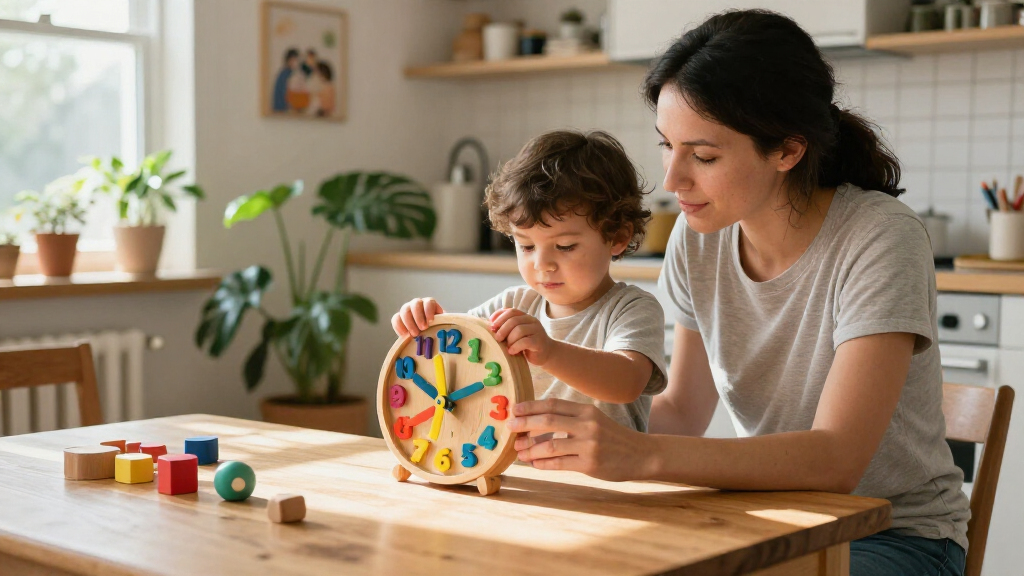
How We Picked
I compared these clocks by how directly they help children learn to read time, how easy the hands and other pieces are to use, and whether the learning format supports practice beyond a single demonstration. I also looked at build and material fit for a wooden-toy search, the usefulness of added cards, calendars, sorting pieces, or games, and how well each design could serve different stages of learning. A clock that combines a readable face with purposeful practice ranks ahead of one whose extra activities do not clearly reinforce time-telling.
The order reflects distinct buyer needs rather than a claim that every child needs the most feature-packed toy. The Turn & Tell leads for its direct practice aid; clocks with calendar, fraction, or game elements are more specialized, while simpler sorting or movable-hand options can work well for short, focused lessons. I also distinguish products whose names or formats suggest materials beyond wood, since shoppers searching specifically for wooden learning clocks should verify the listed construction before buying.
| wooden learning clocks for kid | Material |
|---|---|
| Tender Leaf Toys Bear Colors W | Rubber tree wood |
| Costzon Montessori Wooden Dail | Beech wood and plywood |
| Wooden Learning Clock for Kids | Wood |
| MERRYHEART Wooden Fraction Lea | — |
| Learning Resources Big Time St | Plastic |
| Janod Wooden Teaching Clock fo | Wood |
| Wooden Teaching Clock Set for | Wood |
| Learning Resources Time Activi | — |
| Melissa & Doug Turn & Tell Woo | Wood |
| Melissa & Doug Shape Sorting C | Wood |
| Coogam Wooden Clock and Time-T | Wood |
| Wooden Sorting Clock Toy for K | Wood |
Factors to Consider When Choosing Wooden Learning Clocks For Kids
My main advice is to choose for the learning task your child is ready to practise, not for the number of pieces in the box. These broader checks can help narrow the field before comparing individual models.
Match the clock to the next learning step
Children often first learn the order of numbers and the movement of clock hands, then build toward reading hour and minute times. A clock with prominent numbers and movable hands can serve early exploration, while practice cards or a game can give a child a repeatable challenge. Avoid buying a fraction or calendar-focused clock just because it teaches more topics; extra concepts can compete with the time lesson if your child is still learning the basics. Ask what the child can already do, then pick a toy that extends that skill by one step. This keeps practice engaging without turning the clock into a confusing collection of tasks.
Check hand movement and face readability
A child needs to see which hand is which and how one hand’s movement relates to the other. Look for hands that are easy to move but do not flop around, and a face with markings the child can distinguish at a glance. Fine details may be useful for minute practice but can make a beginner’s first lesson feel busy. A large teaching clock can be easier to demonstrate together, while a compact model may be simpler for independent play. Think about where lessons will happen and whether an adult needs to point to the face from across a table.
Treat cards and extra activities as teaching tools, not automatic bonuses
Cards, calendars, fraction markings, and board-game formats can extend learning when they ask a child to apply what the clock shows. They can also add setup, storage, and small pieces that are easy to misplace. Before choosing a multi-part set, consider whether your child enjoys structured prompts or prefers open-ended play with the hands. A simple clock is often the more useful first purchase if you plan to teach alongside it. Added activities are most valuable when they provide a clear next step rather than unrelated play.
Verify materials, piece size, and age guidance
The word “wooden” in a product name does not by itself tell you that every component is wood. Check the manufacturer’s material details, including cards, counters, pegs, and any plastic parts, if an all-wood toy matters to your household. Review age guidance and dimensions as well: small pieces may be unsuitable around younger siblings, and a tiny clock can be hard for little hands to manipulate. Smooth edges and securely attached hands matter for repeated handling. When details are unclear, use the product listing and manufacturer information rather than assuming from the title.
Choose a format that fits your child’s play style
Some children learn through sorting and matching, while others respond better to a direct demonstration or a prompted game. Shape-sorting clocks can make number recognition tactile, but they may give less room for practising specific times than a clock paired with cards. A board game can encourage turn-taking and shared lessons, though it may require an adult or another child to play. Consider whether the toy will be used alone, together, or in a classroom setting. The right format is the one your child is likely to return to after the novelty fades.
Pay for useful practice, not the largest feature list
A broader set can be worth choosing if its parts support repeated lessons or cover skills your child is actively learning. If you need one clear introduction to the clock face, a simpler model may be easier to use and store. Think about whether the toy can grow with your child: movable hands may stay useful as practice moves from hours to minutes, while a sorting activity may be strongest for early matching. Also factor in where the pieces will live and how quickly you can set up a lesson. The best value is the design that will see regular use, not necessarily the one with the most components.
Frequently Asked Questions
Should I choose a clock with time cards or one with movable hands alone?
Choose cards if your child benefits from prompts and you want ready-made practice tasks to pair with the clock face. Movable hands alone can be a better fit for a first introduction or open-ended play, especially when an adult will guide the lesson. Cards add structure, but they also mean more pieces to store and keep together. Check that the card activities match the times and skills your child is ready to learn. If the toy will mostly be used independently, a simple, easy-to-read clock may get more use.
Is a clock with a calendar or fraction lesson a good first telling-time toy?
It can be, but only if the added concept supports your child’s current learning rather than distracting from it. A calendar clock connects time with daily routines, while a fraction clock can make clock sections more concrete for a child ready for that link. For a beginner still working out the hands and numbers, a simpler face may keep the lesson clearer. Look at the toy’s main activity and ask whether it gives enough direct practice reading times. Choose added concepts as a bonus, not a substitute for a clear clock face.
Are wooden sorting clocks enough to teach children to tell time?
Sorting clocks can introduce numbers, shapes, and matching through hands-on play, which is useful for early learners. They may offer less practice reading specific times than a model with movable hands, cards, or guided activities. If telling time is the primary goal, check that the clock lets the child practise setting and reading times, not just fitting pieces into place. A sorting clock can still be a good starting point for a child drawn to tactile activities. You may later want a more practice-focused clock as the child’s skills advance.
What should I check if I need the toy to be fully wooden?
Read the material details for the complete set, not only the product title or main clock body. Cards, game pieces, hands, and other accessories may use different materials, and listings can vary in how clearly they describe them. Check product photos and the manufacturer’s information if the written description leaves questions. Also review piece size and age guidance, particularly if the toy will be used near younger children. If all-wood construction is a firm requirement, confirm it before purchase rather than inferring it from the word “wooden.”
Should I buy one learning clock or a set with games and extra activities?
Start with one clock if your child is new to time-telling or if you want lessons to stay focused. A set with a game or additional practice can make sense when the child already understands the basics and enjoys structured activities or taking turns. Extra components also mean more setup and a greater chance of misplaced pieces, so consider your storage space and how the toy will be used. A larger set is not automatically a better teaching choice. Match the format to the child’s attention, learning stage, and likely play routine.
Conclusion
Best overall: I’d choose the Melissa & Doug Turn & Tell Wooden Clock for a clear clock-and-card practice combination. Best value: the Wooden Learning Clock for Kids with Movable Hands and Practice Cards is a sensible direction for buyers who want hands-on practice without needing a broader activity system; compare its listed materials and included pieces before deciding. Best premium: Costzon is the pick for families who want time lessons alongside calendar routines. Best for beginners: a straightforward movable-hand or sorting clock, such as the Wooden Sorting Clock Toy, keeps early play tactile and focused. Best for specific needs: choose MERRYHEART for fraction links, Coogam for a game-based format, or a sorting model for shape-and-number matching. If all-wood construction is a requirement, verify every component on the listing; otherwise, prioritize the format your child will use for regular practice.
Halloween Picks
halloween
As an affiliate, we earn on qualifying purchases.